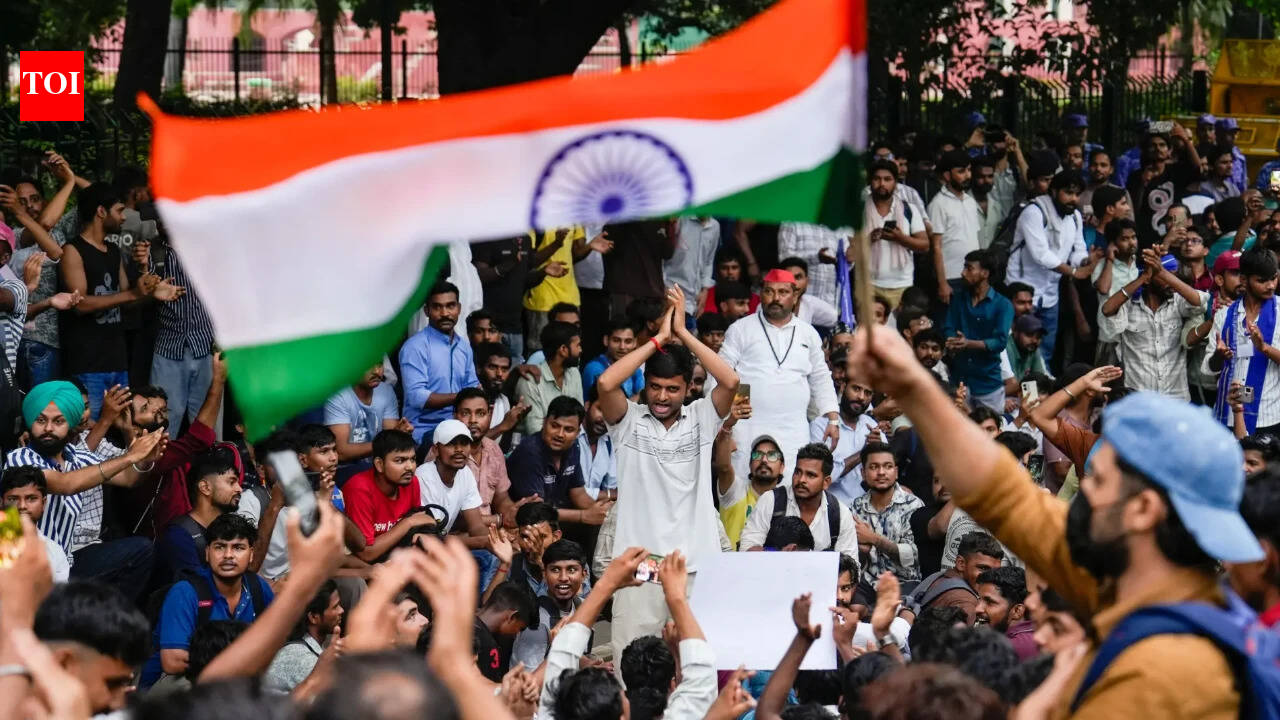

Cockroach Janata Party (CJP) supporters during a protest march, at Sansad Marg, in New Delhi (Picture credit: PTI)
Sonam Wangchuk has ended his 26-day hunger strike after government assurances on paper-leak cases, examination reforms and protections for peaceful protesters, prompting PM Narendra Modi to wish him a quick recovery and promise fast-track courts and tougher punishment for offenders.
The story so far
Wangchuk said his decision followed lengthy negotiations and concerns about possible violence. He also urged supporters to remain peaceful.
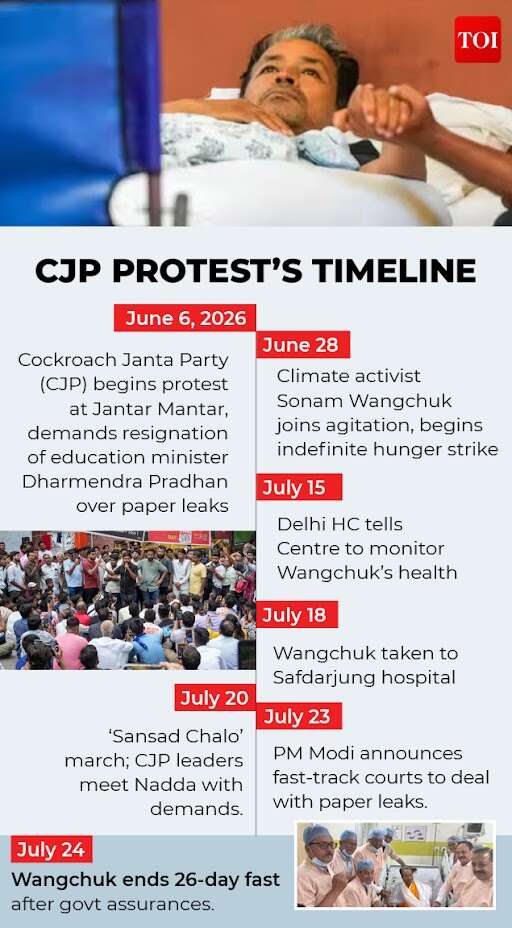
Activist Sonam Wangchuk ended his fast after 26 days
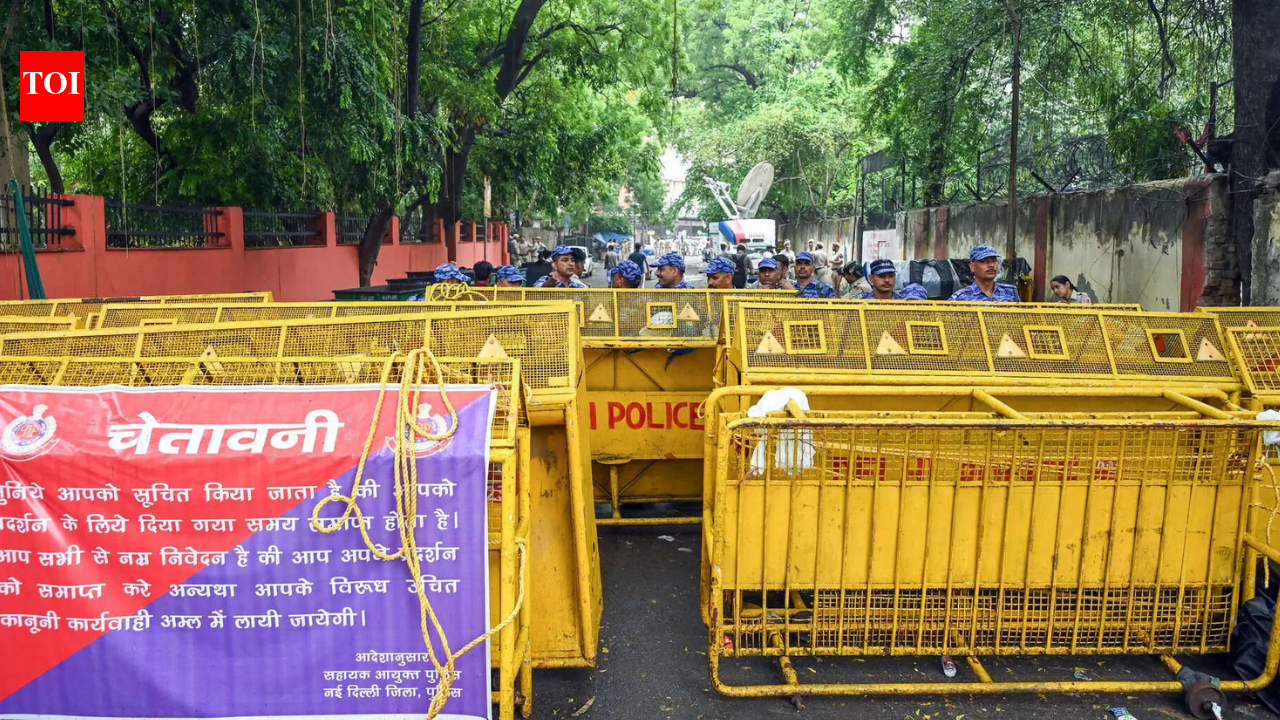
A reshuffle of the education bureaucracy was also under way: New secretaries were appointed for higher and school education, while the incumbent handling both departments was moved to the panchayati raj ministry.Union minister JP Nadda laid out what the government is actually offering: No cases against those who protested peacefully at Jantar Mantar or marched to Parliament on July 20, a parliamentary discussion on paper leaks and exam reforms, and “positive consideration” of compensation for NEET paper-leak suicide victims.For a government that has publicly ruled out education minister Dhramendra Pradhan’s resignation, these shifts are a way of signalling change.But for now, Cockroach Janta Party has vowed to continue protesting until education minister Dharmendra Pradhan resigns.CJP representatives and ministers have met today to arrive at some kind of settlement.That, in brief, is the story so far. A satirical social-media page created barely two months ago has developed into a youth movement powerful enough to force a direct intervention from the PM himself. Although its immediate cause is the NEET paper leak, the anger on the street is about something much larger.
Why CJP protest is different
Earlier protests against the Modi government could usually be placed inside identifiable social or geographical categories. The anti-CAA mobilisation came to be portrayed largely as a Muslim protest. The farm agitation remained largely concentrated among agricultural communities and in north India.CJP protest is harder to categorize. Examination anxiety cuts across caste, religion and region. More importantly, the movement has found resonance among aspirational middle-class families, including those that have traditionally been receptive to the BJP’s message of merit, mobility and a better future.It is a protest that does not look political in the traditional sense. One does not need to attend party meetings or be bused to a rally to participate. Posting a reel, designing a meme, sharing a police-action video or changing a profile picture can make you a part of protest.You can join it from anywhere. Not necessarily be present at Jantar Mantar. That informality makes the movement easier to join and harder for established institutions to understand.
Instagram takes on WhatsApp
The CJP has unsettled the BJP by challenging it on terrain the party has dominated for over a decade: The digital public square of X and WhatsApp. The BJP’s communication model relies on organised networks, centrally crafted talking points and mass WhatsApp forwards. Similarly, older protest movements largely lived on WhatsApp forwards and TV debates.But CJP speaks the native language of Instagram: Reels, memes, remixes and short videos that are decentralised, irreverent and difficult to control. Students, comedians, rappers and amateur creators can produce content faster than an official communication team can rebut it.Police action, in this case, does not necessarily suppress the movement. It produces content for it. Every baton charge and crying student becomes distributable evidence for an online audience. Wangchuk’s forcible hospitalisation similarly transformed a weakening hunger strike into a fresh source of mobilisation.
PM Modi goes selfie-style
Interestingly, the government’s response eventually borrowed from this new media language. PM Modi did not depend on an official statement or formal televised address. In a selfie-style, self-recorded video released around midnight, he spoke directly to young people about paper leaks, fast-track courts and stringent punishment. The format mattered almost as much as the announcement. It showed that the protest had forced the government to change not only its message but also its medium. To respond to the Instagram generation, India’s most formidable political communicator picked up a phone, looked into the camera and spoke in the informal style of a social-media creator.
The opposition’s awkward embrace
The protesters’ appeal comes partly from their distance from conventional politics.But Congress, AAP and other opposition parties naturally see an opportunity. CJP, however, presents them with a dilemma. If they stay away, they surrender a rare wave of anti-government mobilisation. If they embrace it too tightly, they risk making an organic youth movement look like another opposition-sponsored campaign.That tension was visible when Wangchuk’s wife, Gitanjali Angmo, described Rahul Gandhi’s protest near the PM residence as “insincere”, arguing that opposition leaders should have joined the students at Jantar Mantar instead. She also took a swing at the BJP directly, saying there was “nothing Hindu or nationalistic” about how the government had handled young protesters.
Why it matters
It would be premature to liken the cockroach protests as India’s version of the Gen Z rebellions seen elsewhere in South Asia. India has always followed its unique path; democracy flourished in India when no one gave a chance after Independent.CJP is not likely to become another JP Movement or even another Anna Hazare agitation. Its internal contradictions could eventually weaken it. Social-media enthusiasm can disappear as quickly as it arrives, while public attention can move on to the next crisis.But CJP has delivered a message no government can comfortably ignore: India’s aspirational youth will no longer accept repeated institutional failure as an unavoidable part of growing up.Something has already changed. A generation routinely described as distracted, politically disengaged and mainly glued to its phone has used that very phone to create a national protest.For a generation raised on the promise of “New India”, the last few months have been a crash course in the limits of that story.The government, that built its brand on youth aspiration, now finds itself being judged, live‑streamed and fact‑checked by those very aspirants.The opposition, meanwhile, is playing the catch-up game. Go to Source