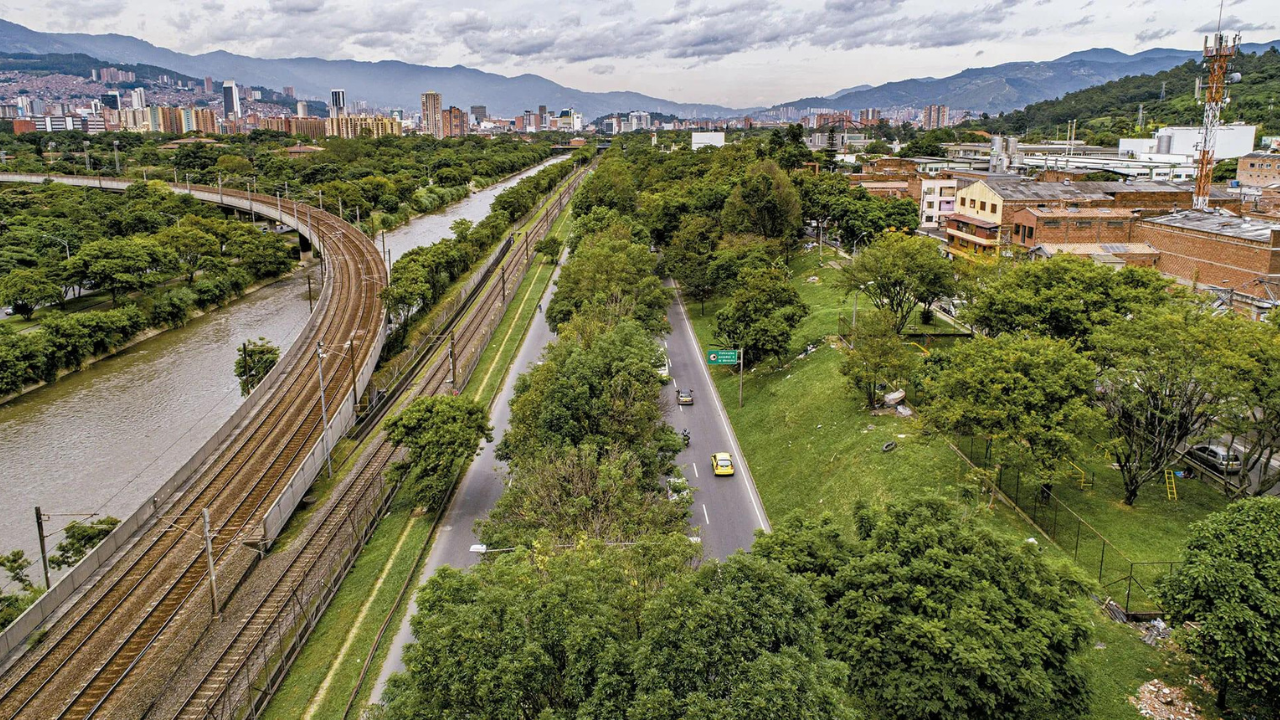

As heatwaves become more frequent and intense, cities around the world are searching for ways to stay cooler without relying solely on energy-intensive air conditioning. Medellín, Colombia, has emerged as one of the world’s most celebrated examples of nature-based urban cooling. Through its Green Corridors programme, the city planted around 880,000 trees and more than 2.5 million shrubs and other plants along roads, parks, rivers and public spaces. The large-scale greening effort transformed concrete-heavy streets into shaded corridors, helping lower temperatures, improve air quality and restore biodiversity. Studies found the project delivered localised cooling of up to 5°C in shaded areas, demonstrating how urban forests can become a powerful tool for adapting to climate change.
Why Medellín needed a solution to rising temperatures
Medellín lies in the Aburrá Valley, where surrounding mountains restrict airflow and allow heat to accumulate. Decades of rapid urban growth replaced vegetation with roads, buildings and paved surfaces that absorb and retain solar heat, creating a pronounced urban heat island effect. As temperatures climbed, residents experienced hotter streets, reduced outdoor comfort and greater exposure to heat-related health risks. To address these challenges, the city launched the Green Corridors (Corredores Verdes) initiative in 2016. Instead of focusing only on engineered cooling systems, planners invested in expanding urban vegetation. The aim was to naturally cool public spaces while making the city healthier, greener and more resilient to future climate change.
What the Green Corridors project involved
The initiative created a network of green corridors stretching across roads, pedestrian walkways, riversides, parks and transport routes. Approximately 880,000 trees were planted alongside more than 2.5 million shrubs, palms and ground-cover plants, carefully selected for Medellín’s tropical climate and their ability to provide shade.Rather than concentrating greenery in a few parks, planners distributed vegetation throughout the city so residents could experience cooler conditions in everyday public spaces. The project also included ongoing maintenance, irrigation and pruning to ensure the plants remained healthy and continued providing environmental benefits.
How trees naturally cool urban environments
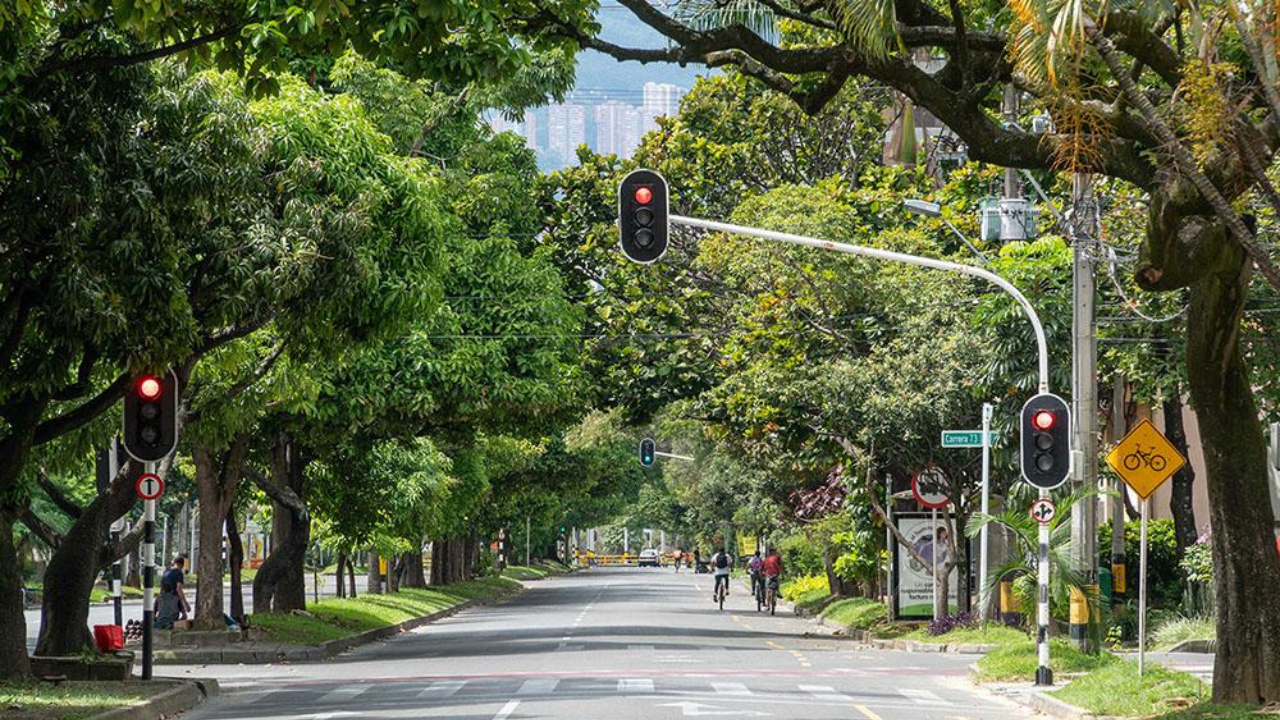
Trees reduce heat through a combination of shading and evapotranspiration. Their canopies block direct sunlight from reaching roads, pavements and buildings, limiting the amount of heat absorbed by urban surfaces. At the same time, trees release water vapour through their leaves, cooling the surrounding air in much the same way perspiration cools the human body.Scientific assessments found Medellín’s Green Corridors reduced average city temperatures by around 2°C, while some heavily shaded locations recorded localised cooling of up to 5°C. Although these figures vary depending on location and weather conditions, they demonstrate that urban vegetation can noticeably improve thermal comfort without consuming additional energy.
Benefits extended far beyond temperature reduction
The Green Corridors programme delivered several environmental and social benefits alongside cooler streets. The additional vegetation improved air quality by trapping airborne particles and absorbing carbon dioxide, while also reducing noise levels in busy areas.The connected green spaces created habitats for birds, butterflies, bees and other pollinators, increasing biodiversity within the city. Shaded streets encouraged more walking and cycling by making outdoor travel more comfortable, while greener public spaces offered residents healthier places for recreation and social interaction. Collectively, these improvements enhanced Medellín’s overall quality of life.
Separating fact from the viral 10°C claim
The success of Medellín’s urban greening programme has led to widespread attention on social media, where many posts claim the city cooled its streets by 10°C after planting nearly 900,000 trees. However, available scientific evidence does not support a citywide or localised air temperature reduction of that magnitude.Most studies consistently report an average cooling effect of about 2°C, with up to 5°C measured in some shaded locations. The larger figures circulating online are likely based on differences in surface temperatures, which can be substantially higher on exposed asphalt than beneath tree cover. Air temperatures, which are the standard measure used in climate studies, show smaller but still meaningful reductions.
A model for cities adapting to climate change
Medellín’s Green Corridors programme has attracted international recognition from organisations including the World Resources Institute, C40 Cities and the Inter-American Development Bank as a leading example of climate adaptation through nature-based solutions. Urban planners from around the world have studied the project as they explore ways to reduce heat while improving public health and environmental sustainability.Although every city has different geography, climate and infrastructure, Medellín demonstrates that strategic investment in urban forests can deliver measurable long-term benefits. By combining extensive tree planting with thoughtful city planning and ongoing maintenance, the programme shows that greener streets are not just more attractive but also more resilient to a warming climate. Go to Source