
- India’s entrepreneurial landscape transforms with digital access and finance.
- Business expos now empower entrepreneurs with knowledge and connections.
- Expos foster SME growth across India’s Tier-2/3 cities.
India’s entrepreneurial landscape is undergoing a structural transformation. A decade ago, starting a business meant navigating high capital requirements, limited access to established business models, and significant operational uncertainty. Today, digital commerce, organized retail, franchise networks, technology-enabled supply chains, and easier access to finance have lowered many of those barriers.
Alongside this shift, another trend is quietly reshaping the country’s business ecosystem, the rapid rise of business expos and entrepreneurship exhibitions.
Across India, from Delhi and Mumbai to Lucknow, Ahmedabad, Bengaluru, Hyderabad, Chandigarh, and several Tier-2 cities, business expos are evolving far beyond conventional trade fairs.
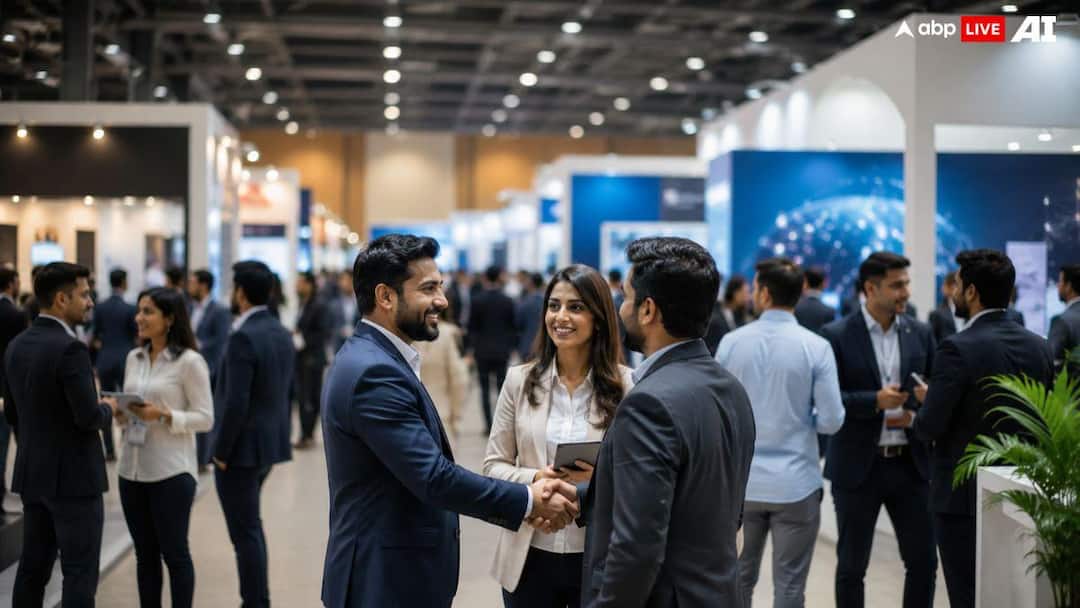
They have become platforms where entrepreneurs meet investors, franchise brands engage with aspiring business owners, startups connect with mentors, and policymakers interact with industry leaders. Increasingly, these events are acting as catalysts for enterprise creation rather than merely venues for product showcases.
Choosing The Right Business Model Matters
Having spent over fifteen years working across e-commerce, omnichannel retail, and brand expansion, I have observed one consistent trend. The biggest challenge for aspiring entrepreneurs today is no longer generating a business idea, it is selecting the right business model.
Opportunities have multiplied, but so has competition. Entrepreneurs today need far more than inspiration; they require market validation, operational knowledge, financial planning, technology support, and access to experienced industry leaders.
This is precisely where business expos create value. They bring together brands, financial institutions, consultants, investors, and entrepreneurs under one roof, enabling informed decision-making that would otherwise take months of research and networking.
Tier-2 And Tier-3 Cities Drive The Next Wave
One of the most significant shifts in India’s entrepreneurial journey is the geographical expansion of organized business ecosystems. Earlier, most large-scale business networking events were concentrated in metropolitan cities. Today, entrepreneurship expos are being hosted across emerging business centres, reflecting the growing economic importance of Tier-2 and Tier-3 cities.
Conferences and expos focusing on startups, SMEs, franchising, and innovation are drawing thousands of founders, investors, and business leaders beyond India’s traditional commercial hubs.
This transition mirrors a larger consumer trend.
India’s consumers increasingly demand branded experiences closer to home. They expect quality products, standardized services, and trusted brands without travelling to major cities. Consequently, franchise-led expansion has emerged as one of the most effective growth strategies for businesses while simultaneously providing local entrepreneurs with proven operating models that significantly reduce early-stage business risks.
Also Read : Gold Silver Rate Today (July 21): Metals Jump, Check Latest Rates In Delhi, Mumbai, Chennai, More
Franchising Is Not A Shortcut To Success
However, franchising itself should never be viewed as a guarantee of success.
In my experience, many first-generation entrepreneurs make the mistake of investing primarily because of a brand’s popularity. Sustainable success depends far more on execution than on the brand name itself.
Before investing, entrepreneurs must evaluate supply chain strength, operational support, technology infrastructure, training systems, financial viability, and the long-term strategic vision of the franchisor, not merely projected returns or initial investment requirements.
Strong Execution Determines Business Outcomes
The reality is that many small businesses in India do not fail because demand is absent. They struggle because execution is weak.
Poor inventory management, inconsistent customer service, inadequate cash-flow discipline, and a lack of data-driven decision-making often undermine otherwise promising ventures. Entrepreneurship today is no longer about opening a shop, it is about building systems, processes, and continuously improving operational efficiency.
Business Expos Are Becoming Knowledge Platforms
This is why business expos have become much more than networking events.
Their greatest contribution lies in democratizing business knowledge. A first-generation entrepreneur can interact with franchise companies, banks, government agencies, startup mentors, consultants, technology providers, and successful founders in a single venue. Such exposure enables entrepreneurs to make better-informed decisions while avoiding many of the costly mistakes associated with starting a business independently.
This becomes even more relevant as India continues to promote entrepreneurship through initiatives supporting startups, MSMEs, manufacturing, and self-employment. Government schemes can create meaningful economic impact only when entrepreneurs are equally equipped with practical business knowledge, operational capabilities, and scalable business models. Business expos increasingly serve as the missing bridge between policy intent and market execution.
SMEs Will Shape India’s Next Growth Phase
India’s next phase of economic growth will not be driven solely by large corporations.
It will depend equally on millions of small and medium enterprises built by first-generation entrepreneurs across the country. Organized retail, quick commerce, food services, education, healthcare, home services, manufacturing, and digital-first brands are expected to witness sustained expansion over the coming years. Franchise and partnership-led business models are likely to play a significant role in generating employment, attracting investment, and strengthening local economies.
Also Read : US Imposes New 50% Tariffs On Canadian Goods; Wine, Dairy, Furniture Among Products Hit
Technology Is Now A Core Business Capability
Yet the profile of the successful entrepreneur is also changing.
Today’s entrepreneur must be as comfortable interpreting customer data as managing daily operations. Digital payments, customer analytics, supply-chain visibility, online marketing, automation, and technology platforms are no longer optional capabilities—they are fundamental business competencies. The businesses that combine operational excellence with technology adoption will define India’s next generation of enterprise.
Beyond Exhibitions: Building India’s Entrepreneurial Future
The growing popularity of business expos across India reflects the maturity of the country’s entrepreneurial ecosystem. These platforms are no longer simply places where companies exhibit products or sell franchises. They are becoming marketplaces of ideas, partnerships, investment opportunities, and business education.
If these events continue to equip entrepreneurs not only with investment opportunities but also with operational knowledge, financial discipline, and long-term strategic thinking, their impact will extend far beyond exhibition halls.
India is already among the world’s fastest-growing major economies. Sustaining that momentum will require more than unicorn startups. It will require thousands of resilient small and medium enterprises capable of creating jobs, building local wealth, and driving regional economic development.
Business expos, therefore, should not be viewed merely as commercial events. They are increasingly becoming the platforms where ambition finds opportunity, ideas evolve into scalable business models, and India’s next generation of entrepreneurs begins its journey.
(The author is Senior Business Director, CEO Office, Stelcore Group)
[Disclaimer: The opinions, beliefs, and views expressed by the various authors and forum participants on this website are personal and do not reflect the opinions, beliefs, and views of ABP News Network Pvt Ltd.]