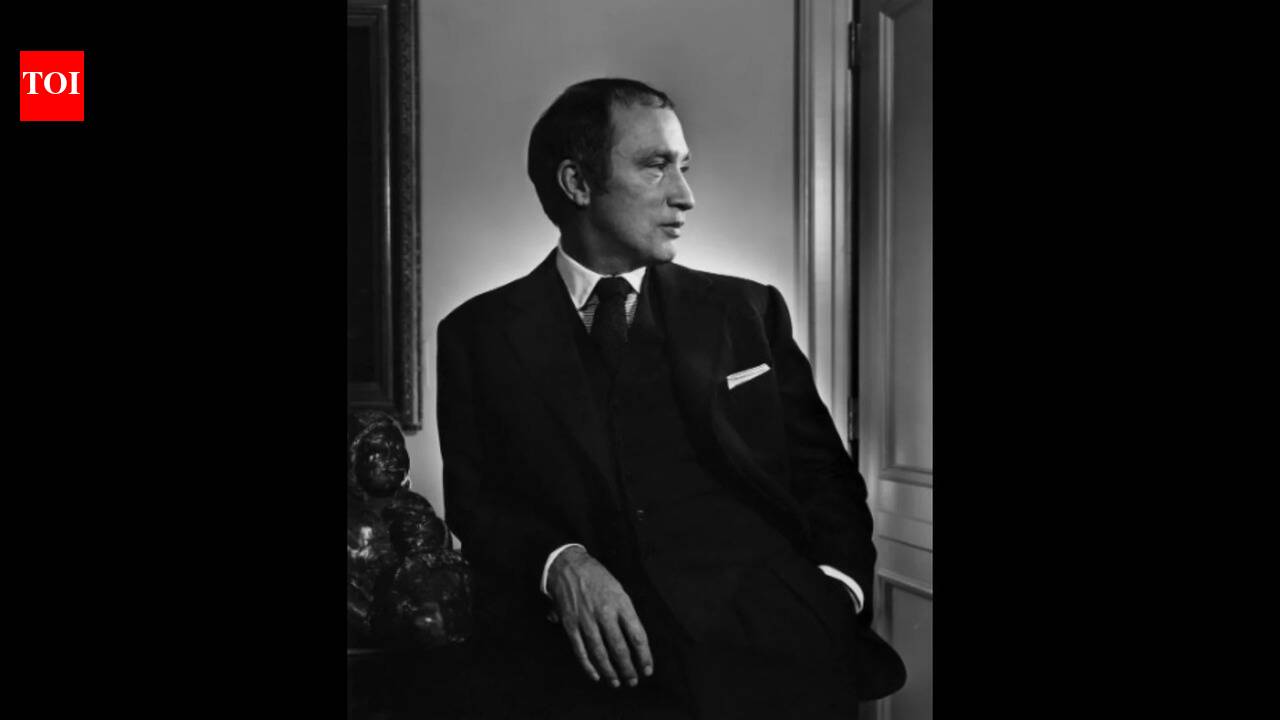

Quote of the day by former Canadian PM Pierre Trudeau (Photo courtesy: Yousuf Karsh)
Everett George Klippert was the last person in Canada to be arrested, charged, prosecuted, convicted, and imprisoned for being gay. Klippert was originally from Kindersley, Saskatchewan, and was raised in Calgary, Alberta. In 1965, he was picked up by police for questioning in connection with a case of suspected arson. He had nothing to do with the fire but he admitted to the police having had consensual homosexual relations with four different adult men.Because homosexual acts were classified as “buggery” and “gross indecency” under Canadian law, Klippert was convicted. He was called a dangerous sexual offender. In November 1967, the Supreme Court of Canada upheld this life sentence in a polarizing 3-2 decision. The public outcry was swift. Large segments of the Canadian public and media found it abhorrent that a man could be jailed for life for consensual, private acts.
Pierre Trudeau and a starting point for gay rights in Canada
Canada’s justice minister was Pierre Trudeau, who would later become the Prime Minister, the father of Justin Trudeau. One month after the Supreme Court ruling, Trudeau introduced Bill C-150, also known as the Omnibus Bill. Passed in 1969, the bill decriminalized homosexuality. In 1967, Trudeau said these words, which went on to redefine Canadian political culture and modernize Canadian social policy on several fronts.He said: “It’s certainly the case that what’s done in private between consenting adults doesn’t concern the Criminal Code. Take this thing on homosexuality… There’s no place for the state in the bedrooms of the nation.”In 1968, Trudeau became the PM and served until 1979 and then again from 1980 to 1984.Trudeau, a highly educated intellectual and lawyer, sought to formally untangle the concepts of sin and crime. In his view, a democratic state had a mandate to maintain public order and prevent harm, but it did not have a mandate to enforce private, religious, or moral uniformity. If an act occurred strictly in private between consenting adults, it could be viewed as a sin by religious institutions, but it did not meet the threshold of a crime against the state. This marked a profound generational pivot from a Canadian government that acted as a moral guardian to one that acted as a neutral arbiter of individual rights.The quote remains a masterclass in political framing. Trudeau successfully shifted a volatile debate about morality into a debate about the limits of government authority, transforming himself into an icon of modern liberalism and securing the Prime Minister’s office just a year later.
Trudeaumania
Pierre Trudeau was so popular and charismatic that the term ‘Trudeaumania’ was coined to describe the excitement he infused in politics. Young Canadians at that time were believed to be dazzled by his charm and good looks and he used to be stopped in the streets for autographs or for photographs even before he became the PM. Go to Source