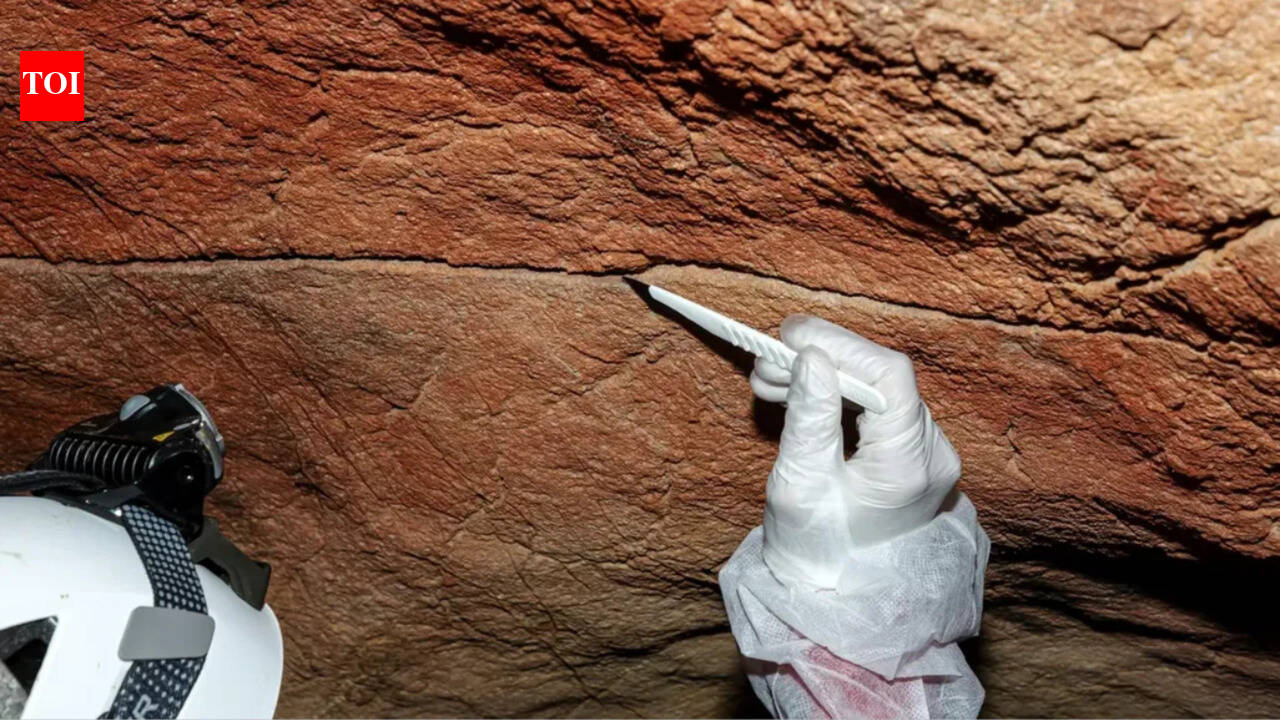

Scientists collected samples from 11 caves in Spain and Portugal (Credits: Alberto Martínez Villa)
For the first time, scientists have recovered ancient human DNA left behind on cave walls and rock art, opening a new way to study the people who created prehistoric paintings thousands of years ago.The breakthrough was described in a study published in June in the journal Nature Communications. It raises the possibility that researchers could one day identify the artists themselves, including their sex, ancestry and even whether different paintings were made by the same person.Scientists have previously extracted ancient DNA from cave sediment, chewed birch pitch often described as prehistoric “gum”, and even a 20,000-year-old pendant. Recovering it directly from rock art had never been achieved before.”It’s the start of a new era,” study co-author Genevieve von Petzinger, a paleoanthropologist at the University of the Witwatersrand, told New Scientist. “This gives us the potential to meet the actual artists, the individuals who did this art. It’s extraordinary.”
Samples collected from caves in Spain and Portugal
The research team visited 11 caves with prehistoric rock art across Spain and Portugal between 2022 and 2025. They collected samples from 24 painted panels, carefully removing tiny shavings of red ochre pigment or the calcite crusts that had formed over the paintings over time.To compare the results, they also sampled nearby sections of cave walls that contained no artwork.Laboratory analysis revealed traces of ancient human DNA in a pigmented calcite crust from Portugal’s Escoural Cave.The researchers think the DNA was deposited directly through saliva, sweat or other bodily fluids left on the cave wall while people were creating or interacting with the artwork. They say this explanation is more likely because the sample contained human DNA without any accompanying animal DNA. If the genetic material had reached the wall through sediment or flowing water, traces of animal DNA would also have been expected.
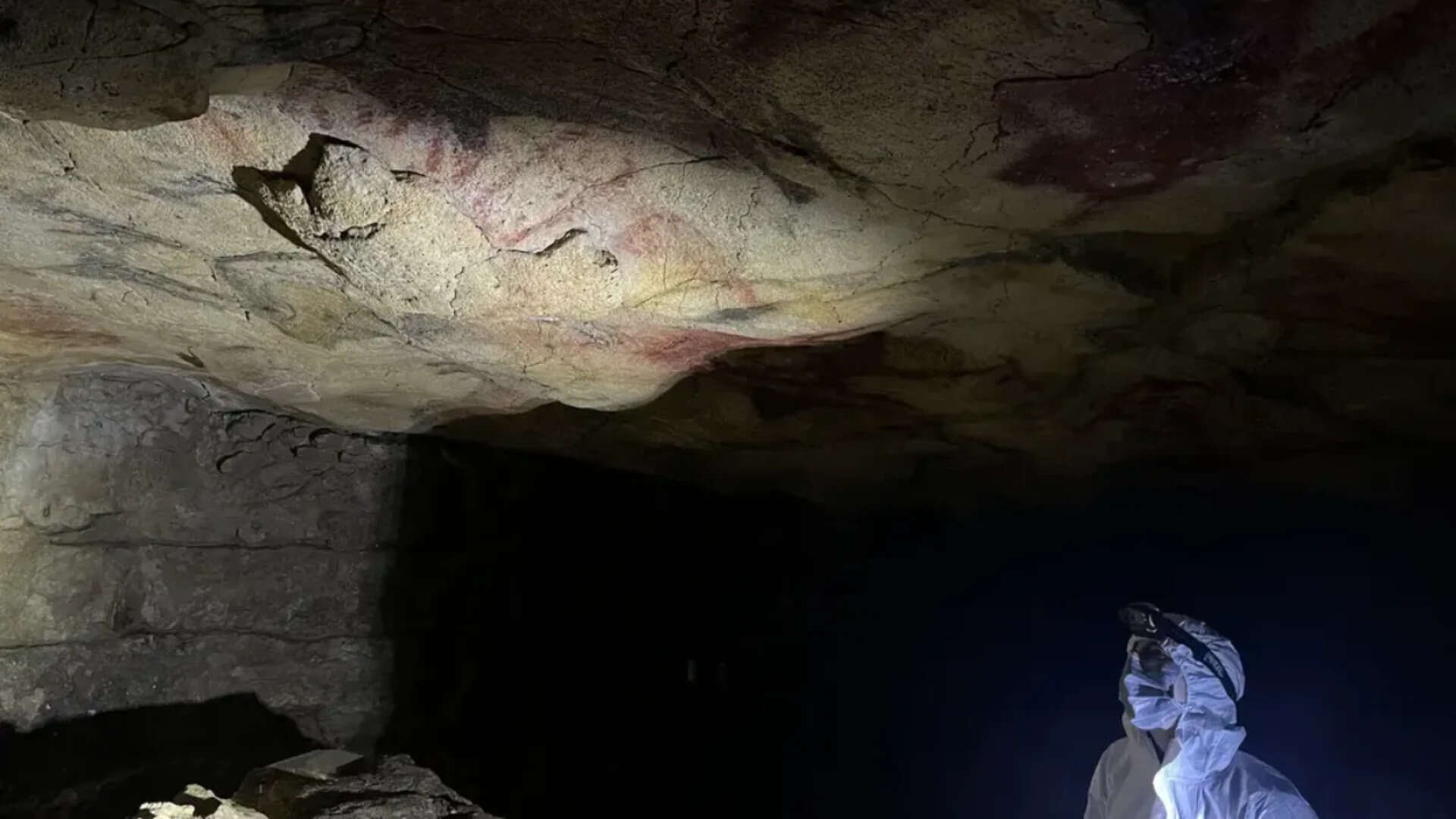
The scientists were surprised to find ancient DNA from humans in samples taken from unpainted areas of the caves, too (Credits: Matthias Meyer)
DNA is ancient, but its exact age remains unknown
The team could not determine the precise age of the DNA because the amount recovered was too small.They say it is at least 2,000 years old and is probably much older. Escoural Cave was sealed off from the outside world around 4,000 to 5,000 years ago, suggesting the DNA likely comes from that period.The researchers also said that they cannot confirm the DNA belonged to the artist who created the paintings. It may have come from someone who entered the cave later and touched the artwork or left behind saliva through coughing or sneezing.
Unexpected finds beyond the painted surfaces
Ancient human DNA also turned up in samples taken from unpainted sections of Escoural Cave and Spain’s Covarón Cave.Some of those samples contained both human and animal DNA, hinting they were probably contaminated by sediment from the cave floor.Only five of the 120 samples collected during the project produced ancient human DNA, showing how difficult genetic preservation on cave walls can be. Despite the low success rate, the findings suggest caves could become an important new source of information about prehistoric communities, especially the unexplored ones.”This is not just about rock art,” study co-author Hipólito Collado Giraldo, an archaeologist for Spain’s Extremadura region, said in a statement. “It’s about understanding how people used caves and where they left their marks.”
New questions for archaeologists
The DNA has already revealed some details about the people who left it behind.Three of the samples appear to have come from women, while one appears to have belonged to a man. Genetic analysis also suggests two samples are closely related to western hunter-gatherer groups that lived between 5,200 and 16,700 years ago.Researchers hope future studies can answer much bigger questions about prehistoric artists.”Were the artists men or women or both?” Francesco d’Errico, an archaeologist at the University of Bordeaux who was not involved with the study, said to New Scientist. “Were animal [drawings] from the same panel made by a single artist? Can we find Neanderthal DNA … or Denisovan DNA? … The potential is huge.”The team is now refining its sampling methods to improve DNA recovery and plans to investigate more cave sites, different painting techniques, hand stencils and figurative art.
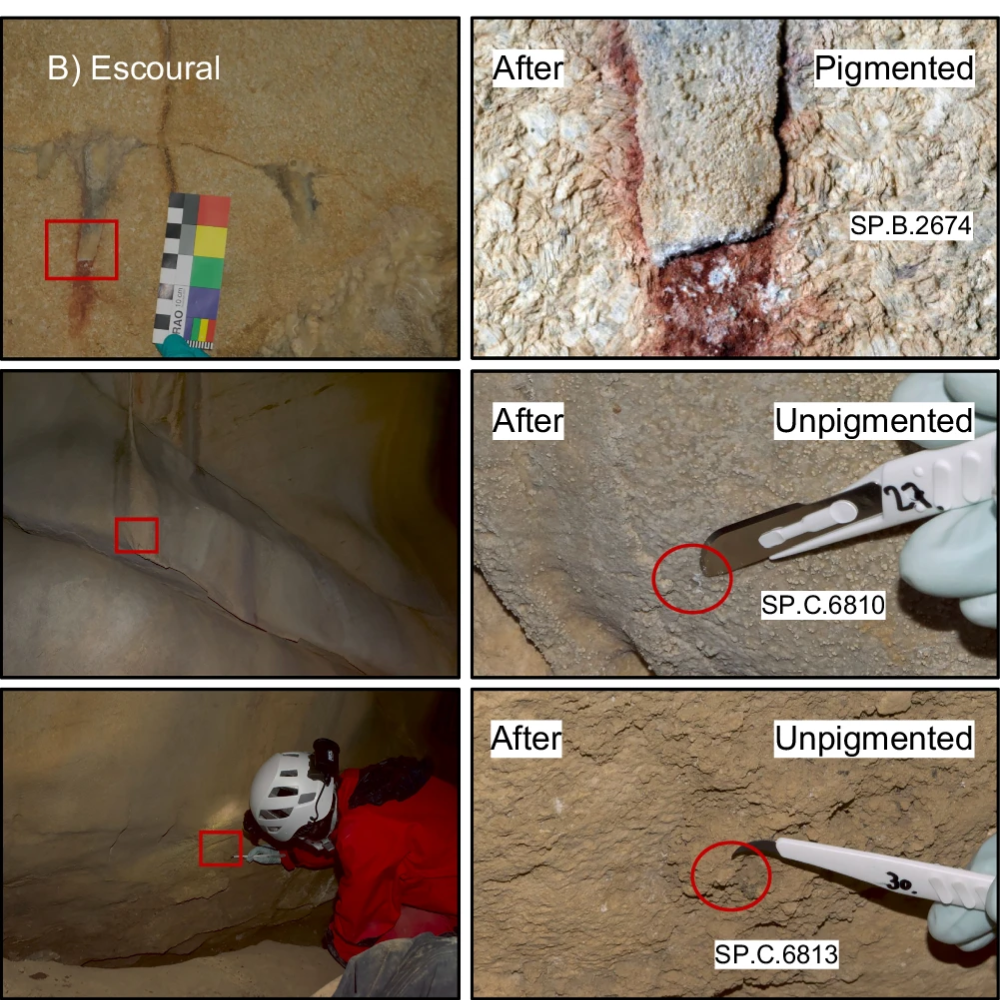
The images on the left provide a broader view of the sample context for A Covarón and B Escoural. The images on the right show close-up views taken before and/or after sampling.
Additional samples are already being collected from Spain’s Ardales and Nerja caves, where researchers suspect Neanderthals may have created some of the artwork.”All of these things we can speculate; we can wonder,” von Petzinger told National Geographic. “But until you have it directly pulled off a wall, you don’t know for sure.”The findings were published in the open-access journal Nature Communications on 23 June 2026 in the paper Investigating ancient human DNA preservation on cave walls and in rock art. The study was authored by Alba Bossoms Mesa, Elena Essel, Louisa Jáuregui, Aurore Galtier, Elena I. Zavala, Kevin Nota, Merlin Szymanski, Julia Zorn, Hugo Gomes, George H. Nash, Pierluigi Rosina, Virginia Lattao, Luiz Oosterbeek, Carlos Carpetudo, Nelson A. Almeida, Carmen de las Heras, Pilar Fatás, Alfredo Prada, Lucía M. Díaz-González, M. Elena Sánchez-Moral, Alberto Martínez Villa, Mario Menéndez Fernández, José Julio García Arranz, Genevieve von Petzinger, Ana B. Marín-Arroyo, João Zilhão, Hipólito Collado Giraldo, Svante Pääbo and Matthias Meyer. Go to Source