
- Experts caution against human rights erosion and authoritarian tendencies.
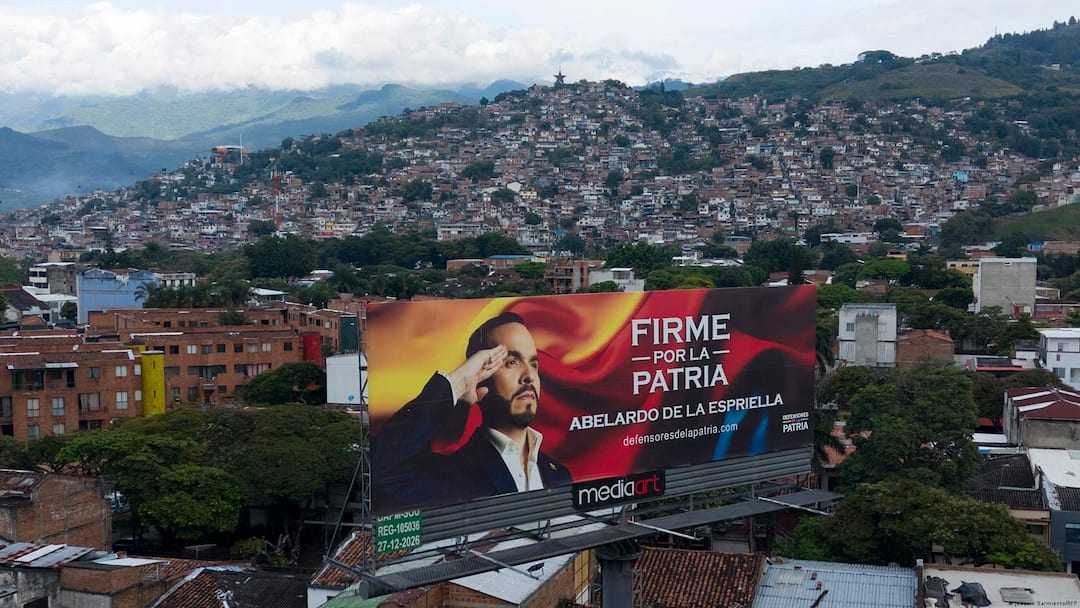
On Sunday, right-wing-extremist candidate Abelardo de la Espriella edged out left-wing opponent Ivan Cepeda to win Colombia’s presidential election in a campaign in which the former focused heavily on the nation’s security crisis.
In Chile, another extreme-right candidate, Jose Antonio Kast, took the reins from a leftist government in the March election. Kast, who is pursuing cuts to education and welfare while handing out tax cuts to businesses, openly talks about Chile’s 1973-1990 military dictatorship under General Augusto Pinochet as something positive.
And right-wing populist Javier Milei, a great admirer of US President Donald Trump, has run Argentina since 2023. He, too, says he is betting on austerity to save his financially destitute nation.
Latin America’s Biggest Country Will Go To The Polls This Fall
Right-wing, conservative or economic liberalist forces now govern Bolivia, Costa Rica, Ecuador, El Salvador, Honduras, Panama, Paraguay and Peru as well.
Brazil, Cuba, Guatemala, Mexico, Nicaragua, Uruguay and Venezuela, on the other hand, are run by leftist-liberal or far-left governments.
Brazil, the largest and most populous country in Latin America, will head to the polls this fall in a race that pits incumbent Luiz Inacio Lula da Silva of the country’s leftist Workers’ Party against Flavio Bolsonaro, the far-right son of the country’s jailed former president, Jair Bolsonaro.
Trend Is Obvious, But What’s Driving It?
Political control has reversed in eight Latin American countries since 2023 — left to right in six cases, right to left in the other two. But what’s behind the shift?
Sabine Kurtenbach, head of the German Institute for Global and Area Studies in Hamburg, Germany, said recent right-wing victories can be boiled down to three closely related issues: extreme social inequality, high crime rates and a lack of rule of law — and the fact that incumbents have consistently failed to get these under control.
In Colombia, Abelardo de la Espriella promised voters he would take on armed guerrillas and drug cartels. Kurtenbach called this “punitive populism,” or the “Bukele model” — after El Salvador’s controversial President Nayib Bukele, who declared a state of emergency in the country three years ago. Since then, more than 75,000 Salvadorans have been jailed, many without trial.
Reaction To The ‘Pink Tide’ Of The Early 2000s
Jonas Wolff, a professor of political science specialized on Latin America at Goethe University in Frankfurt, Germany, points to security concerns and general voter dissatisfaction as reasons for the continent’s current lunge to the right. That, he said, is a reversal of a decades-long trend.
Many countries in the region suffered massive repression under right-wing military dictatorships between the 1960s and 1980s he said. This phase was followed by democratization and peace agreements, which in turn led to left-wing parties being allowed to stand for election.
“The early 2000s were marked by economic growth. In many countries, the so-called ‘pink tide’ brought left-wing governments to power,” Wolff told DW. “But that phase ended with the COVID pandemic at the latest.”
Kurtenbach also sees the current shift toward conservatism and even right-wing authoritarianism as a form of backlash against what voters view as left-wing governments’ inability to get economic stagnation, soaring crime rates and corruption under control.
‘Bukele Model’ Goes Hand-In-Hand With A Disregard For Human Rights
Political scientist Thomas Kestler from the University of Würzburg in Germany uses the analogy of a pendulum that has now swung to the right. Noting that he doesn’t really see a true right-wing ideological shift in Latin America, Kestler said recent razor-thin election majorities are more a reflection of deep political polarization in the region.
“I expect the pendulum to swing back in the not-too-distant future if promised successes don’t come to fruition,” said Kestler, who added that the majority of the voting public is fickle and diverse.
Moreover, in many South American countries, presidents cannot be directly reelected, or the office is subject to strict one-term limits, meaning “the cards are automatically reshuffled.”
Still, the continent’s lunge to the right could cement itself if campaign promises are kept. In El Salvador, for instance, Bukele has very much kept his promise to drastically reduce gang violence.
“The shift right is certainly a swing of the pendulum — but one that is tied to a disconcerting principle,” said Wolff. “The degree to which right-wing forces openly call fundamental civil and human rights into question is new.”
Right-wing voters, observed Wolff, think it’s time to turn back advances won by feminist and Indigenous movements, as well as those of sexual and ethnic minorities. The previously mentioned issues of security and the “Bukele model” also go hand-in-hand with a general disregard for fundamental human rights.
US Thumbing The Scale, Too
Wolff also said right-wing forces in both South and North America are cooperating and supporting each other wherever they can. US President Donald Trump, more than any, has aggressively sought to aid right-wing allies in other countries.
Last year, for instance, Trump not only issued pro-Milei statements in the run-up to Argentina’s parliamentary election, he also delivered billions in financial aid in an effort to slow the nation’s galloping inflation. He has also been a very vocal supporter of the Bolsonaro family in Brazil.
But the Trump administration is also resorting to measures that many observers say violate international law.
In Cuba, the US has heaped pressure on communist leadership by implementing an almost absolute oil embargo. And in January, Trump went so far as to order the US military to kidnap Venezuela’s left-wing authoritarian leader Nicolas Maduro and have him brought to the US. These are not the first instances of the US directly intervening in Latin American politics, however; it happened regularly during the Cold War, for instance.
All that being said, today’s rightward political shift is not simply a Latin American phenomenon. State institutions and established political forces are under pressure around the globe, simply because they have been unable to come up with the solutions voters are demanding. It’s no wonder that populists from both the left and the right are seeking to harness mass voter dissatisfaction with establishment parties for their own means.
Sabine Kurtenbach said it’s important to look beyond the current labels of “right” and “left” when analyzing what is going on, pointing instead to Wolff’s idea of looking at human rights and the rule of law.
“There are governments that recognize autonomy and the role of democratic institutions. And there are others, no matter if they are right or left, that don’t,” said Kurtenbach. “That is an important distinction.”
Disclaimer: This report first appeared on Deutsche Welle, and has been republished on ABP Live as part of a special arrangement. Apart from the headline, no changes have been made in the report by ABP Live.