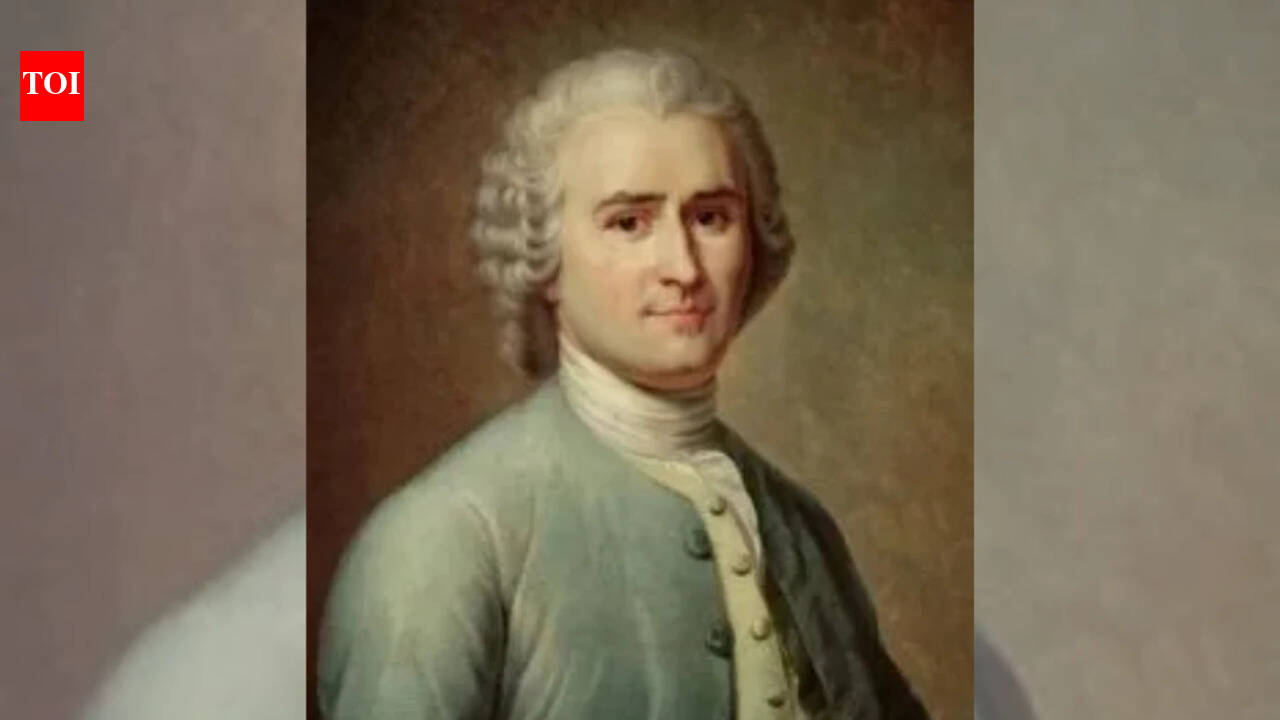

Jean-Jacques Rousseau was born in 28 June 1712
“Man is born free; and everywhere he is in chains. One thinks himself the master of others, and still remains a greater slave than they.”Few opening lines in political philosophy are as famous as this one. Written by Jean-Jacques Rousseau in 1762 as the first sentence of The Social Contract, the quote has survived for more than 260 years because it speaks to a question that every generation must confront: How can human beings be free while living under governments, laws and social rules?The sentence was not merely a philosophical observation. It was a challenge to the political order of Rousseau’s time and remains one of the most influential statements ever written about freedom and power.
Who was Jean-Jacques Rousseau?
Jean-Jacques Rousseau (1712-1778) was a Genevan philosopher, writer and composer who became one of the most important thinkers of the European Enlightenment. Born in Geneva, then an independent republic, Rousseau spent much of his life in France and became known for questioning established authority, social inequality and political power.His major works include Discourse on the Origin of Inequality, Emile and The Social Contract. Through these writings, Rousseau influenced political theory, education, democratic thought and modern ideas about citizenship. His work later inspired many of the intellectual currents behind the French Revolution.
What did Rousseau mean by ‘chains’?
At first glance, the quote seems straightforward. Human beings are born free, but society restricts them.However, Rousseau’s argument was more complex.He was not advocating a return to a lawless state of nature. Instead, he was asking why people obey governments and whether political authority can ever be legitimate. He observed that most societies of his time were ruled by monarchs, aristocrats or inherited privilege. People obeyed because of force, tradition or social hierarchy rather than genuine consent.The “chains” therefore represented more than physical restraints. They referred to political domination, unjust institutions and social arrangements that prevent people from exercising genuine freedom.The second half of the quote is often overlooked:“One thinks himself the master of others, and still remains a greater slave than they.”Rousseau argued that rulers are not necessarily free either. Those who seek power often become trapped by the very systems they control. Maintaining authority can make them dependent on status, wealth and political control.
The Social Contract and the ‘general will’
The central question of The Social Contract was simple: if people are naturally free, how can government be justified?Rousseau’s answer was the idea of a social contract. Political authority should not come from kings, conquest or inheritance. Instead, it should come from an agreement among citizens who collectively create the laws under which they live.This led to his famous concept of the “general will”. Rousseau believed legitimate laws should reflect the common good rather than the interests of a ruler or a privileged minority. In theory, when citizens participate in making laws that serve the public interest, they obey themselves rather than a master. That, for Rousseau, was true political freedom.
Why was the quote so controversial?
In eighteenth-century Europe, most states were monarchies. The idea that political power should come from citizens rather than kings was radical.The Social Contract was banned in several places shortly after publication. Authorities viewed Rousseau’s arguments as a threat because they challenged traditional ideas about authority and obedience. Rousseau faced persecution and was forced to leave certain regions because of the controversy surrounding his writings.His ideas later influenced revolutionary movements, particularly in France, where concepts such as popular sovereignty and citizenship became central political demands.
Why does the quote still matter today?
The world of 2026 is very different from the Europe of 1762, yet Rousseau’s question remains relevant.People today enjoy political rights that were unavailable in Rousseau’s era, including voting, constitutional protections and representative institutions. Yet debates continue over surveillance, censorship, economic inequality, corporate influence and individual autonomy.Many modern discussions echo Rousseau’s concern about whether people are genuinely free or merely living under systems they did not fully choose.The quote also resonates beyond politics. Social media algorithms, workplace expectations, consumer culture and public opinion can shape behaviour in ways that limit individual independence. While these influences differ from eighteenth-century monarchy, they raise similar questions about freedom and conformity.
Rousseau’s legacy
Rousseau’s importance lies not in providing final answers but in forcing society to ask difficult questions.Who should hold power?Why do citizens obey governments?What makes authority legitimate?Can freedom exist within organised society?More than two centuries after The Social Contract was published, these questions remain at the heart of democratic politics.Rousseau’s famous line endures because it captures a tension that every society faces. Human beings need laws, institutions and governments to live together peacefully. Yet they also seek freedom and self-determination.The challenge, as Rousseau saw it, is ensuring that the rules governing society are not chains imposed by others, but laws created by citizens themselves. Go to Source