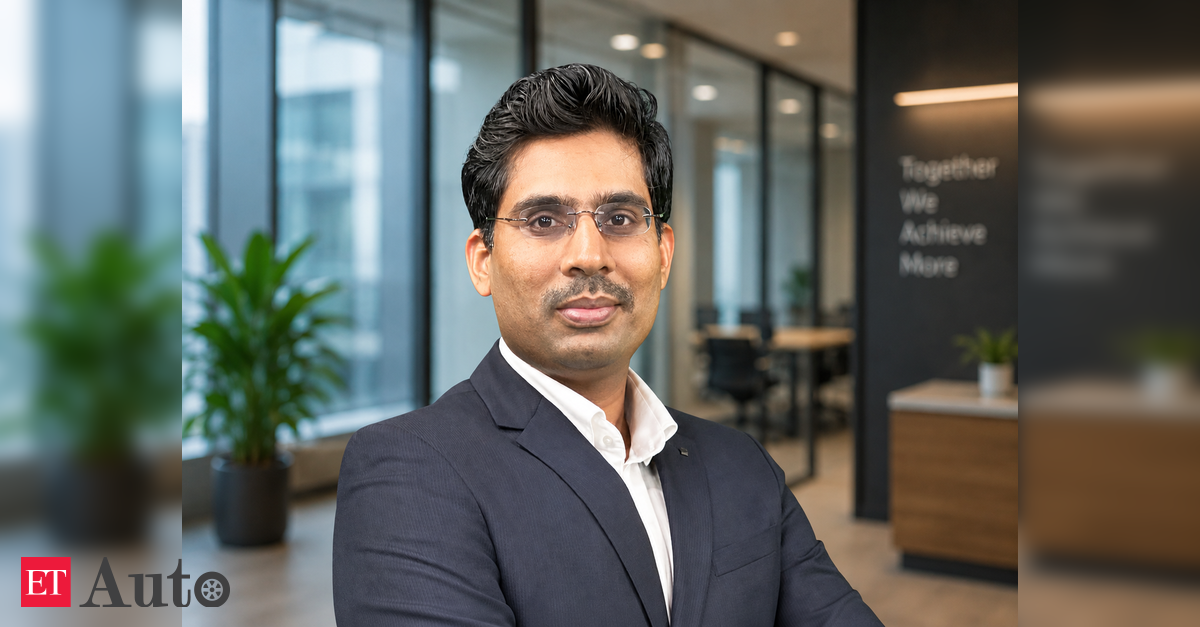

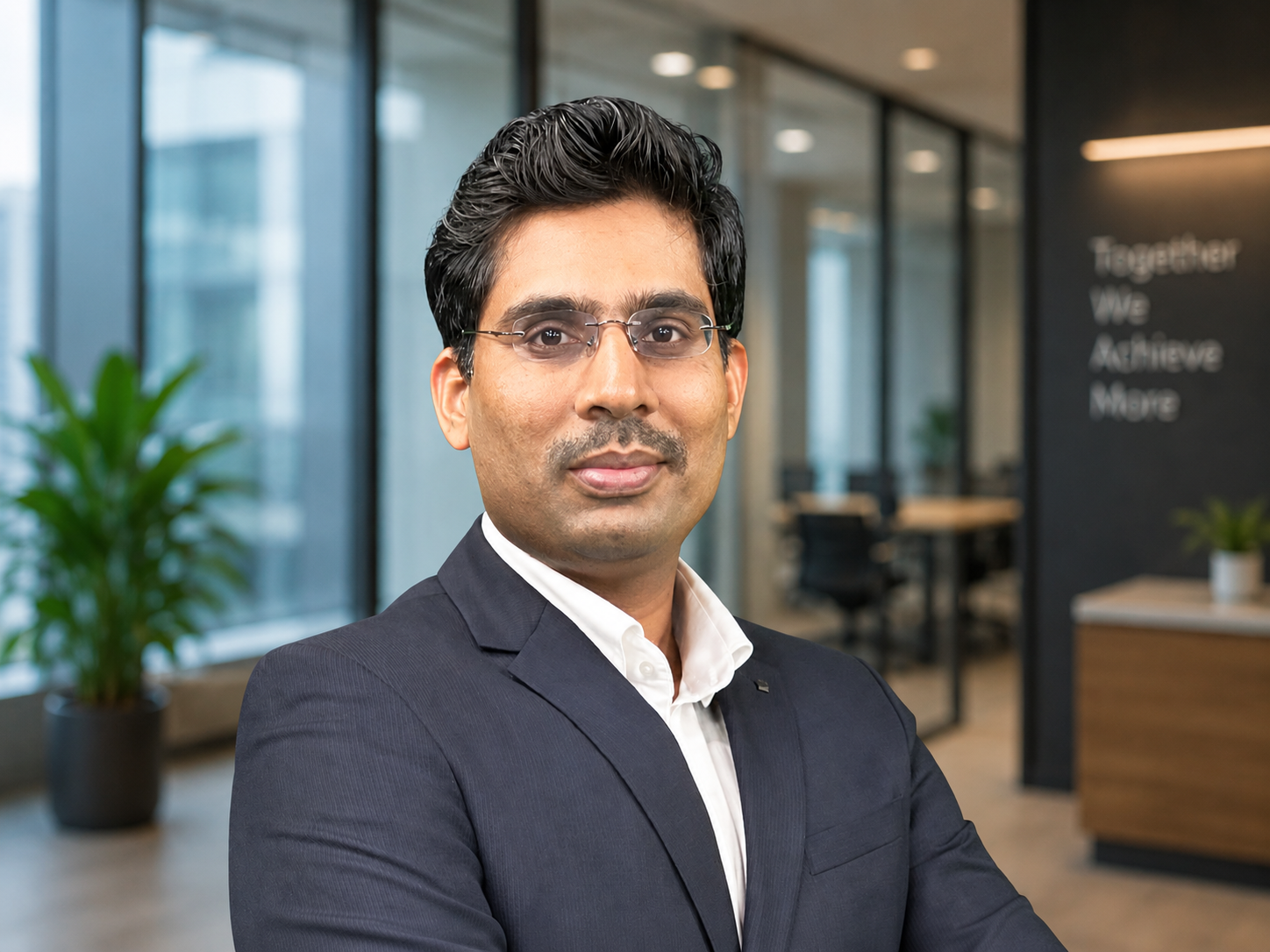
 Dr. Vikraman V, Chief of Renault Engineering, Renault Group India.
India’s automotive industry is entering a defining phase. As electrification gathers pace, software becomes central to vehicle development and localisation deepens, automakers are increasingly shifting their focus from manufacturing to engineering products tailored for Indian customers.
For Dr. Vikraman V, Chief of Renault Engineering, Renault Group India, ‘Made in India’ is about localisation, while ‘Made for India’ is about engineering. In an interview with ETAuto, he talks about Renault’s engineering philosophy, India’s multi-powertrain future, software-defined vehicles and why the next decade of mobility will be shaped as much by engineering as by technology choices.
Edited excerpts:
How did Renault adapt the new Duster for the Indian market? How important is India-specific engineering to fulfill customer requirements?
The Duster is an iconic brand, so our objective was clear from the beginning: To deliver best-in-class ride and handling, powertrain performance, passive safety and driving experience.
The vehicle is built on Renault Group’s Modular Platform (R-GMP), which originates from Europe. But we didn’t simply localise the European product. We used it as the starting point and re-engineered more than 90 per cent of the components for Indian conditions.
Take vehicle dynamics as an example. We completely recalibrated the suspension, steering, electronic stability systems and ride-and-handling package for Indian roads. Indian customers have unique expectations.
Similarly, safety was never treated as an optional feature. It was a target from the very beginning. Every structural decision, every calibration and every engineering change was aimed at achieving the highest safety standards while meeting Indian customer expectations.
That’s the difference between merely localising a product and engineering one specifically for India.
Does localisation today mean much more than manufacturing in India?
Localisation today is no longer just about manufacturing parts in India. If you’re already investing in supplier tooling, assembly lines and industrialisation, it makes sense to invest a little more in engineering and optimise the product specifically for Indian conditions.
This approach results in better performance, improved durability and a more relevant product for Indian customers. That’s why I always say Made in India means localisation, while Made for India means engineering. Engineering is what transforms a global product into one that truly belongs to India.
What does Renault’s long-term powertrain roadmap for India look like, and how do you see the market evolving over the next five years?
India is an increasingly fragmented market, and that’s why every OEM needs a multi-powertrain strategy. Today there is petrol, diesel, CNG, hybrids and EVs, each serving different customer segments. No single technology can address the entire market.
Renault’s roadmap reflects that reality. We are moving from being a mono-fuel company to offering petrol, CNG, hybrid and eventually EVs. We will also venture into flex fuels, up to E85 and E100, depending upon the government push and how the policy evolves.
If I look towards 2030, I expect diesel to gradually decline while CNG, hybrids and EVs continue to grow. Petrol will remain important, but its share will reduce over time.
OEMs, therefore, cannot afford to remain mono-fuel companies. If you offer only one technology, you simply reduce your addressable market. The right approach is to provide customers with multiple options and let them decide which technology suits their needs best.
How do hybrids fit into Renault’s long-term vision for the Indian market?
We are introducing our strong hybrid technology this Diwali to address the premium end of the market, and the initial response has been very encouraging. In fact, our hybrid allocation for this year is already fully booked.
We wanted to bring the technology to market quickly because ICE continues to account for the largest share of the Indian market. At the same time, we don’t want to go back to yesterday’s technologies.
That’s why I say ‘hybrid is the new diesel’. It offers many of the efficiency benefits of diesel while being better aligned with future emission requirements.
How does Renault view the EV opportunity in India?
Every OEM today needs an EV strategy. Nobody can ignore electrification. Renault has significant expertise in electric mobility globally. In Europe, we are among the leading EV manufacturers, so the technology already exists within the Group.
The question is not whether we will bring EVs to India. The question is when and how.
When Renault enters the Indian EV market, it should be with a product that is truly state-of-the-art – offering excellent value without compromising safety, durability or customer experience. Indian conditions demand additional engineering around battery safety, water wading, thermal management and long-term durability.
Our EV entry has to be meaningful. It should create excitement and showcase the best of Renault’s technology.
Software-defined vehicles are transforming the industry. How is this changing vehicle engineering?
The pace of change is extraordinary. Yesterday’s differentiator becomes today’s hygiene factor, and today’s hygiene factor carries no value tomorrow. That means OEMs have to continuously evolve cockpit technologies, ADAS, connectivity, software architecture and electronics.
The challenge becomes even greater because the same platform must support multiple powertrains, multiple vehicle segments and multiple feature levels. Your architecture has to be scalable across products, across variants and across time.
At the same time, affordability remains extremely important. So engineers have to balance software capability, hardware cost and future scalability without making the vehicle prohibitively expensive.
Fortunately, India’s electronics ecosystem is maturing rapidly. Today, we have a strong supplier base capable of developing many of these technologies competitively, and I believe, India is steadily narrowing the gap with global leaders.