
 "Will more sanctions break Russia’s will? US bets on economic pressure to push Putin to the negotiating table")

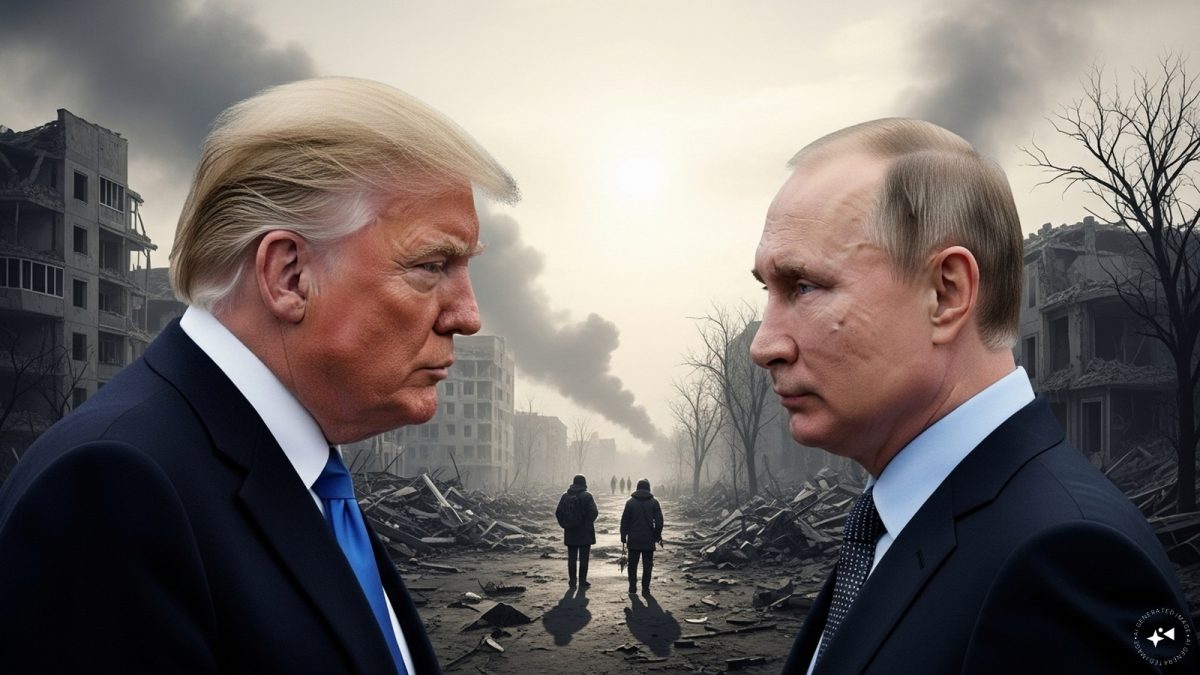
As the war in Ukraine grinds into its fourth year, the US and EU bet on tougher sanctions to break Russia’s resolve. But experts question whether economic pressure can truly force Putin to the negotiating table.
The Biden and Trump administrations have both wagered on economic pressure as the lever to force Russia’s hand in the war on Ukraine, banking on the power of sanctions to eventually bring President Vladimir Putin to the negotiating table. But with the war now well into its third year, can tougher sanctions really break the Kremlin’s resolve or are Western hopes misplaced?
The new push: Sanctions on oil and shadow fleets
US Treasury Secretary Scott Bessent said on NBC’s Meet the Press on Sunday that stronger and more coordinated economic sanctions along with European backing could ultimately push President Putin toward negotiations over the Ukraine conflict.
He called for secondary sanctions on countries buying Russian oil and urged deeper transatlantic coordination. “If the US and the EU do this together, we are in a race now between how long can the Ukrainian military hold up versus how long can the Russian economy hold up?”
Germany and France, meanwhile, continue to advocate for even stronger EU penalties, targeting “shadow fleet” oil tankers and financial enablers in third countries as part of the EU’s 18th sanctions package.
This renewed push comes as the grinding war in Ukraine enters its fourth year, with previous sanctions having delivered a mixed record of success. While the West has imposed over 16,000 restrictions on Russian entities, frozen hundreds of billions in assets and cut off access to key technologies, Russia’s economy has proven surprisingly resilient.
Aided by a pivot to a war economy and increased trade with nations like China and India, Russia’s GDP even saw growth in 2024, defying initial predictions of a swift collapse. Despite this, the long-term damage is undeniable.
Are sanctions working? The evidence so far
Sanctions have exacted a real toll. The EU’s new “dynamic” oil price cap is set 15% below global rates, further limiting Russian export revenue. Sanctions have battered the banking, tech, and energy sectors, pushing disposable incomes down by up to 25 per cent and slicing 10–12 per cent from Russia’s GDP compared to pre-war trends. Russia’s once-vaunted central bank reserves remain partly frozen and goods shortages have hit sectors from aviation to pharmaceuticals.
But Moscow has proven resilient and adaptive. Oil sales have shifted to India and China, who now conduct over 90 per cent of their trade with Russia in yuan and rubbles, bypassing Western financial chokepoints.
The Kremlin has weaponised its commodity exports, squeezing Europe by throttling gas supplies. Even after 18 rounds of EU sanctions, a record—Russia’s economy while battered, still grows on the back of war spending and new trade routes.
US reluctance and hope for ‘secondary sanctions
Recent broadsides put the onus on the US to tighten its stance. Despite growing pressure, Washington has shown hesitation in fully embracing the harshest economic measures against Russia. Experts point out that as of mid-2025, the US has sanctioned fewer Russian ships than the EU or UK since the end of the Biden term, a trend they say raises doubts about Washington’s current commitment.
Analysts argue that the threat of US “secondary sanctions”, penalising those who facilitate sanctions evasion or buy Russian oil, is most feared by global markets, often more than EU measures. The specter of these measures has pushed countries and companies to distance themselves from Russian oil.
However, there are limits. According to the International Monetary Fund, despite sanctions, Russia’s GDP actually grew by 3.6% in 2024, buoyed by military expenditure and trade with non-Western partners. Sanctions have not forced Putin to the table; if anything, they have pressured Russia to further decouple from the West while deepening ties with states willing to ignore or circumvent Western rules.
End of Article
&description=Will+more+sanctions+break+Russia%E2%80%99s+will%3F+US+bets+on+economic+pressure+to+push+Putin+to+the+negotiating+table)