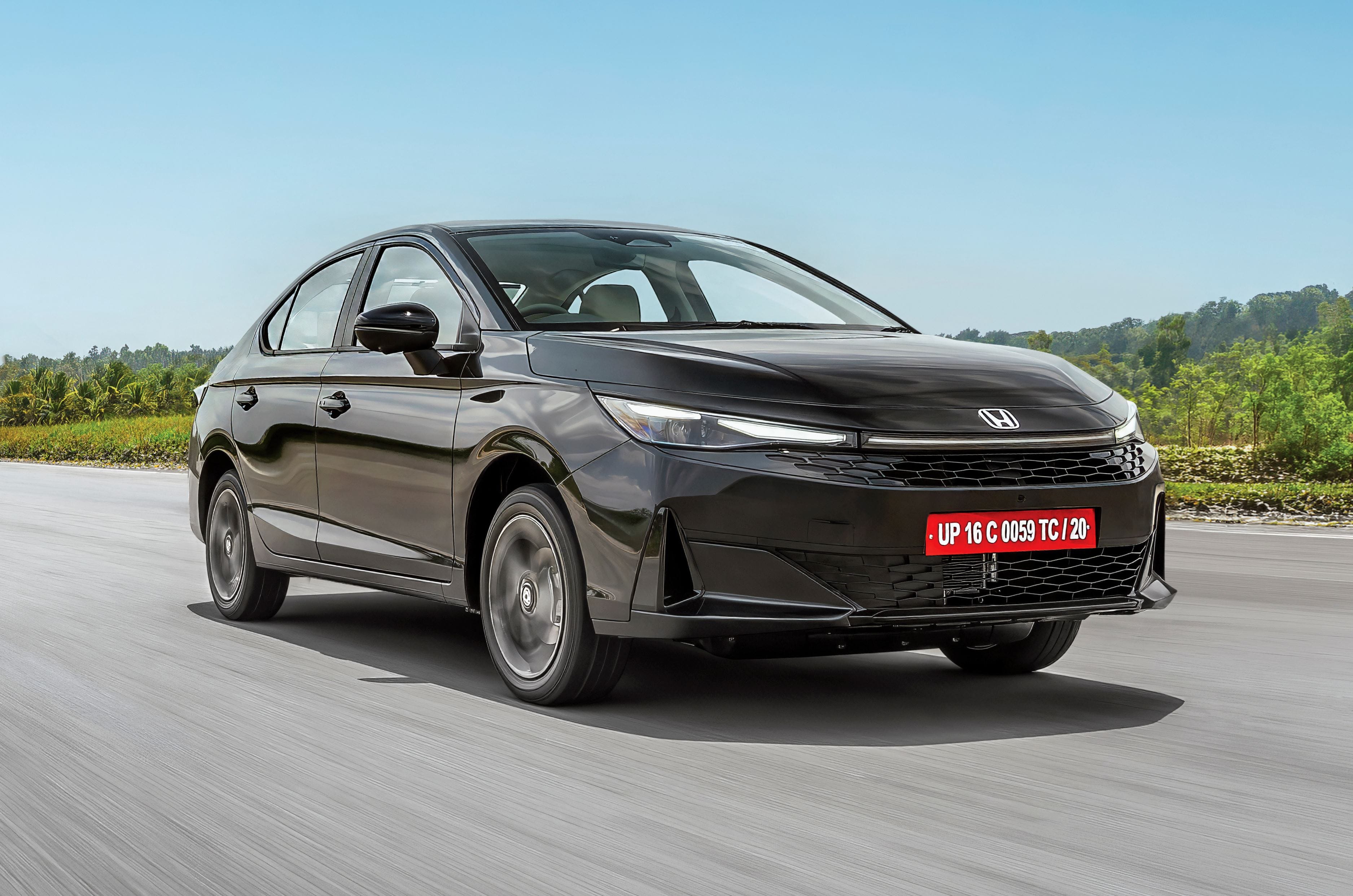

The Honda City is the longest continuously running nameplate among mainstream cars in India and has defined the C-segment sedan for years. The current, fifth-gen model has been on sale for six years, and Honda has now given it a much-needed shot in the arm with a redesigned front fascia, updated interior and new features to keep it fresh amongst newer rivals.
2026 Honda City Hybrid Exterior Design and Engineering –
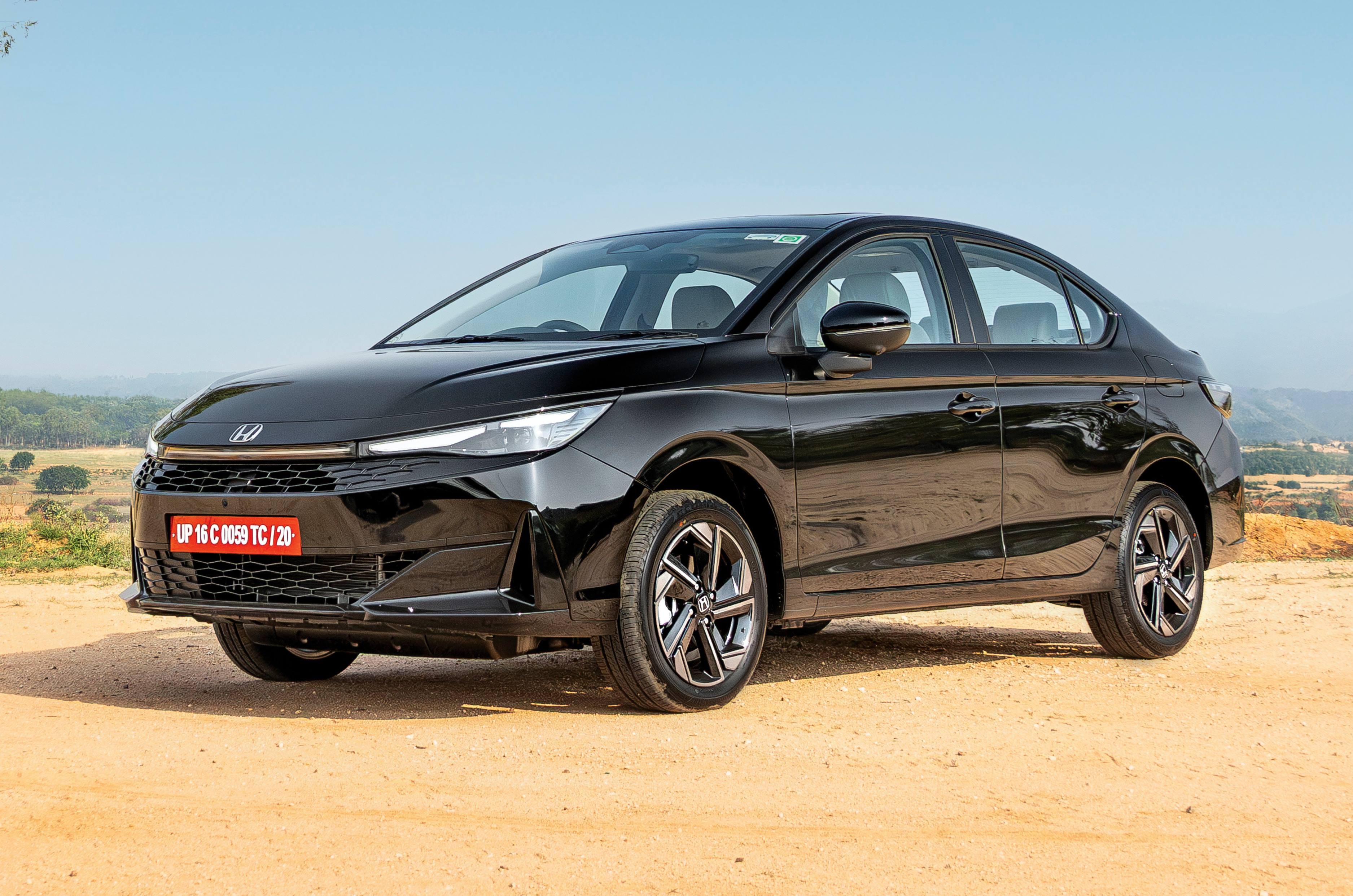
This isn’t the first facelift for this generation of the City, as Honda did roll out an update in 2023 too. Like earlier, there are no sheet-metal changes, but this time Honda has managed to give the City a dose of attitude with a much sportier-looking front end. There are sleeker LED projector headlights, connected by a light bar on higher variants, and it forgoes the thick chrome band in the front grille for a more discreet look. The grille itself is all-new and features a honeycomb-like pattern, while a new 2D Honda logo sits above it for a cleaner appearance. Lower down, the new bumper features functional air curtains on the outer edges in place of fog lamps.
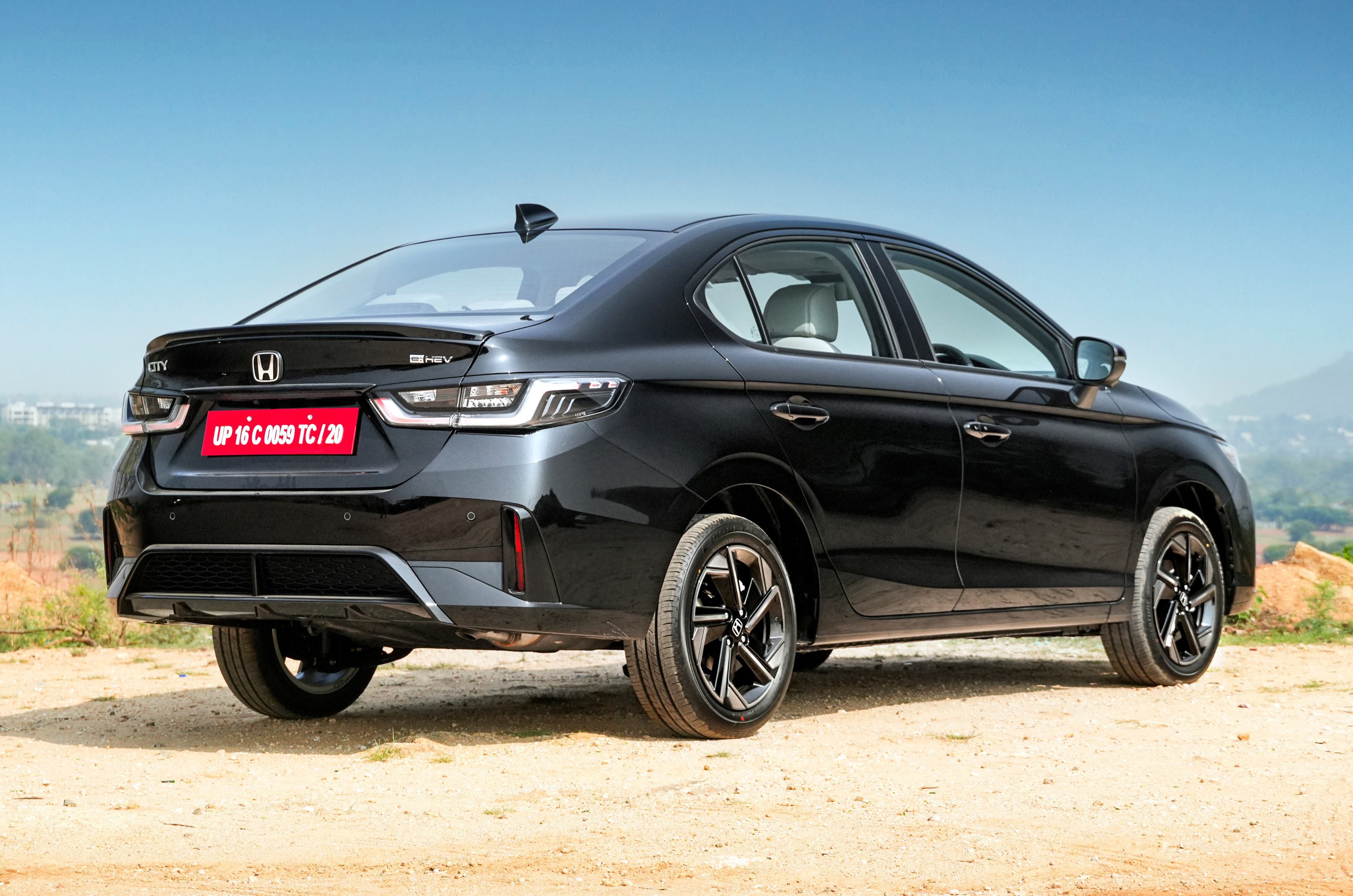
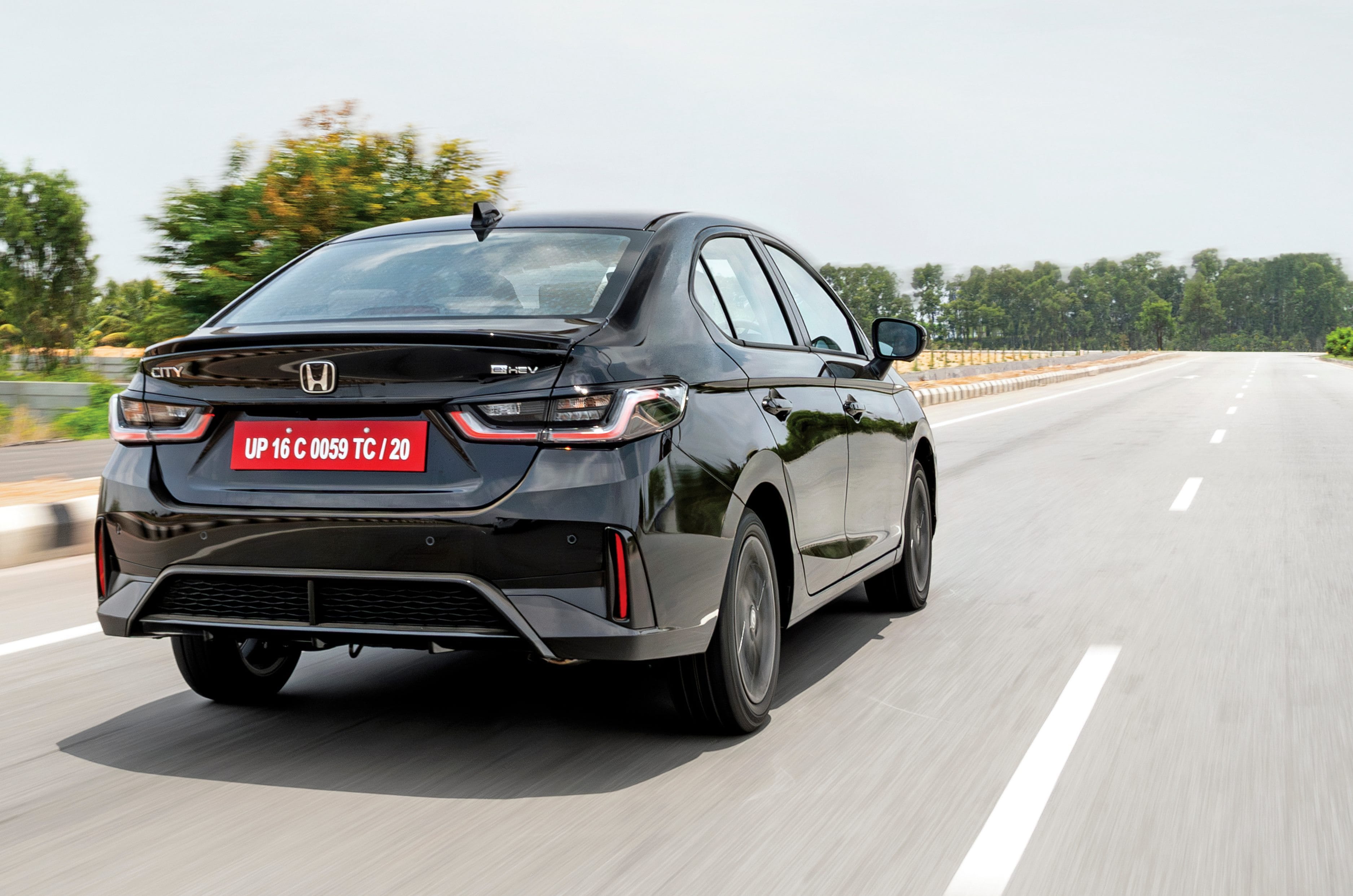
The side profile remains largely unchanged, though the 16-inch alloy wheels get a new design and a dual-tone finish. At the rear, the tail-lights are now clear-lens units and have received a smoked-out effect, which furthers their sporty look. Rounding off the changes is a new rear bumper, which gets a faux diffuser element with a honeycomb grille in the centre and vertical reflector units along the edges. For 2026, there’s even a new Crystal Black paint shade that you see here. Other colour options include Lunar Silver, Obsidian Blue, Radiant Red, Platinum White and Meteoroid Grey. Overall, Honda has done a good job of upping the City’s sporty quotient, and it comes across as an attractive-looking sedan.
2026 Honda City Hybrid Interior Space and Comfort –
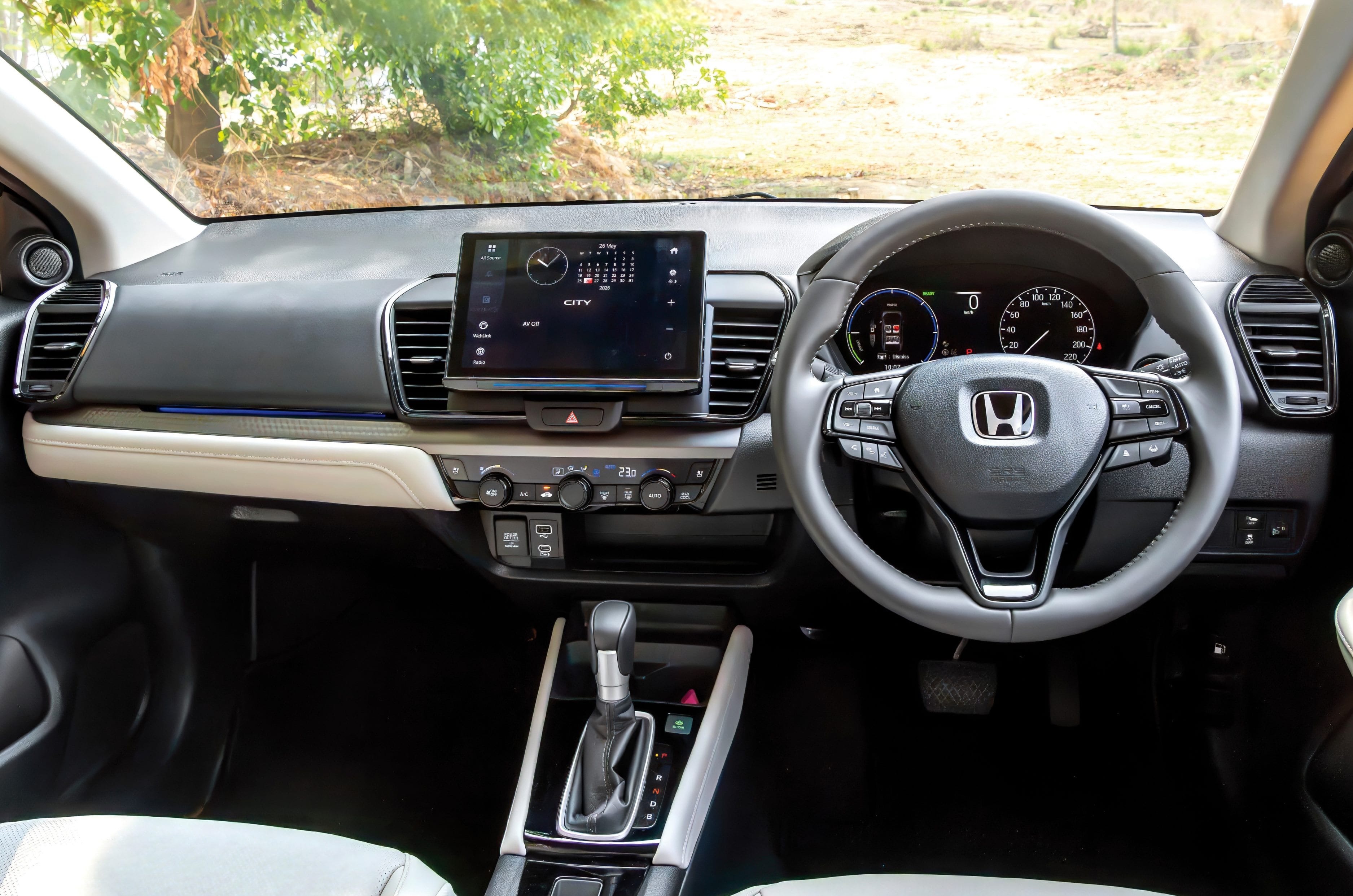
Inside, the overall design remains largely the same, save for some different upholstery and trim elements. The City now gets an ivory and black theme instead of the beige and black theme, and while this does help the sense of space inside the cabin, the light-coloured seats will no doubt be hard to keep clean. The dashboard now features a silver, textured trim piece instead of the faux carbon-fibre element from earlier. The other big change is the larger 10.1-inch touchscreen on the dash, but we’ll get to that later.
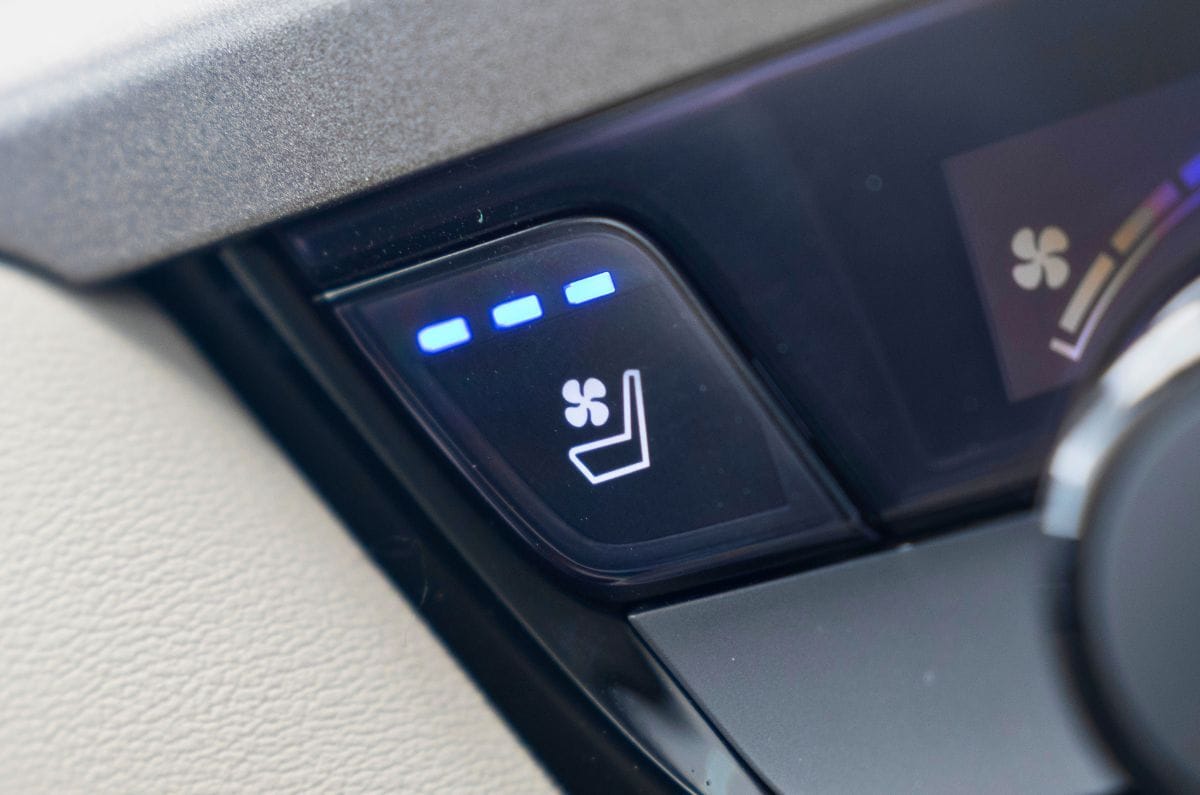
Not much has changed otherwise, but that isn’t a bad thing, as the City’s cabin remains well-appointed and certain bits still feel high-quality, like the climate control knobs that are satisfying to operate, the superbly executed part-digital instrument cluster, and the plush, comfortable seats. The accommodating front seats now feature ventilation and redesigned headrests, though electric adjustment is still missed.
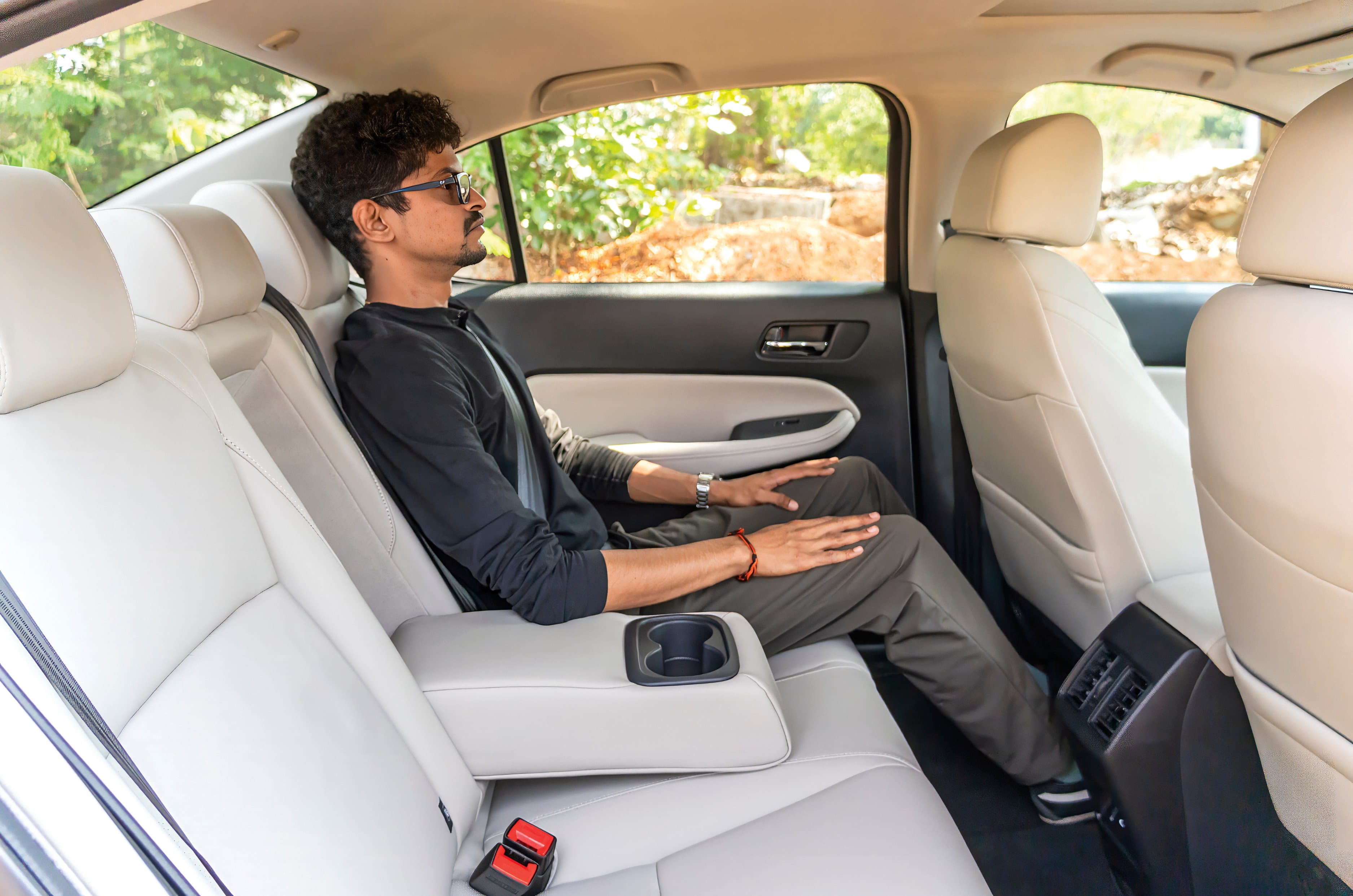
The rear seat remains a comfy place to be, with good legroom, a decent amount of headroom and the soft, sofa-like cushioning. You get a centre armrest with cupholders, dedicated AC vents, Type-C charging ports and a sunshade for the rear windscreen. Sunshades for the windows would have been nice to see, however, and rear headrests are still not adjustable.
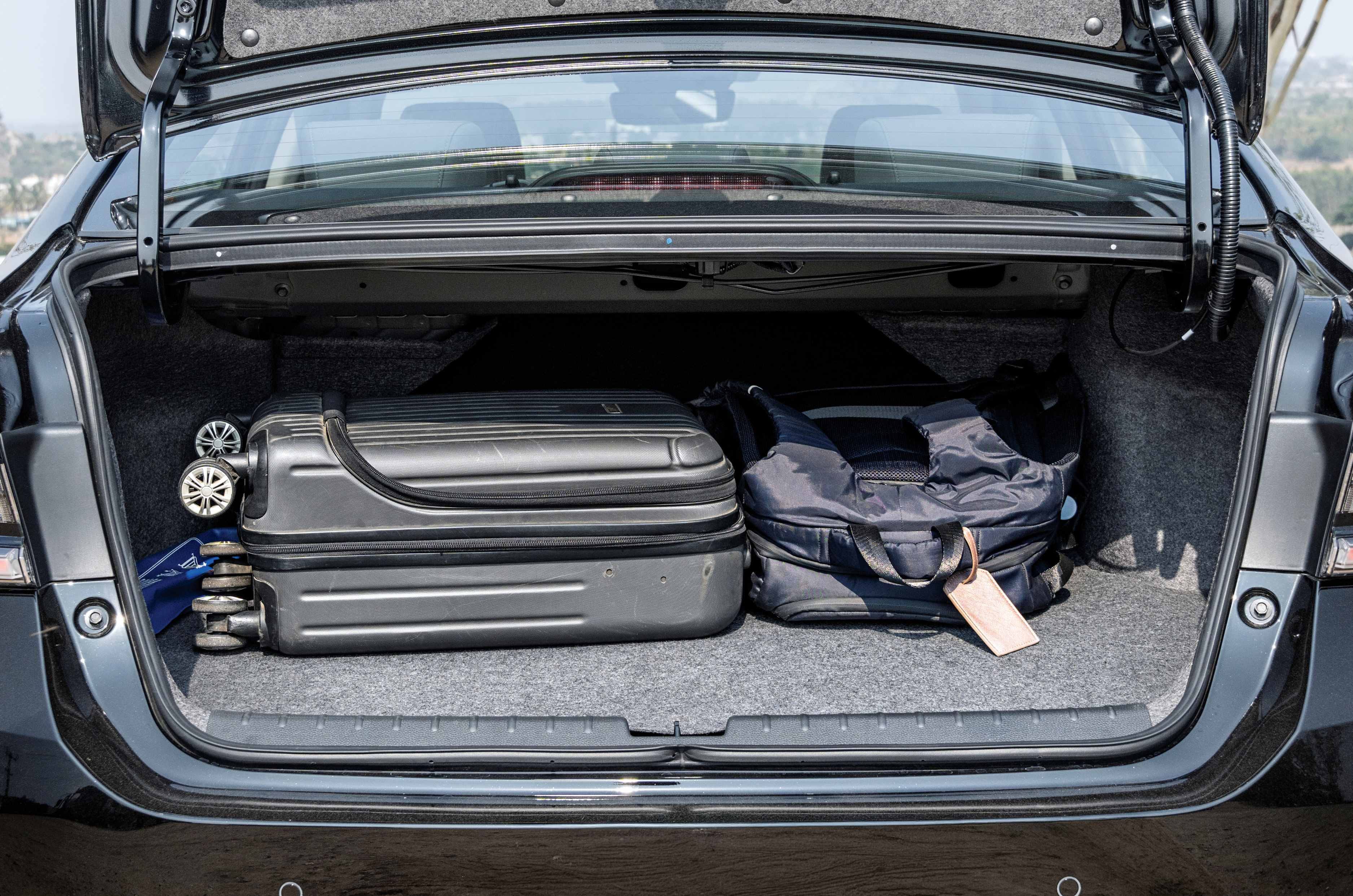
The boot is 506 litres on the petrol version, although the hybrid offers considerably less space due to the position of the lithium-ion battery under the floor. What’s nice, though, is that you still get a space-saver spare tyre.
2026 Honda City Hybrid Features and Safety –
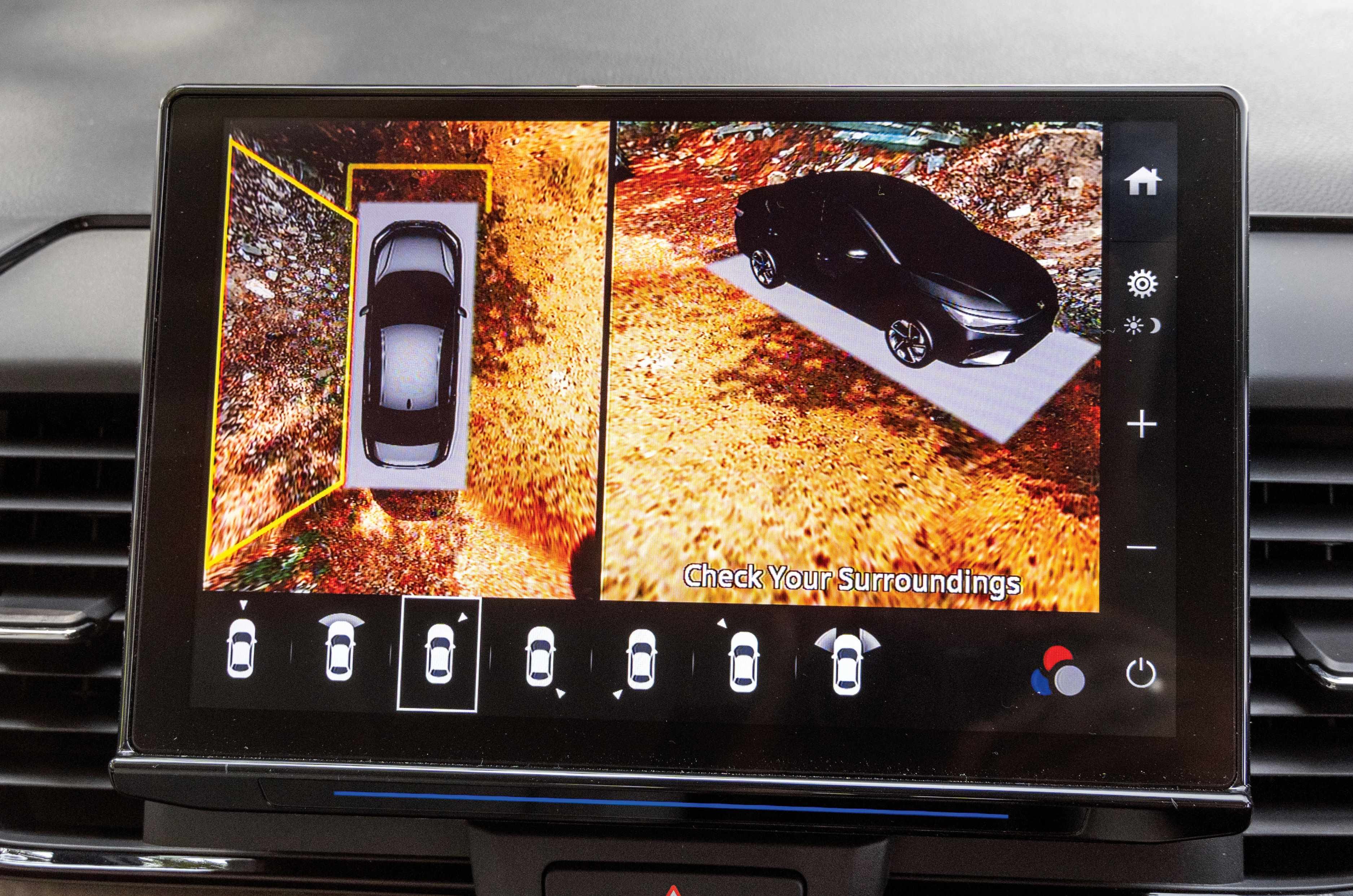
As for features, there are three main additions. The City now features ventilated front seats, which proved to be effective on our hot shoot day. Next is a 360-degree parking camera, but while it’s a nice addition, the resolution and graphics are simply too low-resolution, and it even glitched a few times on our drive, refusing to show the feed from the front camera or to engage at all.
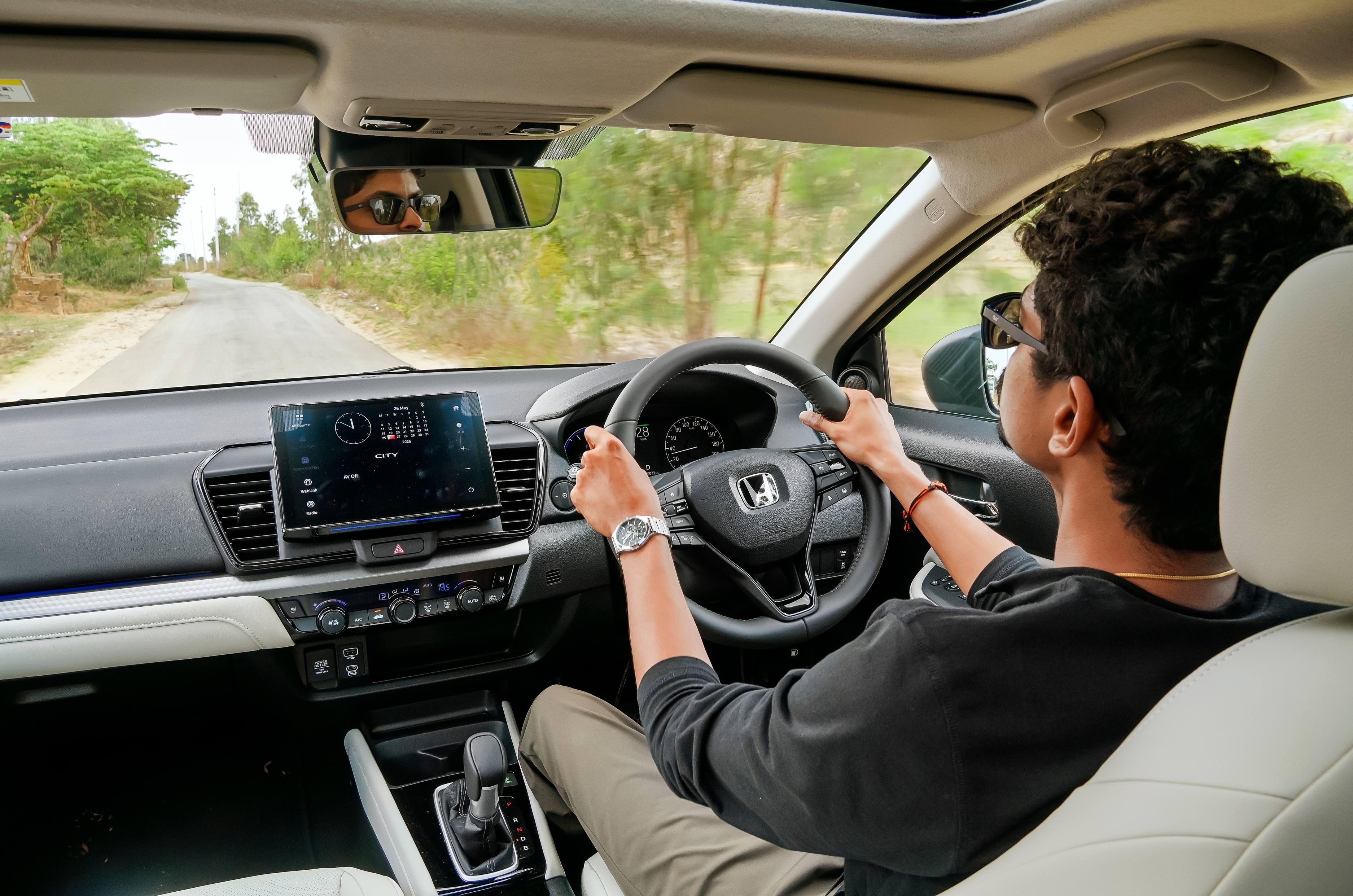
Then there’s the new, free-standing 10.1-inch touchscreen. It’s angled too sharply and is not bright enough, even at its brightest setting. As such, it picks up reflections too easily, and most of the information is not legible during the day. This was an issue with the older unit too, and it’s disappointing that Honda hasn’t fixed this with the update. The user interface, too, feels rather basic in both design and functionality and doesn’t operate as slickly as newer systems at this price point.
Other than that, the feature set remains the same, with an 8-speaker sound system, ambient lighting, wireless Apple CarPlay and Android Auto, a wireless phone charging pad, connected car tech, a sunroof, an electronic parking brake and a rear windscreen sunblind. Features like powered front seats and a branded audio system would have sweetened the deal, though.
The City’s safety kit includes the lane-watch camera, hill-start assist, 6 airbags and an ADAS suite, which includes lane-keep assist, adaptive cruise control, collision avoidance, and more, just like earlier. On our brief test drive, we didn’t get a chance to extensively test the ADAS features, but they worked as intended.
2026 Honda City Hybrid Performance and Refinement –
The Honda City remains mechanically unchanged, so it continues with the tried-and-tested 121hp, 1.5-litre, four-cylinder, naturally aspirated petrol engine that can be had with either a 6-speed manual or a CVT automatic. However, we didn’t get to drive either.
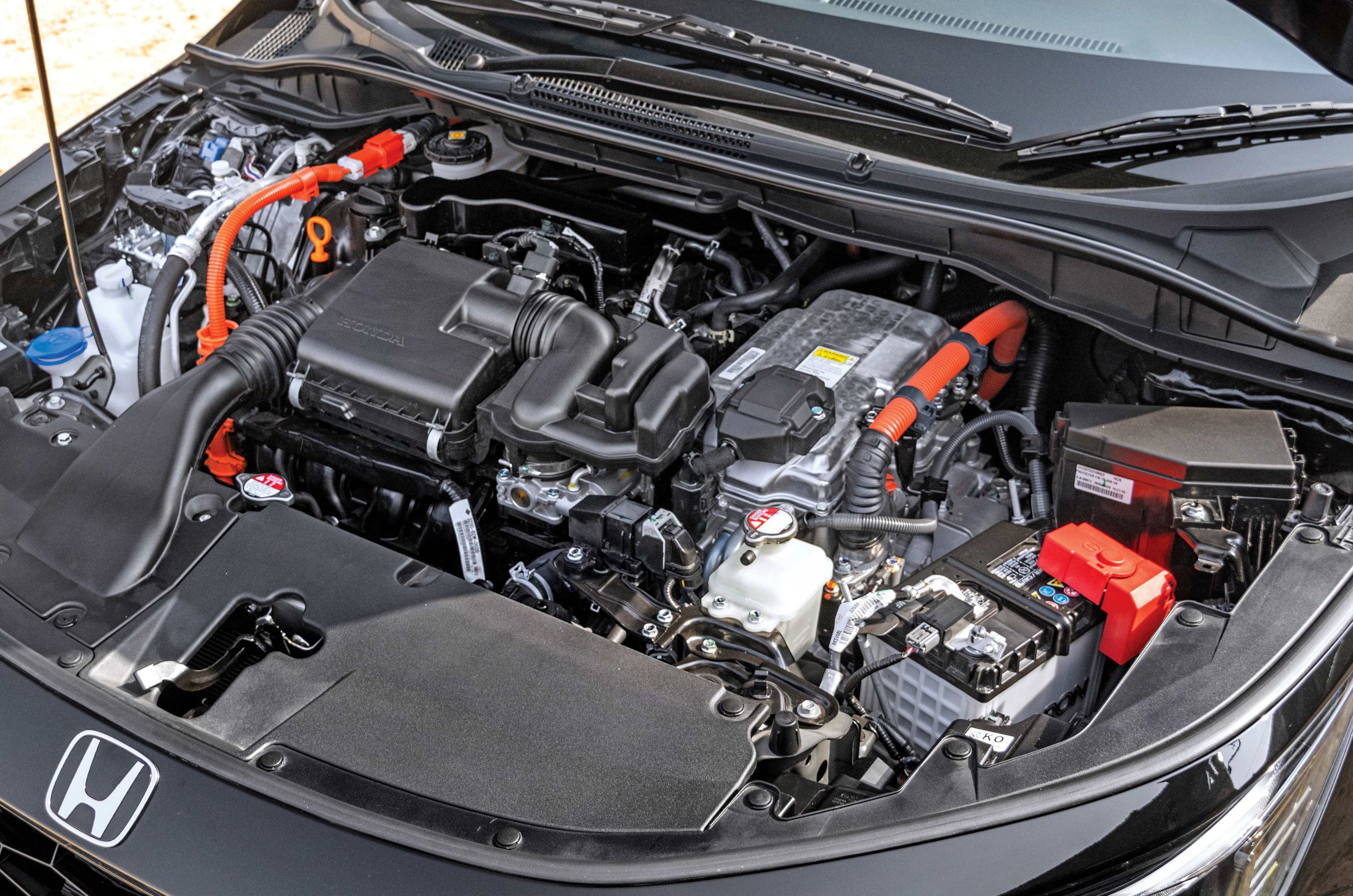
Instead, we got to drive the other powertrain option, which is the ‘e:HEV’, or strong hybrid – the only one of its kind in this segment. This comprises a 1.5-litre Atkinson cycle petrol engine and two electric motors – a 109hp traction motor that draws power from the secondary lithium-ion battery to power the wheels, and a 95hp motor-generator that charges the battery using the petrol engine. Total system output stands at 126hp and 253Nm, and it comes mated to an e-CVT automatic gearbox.
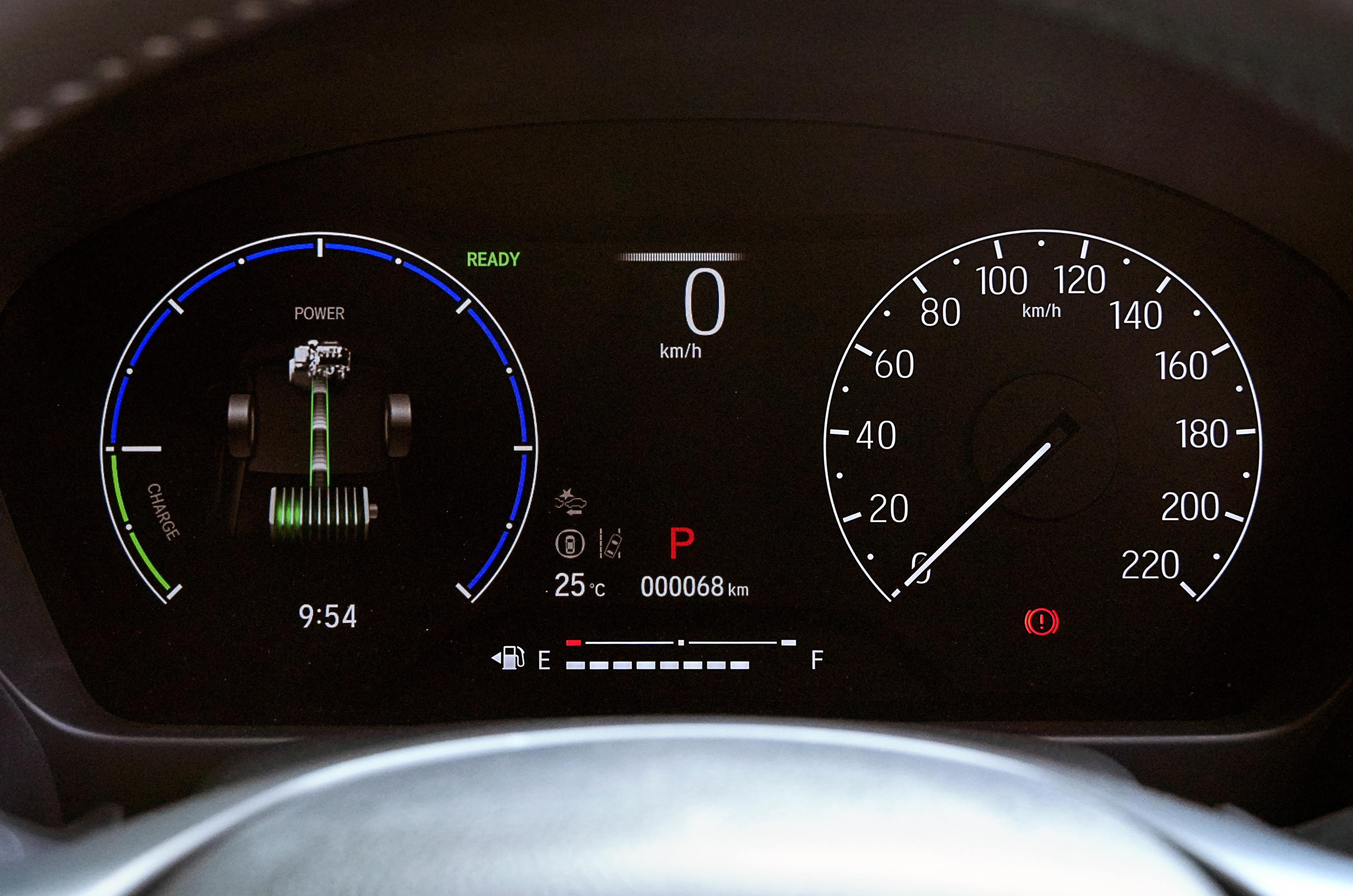
The hybrid’s intelligent system automatically toggles between its three drive modes – Electric, Hybrid and Engine – based on various parameters like the vehicle speed, road angle and throttle response, among other things. The system has been calibrated to remain in full EV mode as much as possible, so long as the battery has enough charge. Even at traffic lights or while idling, it mainly draws energy from the lithium-ion battery, so you’re sitting in a cool cabin with the air-con running normally, and the car will not waste fuel like a regular ICE vehicle. In Hybrid mode, the power is supplied by the motor and the engine in tandem. And when the battery is out of charge, the system will switch to Direct-Drive mode, where the engine powers the wheels, while the generator simultaneously charges the lithium-ion battery. The entire system is cleverly engineered, and there’s even a nifty power-flow graphic in the cluster, which shows you the hybrid system in action.
The transition between the modes is seamless, the engine is refined and vibe free, and, in addition to being far more responsive than the standard petrol, thanks to the electric assist, it offers excellent real-world efficiency. It’s worth noting that you can’t manually toggle between the modes.
2026 Honda City Hybrid Mileage and Efficiency –
Honda claims an efficiency of 27.26kpl for the City hybrid. Our brief test drive meant we weren’t able to put it through our instrumented real-world mileage test, but the MID did display around 20kpl for the majority of our drive, which is impressive. Meanwhile, the City 1.5 petrol has a claimed mileage of 17.77kpl with the 6-speed manual gearbox and 17.97kpl with the CVT automatic.
Ride Comfort and Handling –
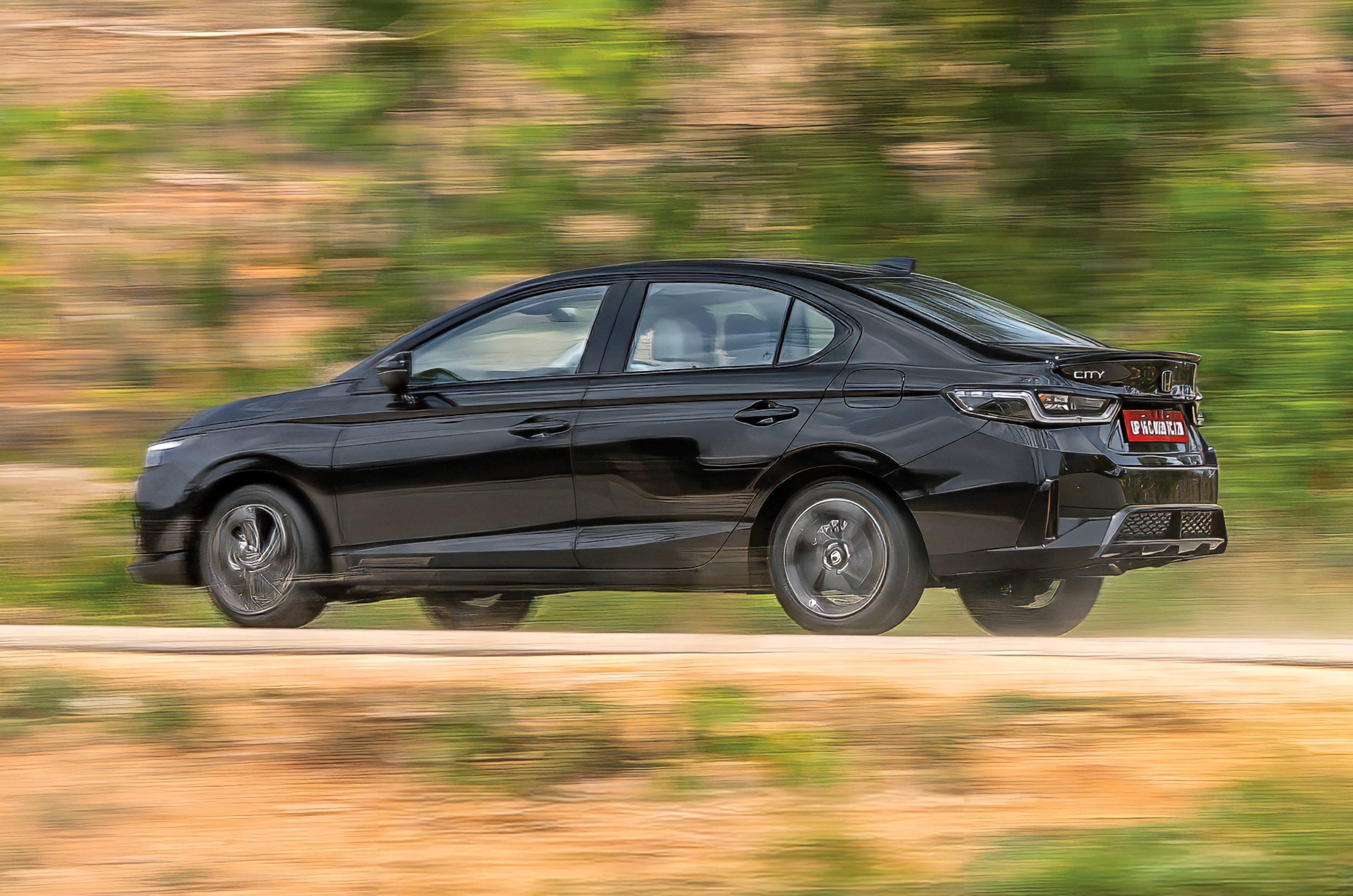
As before, the City feels reassuring and composed from behind the wheel, with a ride that smoothens out broken roads with an impressive level of sophistication. High-speed stability is solid, and paired with well-weighted steering and predictable handling, there’s proper fun to be had on a spirited drive along a winding road. That said, refinement could have been better. Engine and road noise filter into the cabin more than you’d expect, which slightly takes away from the otherwise polished driving experience.
2026 Honda City Hybrid Value for Money –
The 2026 City facelift is priced from Rs 12 lakh for the base SV petrol manual, and up to Rs 21 lakh (introductory, ex-showroom) for the range-topping ZX+ hybrid you see here. While the starting price remains the same as before, the top-spec petrol-CVT variant now costs Rs 1.08 lakh more, and the City e:HEV also sees a price hike of Rs 1 lakh. Considering how incremental the changes are, the price hike is hard to digest.
As before, the Honda City’s strengths remain – a spacious and comfy cabin, user-friendly controls, a smooth and efficient hybrid powertrain, and the peace of mind associated with Honda ownership. The sportier styling and added features also do their bit to make the City feel more contemporary. The new touchscreen and 360-degree camera should’ve been of a higher quality, and Honda could’ve even used this opportunity to pack in some more features to one-up the competition. However, for those looking for a reliable, efficient, comfortable and fuss-free sedan, the Honda City still represents a good option.