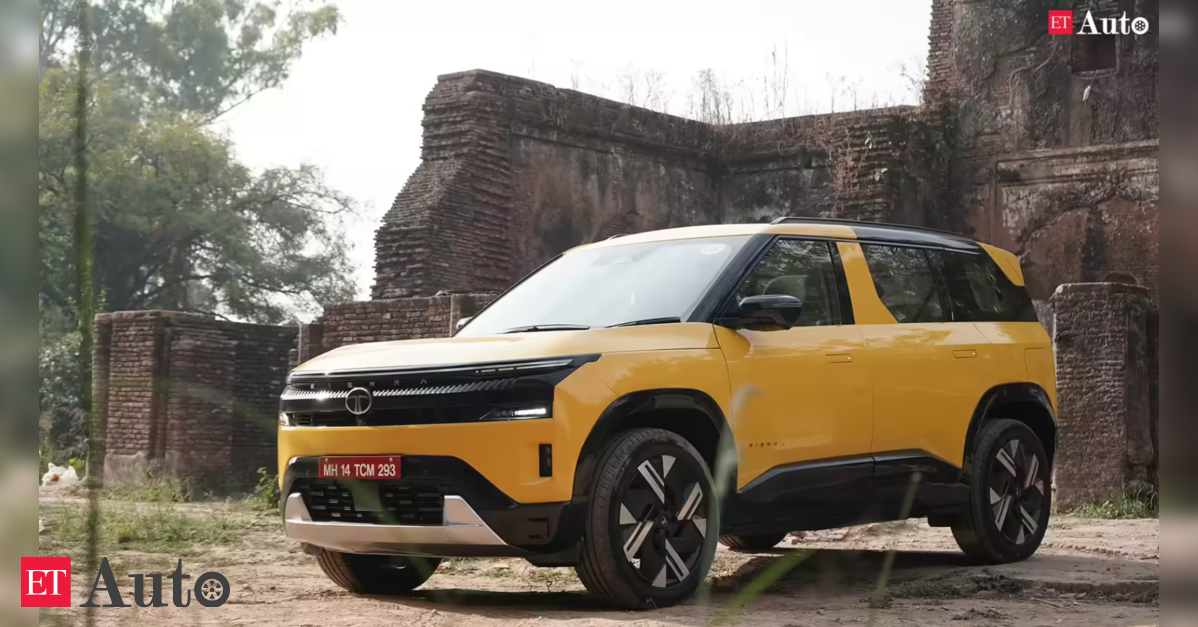

Indian carmakers are reclaiming the home turf from foreign rivals, underscoring a notable shift in competitive dynamics in the world’s third-largest passenger vehicle market.
Analysts say the scenario reflects local companies’ nimble strategic approach, marked by active monitoring and responding swiftly to markchanges such as surging demand for sport utility vehicles.
The share of local manufacturers such as Tata Motors and Mahindra & Mahindra reached a five-year high, at nearly 27 per cent in FY26, from 18 per cent in FY22, showed an analysis of annual vehicle registration data counted as a proxy for retail, compiled by the Federation of Automobile Dealers Associations (Fada).
Continuing Momentum This Year
In contrast, Korean and European firms ceded ground during the period, while Japanese carmakers-despite Maruti Suzuki retaining its market leadership-are seeing a gradual reshaping within their ranks.
“What we are seeing in FY26 is a relative outperformance of Indian automakers, not just on volume but on market relevance,” said Harshvardhan Sharma, group head, automotive at Nomura Consulting. “They have been quicker in aligning to local demand pockets, particularly SUVs and value-rich offerings, while a number of foreign carmakers have struggled to sustain the same pace of portfolio and network response.”
Sharma said Indian companies would continue their robust momentum this fiscal year, though there would be headwinds such as input cost inflation and supply disruptions.
A deeper look shows Mahindra and Tata Motors driving domestic gains through a steady pipeline of new SUVs, electric vehicles and model refreshes.
Mahindra’s market share nearly doubled to 13.4 per cent in FY26, from 6.8 per cent in FY22, while Tata Motors climbed to 13 per cent, from 11.3 per cent in the same period. Both automakers are now battling for the second spot.
Anchored by Maruti Suzuki, Japanese carmakers continue to control the lion’s share at nearly 49 per cent. Notably, Japan’s cumulative share looks broadly stable even as three of the four manufacturers-Honda, Nissan, and Maruti itself-saw a consistent erosion in their holdings. Maruti’s market share fell to an all-time low of 39.71 per cent in FY26.
The overall decline has, however, been offset by Toyota’s steady ascent, with its share rising to 7.1 per cent in FY26, from 3.9 per cent in FY22.
Among Korean brands, Hyundai Motor India’s market share continued to slide, falling to 12.3 per cent in FY26, from 16.3 per cent in FY22, weighed down by an ageing portfolio and absence of a blockbuster launch. Hyundai lost its second position in FY26-for the first time in a quarter of a century-slipping to the fourth rank behind Maruti, Mahindra and Tata Motors.
Kia India’s share rose marginally to 5.9 per cent, from 5.3 per cent, over the same period.
Meanwhile, the combined share of European carmakers fell to 4.3 per cent in FY26, from 6.2 per cent in FY22, though the pace of decline has eased. Within the bloc, Skoda Auto Volkswagen India offered a bright spot, with its share recovering to 2.3 per cent in FY26.
Chinese-origin brands led by JSW MG Motor and BYD India have a small but growing presence, with their combined share rising to 1.5 per cent in FY26 from near-negligible levels in FY22. Fada draws its retail sales data from the government’s Vahan portal. The portal captures data from 1,463 regional transport offices out of 1,466 across the country.
Analysts point to several structural factors behind the domestic surge.
M&M’s aggressive SUV offensive – spanning the Scorpio-N, XUV 3XO, and the new-generation Thar – tapped into India’s deepening preference for utility vehicles, which now comprise nearly two-thirds of all passenger vehicle sales.
Tata Motors, meanwhile, leveraged its early-mover advantage in EVs through the Nexon and Punch platforms to build a loyal urban buyer base. For the incumbents losing ground, the common thread is a slower product cadence-Hyundai’s struggles in particular reflect a widening gap between its existing product lineup and rapidly evolving consumer expectations around features, connectivity, and value.