
PC: Wikipedia
For many decades, one of the biggest debates in the history of human civilisation has been about the time when human beings first arrived in America. Some sites, especially in South America, were considered to have the earliest signs of human settlement, and many theories were based on these sites. However, recent scientific discoveries have challenged many of these long-established theories about human migration to America. Recent scientific studies have revealed that some of the most popular sites might not be as old as previously thought. This has created a new debate among scientists and has led to a re-examination of the time when human beings arrived in America. With new techniques and geological studies entering the scene, the migration of human beings to America has become more complicated than ever.
Why Monte Verde was considered a key site
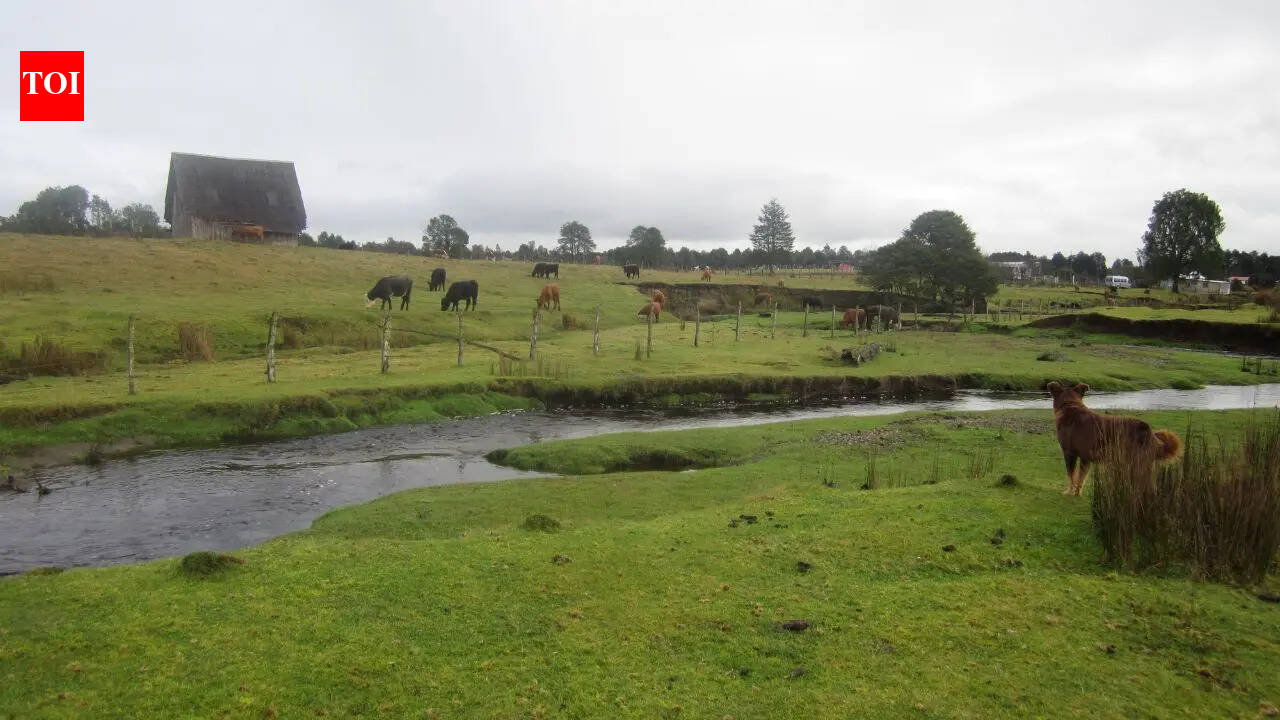
One of the most important sites in this debate is Monte Verde in Chile. This site had long been considered to be one of the oldest human settlements in the Americas and dated back to around 14,500 years ago. This site’s age contradicted the traditional theory of ‘Clovis first,’ which posited that humans first arrived in North America around 13,000 years ago. The age of Monte Verde supported the theory that humans may have arrived in South America earlier than expected and may have come via the coastal route.
New research challenges the timeline
Recent research has also challenged the original date of Monte Verde, proposing that the site could actually be much younger. Recent research by Todd Surovell of the University of Wyoming re-examines original research on the date of these key archaeological sites in America.As discussed in the research published in the journal Science, there is no evidence to support the original date. The research suggests that human occupation of the site could have been between 4,200 and 8,200 years ago, rather than 14,500 years ago.This would have a major impact on the history of human migration to America. The site would no longer support the theory of human occupation before the Clovis culture, leaving scientists to re-evaluate the current theory.
What caused the dating error
This, according to researchers, could have been affected by geological activities. For instance, wooden and organic materials could have been displaced from old deposits to new deposits because of water currents and erosion.Moreover, the presence of a volcanic ash layer below the human occupation levels indicates that the site must be younger than it was thought to be. This layer has been dated to be about 11,000 years old, indicating when humans could have occupied the place.
Scientific debate and disagreement
In spite of these findings, the new interpretation is not yet widely accepted. Some archaeologists think that the study might not have properly understood the geological information used. Others think that the study might not have used adequate information.The researchers who originally excavated the Monte Verde site think that the findings from the excavation are still valid. This is an example of the complexity involved in the interpretation of archaeological finds.
What this means for human migration theories
If Monte Verde is in fact younger than thought, this would change what we know of human migration in America. For many years, this site was used to prove early migration theories.Without this site, scientists may have to rely on other evidence, such as human footprints in North America.This would indicate that there may not be a simple pattern in human migration, and there may have been multiple migrations.
Why re-evaluating ancient sites is important
The re-dating of Monte Verde demonstrates the value of reviewing old discoveries with new technologies. New technologies in radiocarbon dating, sediment analysis, and geological studies enable scientists to build on previous research.The controversy over Monte Verde demonstrates that the history of human migration to America is far from clear-cut. Although this site was a key aspect of early theories on human migration, new research has sparked controversy and debate. As new research continues on this ancient site, so will our knowledge of this history. What is certain is that human history is more complex than ever thought, and many discoveries are still to be made in this field. Go to Source