
Credit: AI Generated
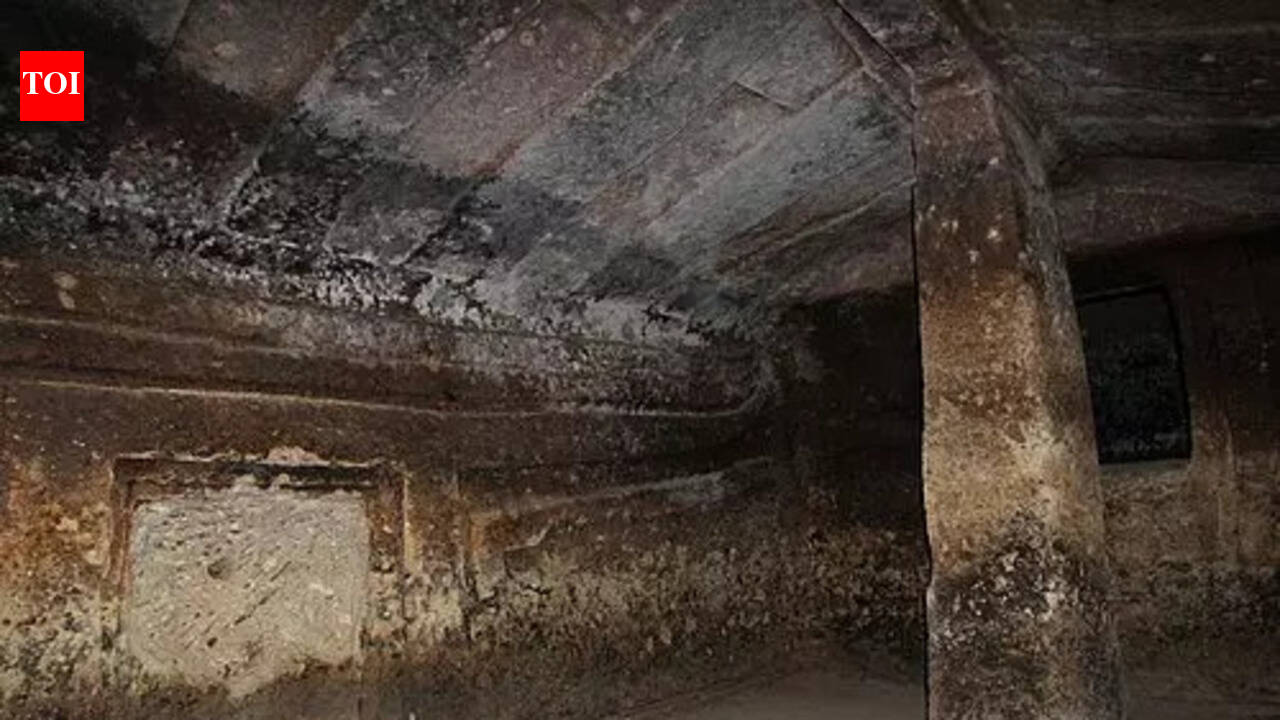
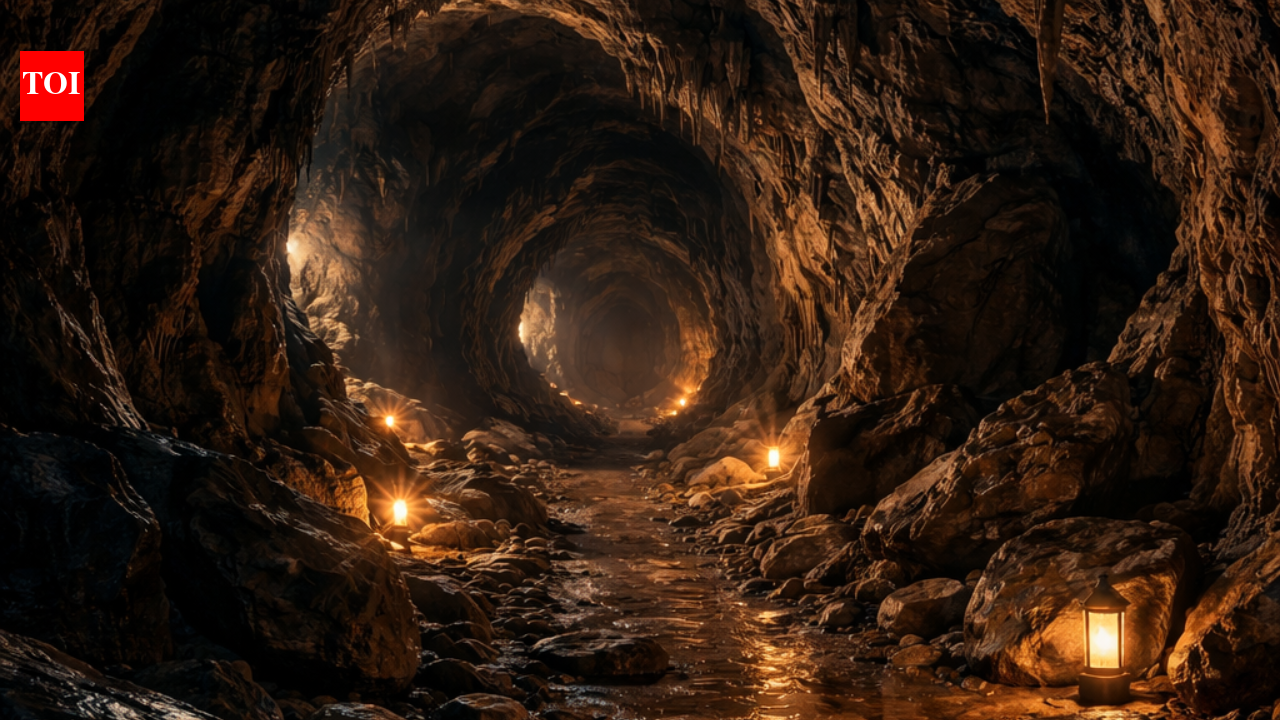
Beneath the rolling hills of southern Brazil and northern Argentina, scientists have found a hidden network of large underground tunnels. These tunnels were not created by humans or ordinary geological processes. Some passages reach over 550 meters in length and are wide enough for an adult to walk through upright. They are carved into hard sandstone and volcanic rock. Researchers have discovered clear parallel claw marks and uniform curves on the walls, indicating that a single, powerful animal shaped them, rather than random erosion or human mining. This discovery is now seen as a vast system of ancient “palaeo-burrows,” built by Ice Age megafauna, possibly giant ground sloths, tens of thousands of years ago.
Israel Iran War
What are these mysterious South American tunnels
The tunnels are neither mines nor early humans’ shelters, nor are they caves in the conventional sense. Rather, they are long, smooth-walled passageways with branching side passages carved out of moderately soft sandstone, weathered rock, and compacted sediment that would have been challenging for humans to chip away without tools. The authors of the study stress that there are no signs of habitation, tool marks, fire stains, artefacts, or evidence of human activity in the burrows. Geologists led by Heinrich Frank at the Federal University of Rio Grande do Sul have mapped more than 1,500 such structures in the Rio Grande do Sul region alone, describing them as “giant palaeoburrows” re‑shaping the underground landscape. The tunnels, which can be up to 600 meters long and 1.8 meters high, frequently extend tens of meters into the hills, creating a subterranean labyrinth that appears to be almost engineered.
Why scientists say they are not man‑made or natural
The shape and location of these tunnels are among the strongest indications that they are neither naturally occurring nor man-made caves. In contrast to the erratic patterns of water-worn rock or collapsed fissures, the walls are smooth, gently curved, and uniformly spaced with consistent claw-like ridges. On the other hand, these passages lack the obvious indications of tool use, ventilation, and settlement found in typical human mines or shelters.The tunnels were formed tens of thousands of years ago, before and along long-term human habitation in many of these regions, according to a study describing geological dating of the surrounding rock layers, ruling out recent human excavation. For a very powerful, clawed animal, the relatively compact rock surrounding them is still manageable, but not for a Stone Age digger without metal tools. Size, homogeneity, and the absence of natural or human signatures all point away from both humans and normal Earth processes, according to researchers.
The likely builders: Giant Ice Age sloths
The most widely accepted theory is that massive ground sloths, most likely belonging to the genus Megatherium or related giant sloth species, carved these tunnels. These animals have the strength to excavate large, deep burrows in soft rock and compacted sediments because they can reach a length of about 4 meters and weigh several tonnes. The idea that these extinct sloths were the burrow-makers is supported by fossil footprints and claw impressions discovered inside some passageways, which closely match their known anatomy.According to Frank’s research, which was published in the journal Ichnos, the largest tunnels, which are about two meters tall and wide, are the ideal size for such a massive creature, with widened chambers that indicate repeated use over many generations. There are even indications in certain sections that the animals returned to expand and modify the burrows, transforming them into semi-permanent havens from predators and harsh weather.
Why this discovery matters today
Scientists can now better understand how Ice Age megafauna shaped their surroundings by reshaping the ground beneath them as well as by walking on the surface, thanks to the discovery of such a vast network of palaeoburrows. The sheer quantity and length of the tunnels imply that these burrows formerly constituted a sizable subterranean “habitat” that affected soil stability, water flow, and even small animal communities. The tunnels serve as a reminder to contemporary geologists and archaeologists that elements that were once thought to be natural caverns or human constructions may actually have entirely different, animal-driven origins.A humble, almost cinematic glimpse into a hidden chapter of South American natural history is provided to the public by the image of giant, long-extinct sloths silently carving enormous homes beneath what is now farm and grassland. These tunnels are more than just passageways made of stone; they are fossilised behaviours that have been preserved in rock for thousands of years, waiting for modern scientists to decipher the history of the animals that once inhabited them. Go to Source