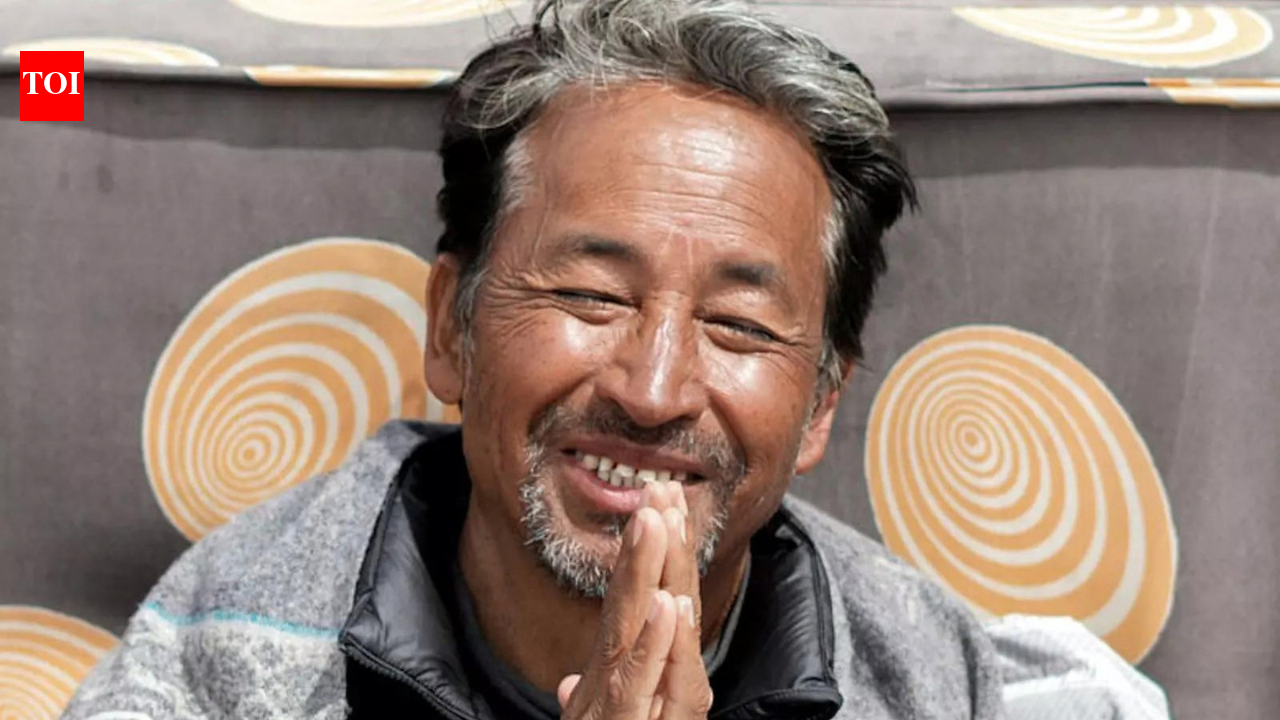

NEW DELHI: Centre on Saturday revoked the detention of climate activist Sonam Wangchuk with immediate effect by exercising powers under the National Security Act, the ministry of home affairs said.In a statement released, the ministry said that the “government remains committed to fostering an environment of peace, stability, and mutual trust in Ladakh so as to facilitate constructive and meaningful dialogue with all stakeholders.””In furtherance of this objective, and after due consideration, the Government has decided to revoke the detention of Shri Sonam Wangchuk with immediate effect by exercising the powers available under the National Security Act,” it added.
Israel Iran War
The government noted that it has been actively engaging with stakeholders and community leaders in Ladakh to address the aspirations and concerns of people in the region.However, it said that the prevailing atmosphere of bandhs and protests had affected normal life and economic activity.”The Government has been actively engaging with various stakeholders and community leaders in Ladakh with a view to addressing the aspirations and concerns of the people of the region. However, the prevailing atmosphere of bandhs and protests has been detrimental to the peace-loving character of the society and has adversely affected various sections of the community, including students, job aspirants, businesses, tour operators and tourists and overall economy,” the statement said.Wangchuk was detained on 26 September 2025 under the provisions of the National Security Act (NSA) pursuant to an order issued by the District Magistrate, Leh, with a view to maintaining public order. “Wangchuk has already undergone nearly half of the period of detention under the said Act,” the ministry noted announcing his immediate release.Earlier this week, the Supreme Court of India adjourned the hearing on a petition challenging Wangchuk’s detention to March 17.During the proceedings, government authorities told the court that Wangchuk’s remarks had encouraged young people to organise protests similar to movements seen in Nepal and Bangladesh, and had even referenced an uprising similar to the Arab Spring.The government argued that such statements could trigger instability in the strategically sensitive border region. Officials also linked him to violence in Leh on September 24 last year that left four people dead and more than 160 injured.Wangchuk had been detained after the Centre alleged that he had incited unrest in Ladakh. His wife, Gitanjali Angmo, had approached the Supreme Court challenging the detention. The court first took up the petition on October 6 last year and issued a notice to the authorities.