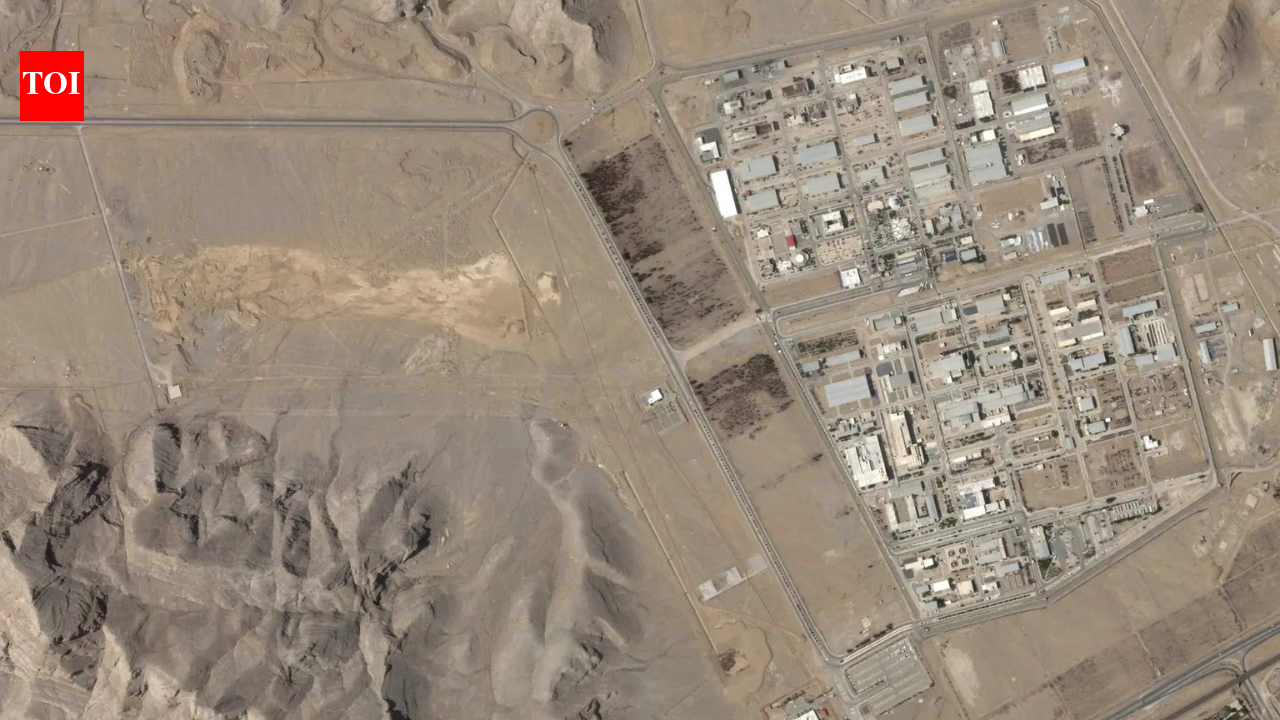

Isfahan nuclear facility, Iran (PTI file photo)
Iran a week away from producing bomb-grade uranium? Rising tensions in Tehran once again worry Uncle Sam, as President Donald Trump’s special envoy to the region, Steve Witkoff, expressed concerns amid escalating strains between the Trump administration and Ayatollah Khamenei’s establishment. He also pointed out the domestic pressure in Tehran, referring to the resurfacing of protests in the Middle Eastern country.The Donald Trump administration remains concerned about Khamenei-led Iran after it bombed multiple nuclear sites in the Islamic Republic under its hard-handed action, Operation Midnight Hammer, in the summer of 2025.In an interview with Fox News, US special envoy to the Middle East Steve Witkoff said Iran could theoretically be just a week away from enriching uranium to weapons-grade levels. However, he did not mention that Iran currently has no access to the necessary material, lacks the equipment required for enrichment, and has no active weapons programme to put such material to operational use.Meanwhile, Arab media reports claim Iran’s Revolutionary Guard officers are directly overseeing Hezbollah’s military preparations and strategic war planning amid rising regional tensions.
‘Probably a week away’
“They’re probably a week away from having industrial-grade bomb-making material. And that’s really dangerous. So they can’t have that,” Witkoff said, highlighting the seriousness of Iran’s potential to rebuild and gather all the other elements of its nuclear programme that were bombed in June 2025.In June 2025, Israel and the United States carried out coordinated strikes that they said destroyed Iran’s fleet of roughly 20,000 nuclear centrifuges, dismantled its multifaceted weaponisation programme, and severely damaged its three main nuclear sites along with dozens of smaller facilities. The attacks also reportedly killed several leading nuclear scientists and collapsed parts of key installations, making it difficult for the Islamic Republic to access its existing stockpile of enriched uranium.
June 2025 strikes & shrinking nuclear window
Before the June 2025 strikes, Iran was believed to be about a week away from weaponising its uranium, should it have chosen to do so. It was then estimated that Tehran would need another three to six months to integrate the material into a missile system and assemble the necessary components for a nuclear weapon.That window was considered extremely narrow, having shrunk rapidly from an earlier estimate of two years — prompting concerns within Israeli intelligence that it might not detect the precise moment Iran crossed the nuclear threshold if action was delayed.
US and Israel assessment on Iran’s nuclear timeline
Currently, the US and its close ally Israel believe Tehran is at least two years away from becoming a potential nuclear power, a factor that continues to trouble the Benjamin Netanyahu-led government in Tel Aviv, as well as Washington under President Trump’s stated resolve to curb the nuclear ambitions of the Khamenei rule.
Focus on uranium enrichment and US red lines
However, Witkoff appeared to be stressing that Iran has previously come very close to producing weapons-grade uranium. He suggested this is why the Trump administration does not want Iran to be allowed to enrich uranium in the future, as Washington lays out its broader case amid rising tensions with Tehran.In the interview, Witkoff said Trump was not exactly upset about Iran’s refusal to reach a deal, but rather more “curious.””I don’t want to use the word frustrated,” he stated, offering a rare glimpse into Trump’s decision-making process on the issue.”It’s curious. He’s curious as to why they haven’t capitulated … under this sort of pressure, with the amount of sea power, naval power that we have over there.”Witkoff repeated Trump’s earlier demand of “zero enrichment” by Iran under any future agreement. “There have been some very hard red lines drawn,” he said. However, reports suggest that Trump is considering an Iranian proposal that would allow limited or “token” uranium enrichment.According to the report, the Trump administration may accept a limited compromise, as long as it can be verified that any uranium enrichment is strictly for civilian use and cannot be used as a step toward developing nuclear weapons.
Domestic pressure in Iran and Pahlavi factor
Witkoff also pointed to growing domestic pressure inside Iran as an important factor in US decision-making. Protests returned to the streets on Saturday, with students from several universities across the country demonstrating against the Islamic regime.Speaking about the exiled crown prince Reza Pahlavi and his possible role in Iran’s future, Witkoff said Pahlavi “cares about his country,” but added that the country’s future would ultimately depend on “President Trump’s policies, not Pahlavi’s policies,” noting that Trump “is interested in hearing everyone’s views.”
Iran supervising Hezbollah’s war plans
In a parallel development, reports from Arab media outlets on Saturday claimed that Hezbollah is now being overseen by officers from Iran’s Islamic Revolutionary Guard Corps (IRGC), rather than solely by its traditional Lebanese leadership.According to sources cited by Al Arabiya and Al Hadath, Hezbollah has sharply stepped up its military and security preparations in anticipation of a possible Israeli or American strike. These preparations are reportedly being carried out under the close supervision of IRGC personnel who have recently arrived in Lebanon.The reported leadership shift comes amid rising concerns that both Hezbollah and Iran are preparing for a potential military confrontation with Israel and the United States.Sources further told the two outlets that IRGC officers are not only supervising the rebuilding of Hezbollah’s military infrastructure but are also directly managing and executing strategic war plans. Go to Source