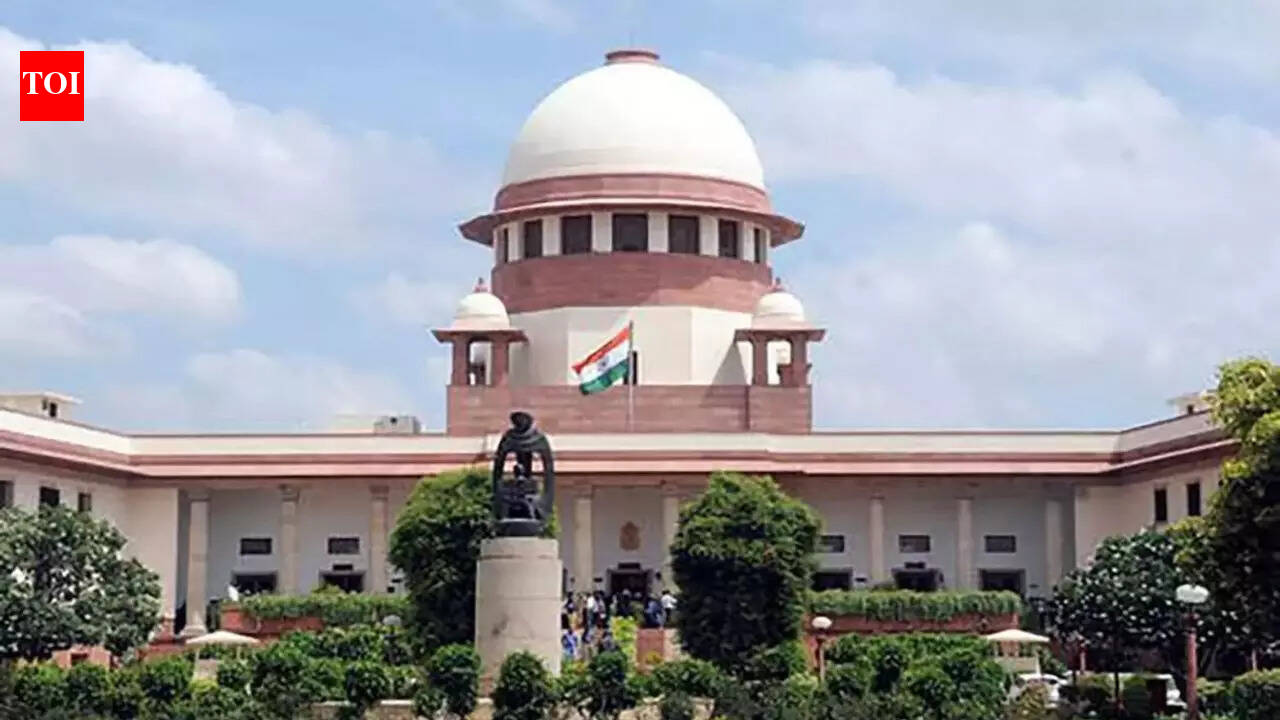

NEW DELHI: Amid mounting unease of SC over the practice of judges inordinately delaying pronouncing verdicts reserved by them, a two-judge bench of apex court has set Thursday as the day to deliver a verdict it reserved a year and two months ago.SC had recently criticised HC judges who reserve verdict and forget to pronounce their decisions, terming it an ailment in justice system. An SC bench of Justices P S Narasimha and Manoj Misra on Dec 3, 2024 reserved verdict in the case “B Prashanth Hegde vs State Bank of India and Another” after hearing senior advocate A M Singhvi for appellant and additional solicitor general N Venkataraman. The case centred on failure to repay alleged bank dues of Rs 300cr and a counter-claim challenging the IBC proceedings. It might be a coincidence that the case showed movement soon after an SC bench led by CJI Surya Kant on Feb 3 criticised Jharkhand HC judge Rongon Mukhopadhyay for keeping judgments reserved for years.Terming it as “challenge” and an “ailment of the justice delivery system,” the CJI said such delays “must be cured and not allowed to infect the system”.When contacted for comments on his concerns over the judgment being kept reserved for long, the CJI office said, “the CJI is aware of the issue and that he is contemplating consultation with his colleagues for issuance of a general internal guidelines for prompt delivery of judgments. Overwhelming majority of judges in the SC do not keep judgments reserved for a long period. Compared to the HCs, the SC judges must get a little more time to contemplate and deliberate before delivering judgments as these become the law of the land.”On inquiry with the SC registry, TOI learnt that Justice Misra had agreed to author the judgment on behalf of the bench and that it is pending with him for more than one year. CJI Kant had earlier said the best way to avoid reserving decisions in too many cases is to dictate the orders in the courtroom immediately after hearing the two sides to a litigation.CJI, in most cases, dictates judgments in the courtroom. Because of the pressure of administrative work that eats into his judicial time, the bench led by the CJI sits beyond the scheduled business hours to compensate the litigants and complete the day’s work, sources said.In 2001, the SC in Anil Rai case flagged the practice of some HC judges reserving verdicts and then failing to pronounce them, or issuing only the operative portions of the verdict with a promise to provide detailed reasons later — a commitment which was often observed in the breach.SC had ruled that if the judgment remained reserved for over six months, the litigants could make an application to the CJ concerned for listing the case for fresh hearing before another bench. SC could lay down guidelines for HCs, but it has done little to tackle similar delays in SC. Justice A S Oka, close to his retirement last year, had delivered the judgment on a long-pending dispute between two ISKCON factions after keeping it reserved for almost a year.