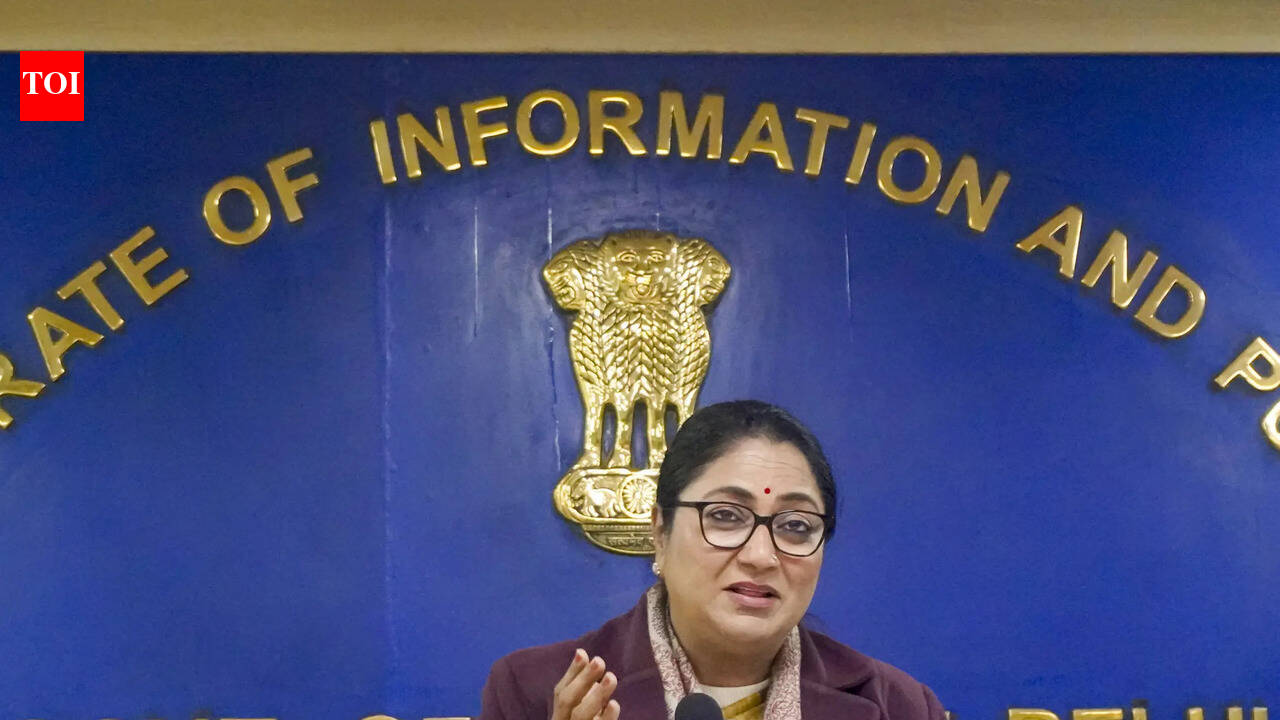

New Delhi: Delhi CM Rekha Gupta addresses a press conference on Union Budget 2026-27, at Delhi Secretariat in New Delhi. (PTI Photo)
Delhi chief minister Rekha Gupta on Monday announced that the Delhi government is expecting to commission a new 105 million gallon per day (MGD) water treatment plant at Chandrawal in 2026.The pending project, aimed at strengthening the capital’s water supply system, was originally approved in 2012 but faced years of delays, officials said.Charging a review meeting of the Delhi Jal Board (DJB) in preparation for the upcoming summer season, Gupta stated that the new plant is expected to significantly enhance both the quality and reliability of drinking water in the city.”Once commissioned, the Chandrawal water treatment plant is expected to significantly improve the quality and reliability of drinking water supply in the city,” Gupta said.The project will cover an area of approximately 92 square kilometres, accounting for around 6.2 per cent of Delhi’s total geographical area, and is expected to benefit nearly 11 per cent of the city’s population, she added further.The chief minister further informed that, constructed at an estimated cost of Rs 599 crore, the project was stalled due to repeated tender cancellations and non-compliance with guidelines of the Japan International Cooperation Agency (JICA) during the previous government’s tenure. “These delays led to a cost escalation of nearly Rs 400 crore,” she added.As part of the project, the government is also replacing water supply and distribution pipelines for Rs 1,331 crore.”Of the three distribution projects — West Chandrawal, East Chandrawal and Central Chandrawal — two have already been awarded,” Gupta said further.The pipeline replacement work will span nine Assembly constituencies, covering areas such as Karol Bagh, Civil Lines, Kamla Nagar, Patel Nagar, Shastri Nagar, Naraina, New Rajendra Nagar and surrounding localities.The project also includes strengthening underground reservoirs, installation of water meters, measures to prevent contamination and the establishment of grievance redressal centres.According to the chief minister, the government aims to reduce non-revenue water losses from the current 30-45 per cent to below 15 per cent within three years. Maintenance of the newly laid pipelines will be carried out under a separate 12-year agreement.