
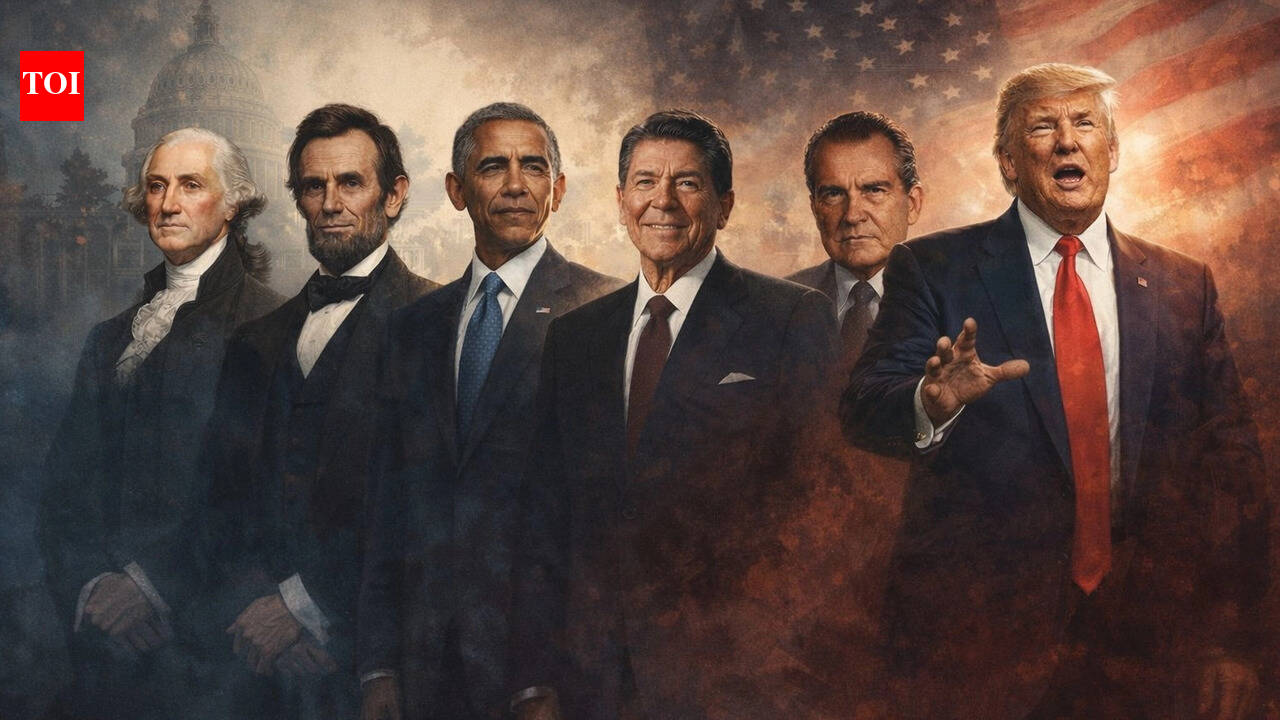


Donald Trump dislikes being compared to other American presidents. The irritation is almost visceral. Once described as the third-best president after George Washington and Abraham Lincoln, he snapped back that they had not fought “eight, nine wars.” When contrasted with Barack Obama or Joe Biden, the verdict in his mind is even simpler. He is better, full stop. The comparisons, he suggests, are flawed because they fail to grasp what greatness really means.That reaction itself is revealing. Trump does not see the presidency as a role shaped by inheritance, restraint, or continuity. He sees it as a personal contest, one in which dominance, visibility, and disruption are the metrics of success. To compare him with earlier presidents is therefore not just an academic exercise. It is a way of understanding how radically his leadership style departs from the American tradition.
Provocateur-in-chief
Most presidents have understood themselves as stewards of an institution larger than any individual. Trump governs as if the institution exists to amplify the individual. He’s a provocateur-in-chief. His leadership style is assertive rather than custodial. Authority is exercised loudly, publicly, and often confrontationally, not quietly or procedurally.
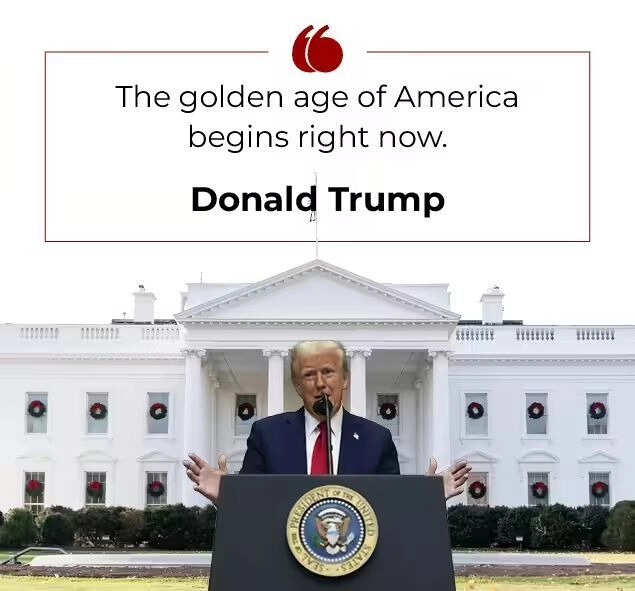
In Trump’s worldview, hesitation is weakness and compromise is surrender. Executive power is not something to be balanced against Congress or constrained by norms but something to be tested, expanded, and displayed. Conflict is not a regrettable by-product of leadership; it is proof that leadership is happening.
This philosophy marks a sharp break from the way most of Trump’s predecessors understood the office. Political scientist Richard Neustadt famously wrote that presidential power is “the power to persuade.” Trump has inverted that logic. His presidency is built on the power to command, threaten, and outlast resistance rather than coax it.
Washington and Lincoln: restraint as legitimacy
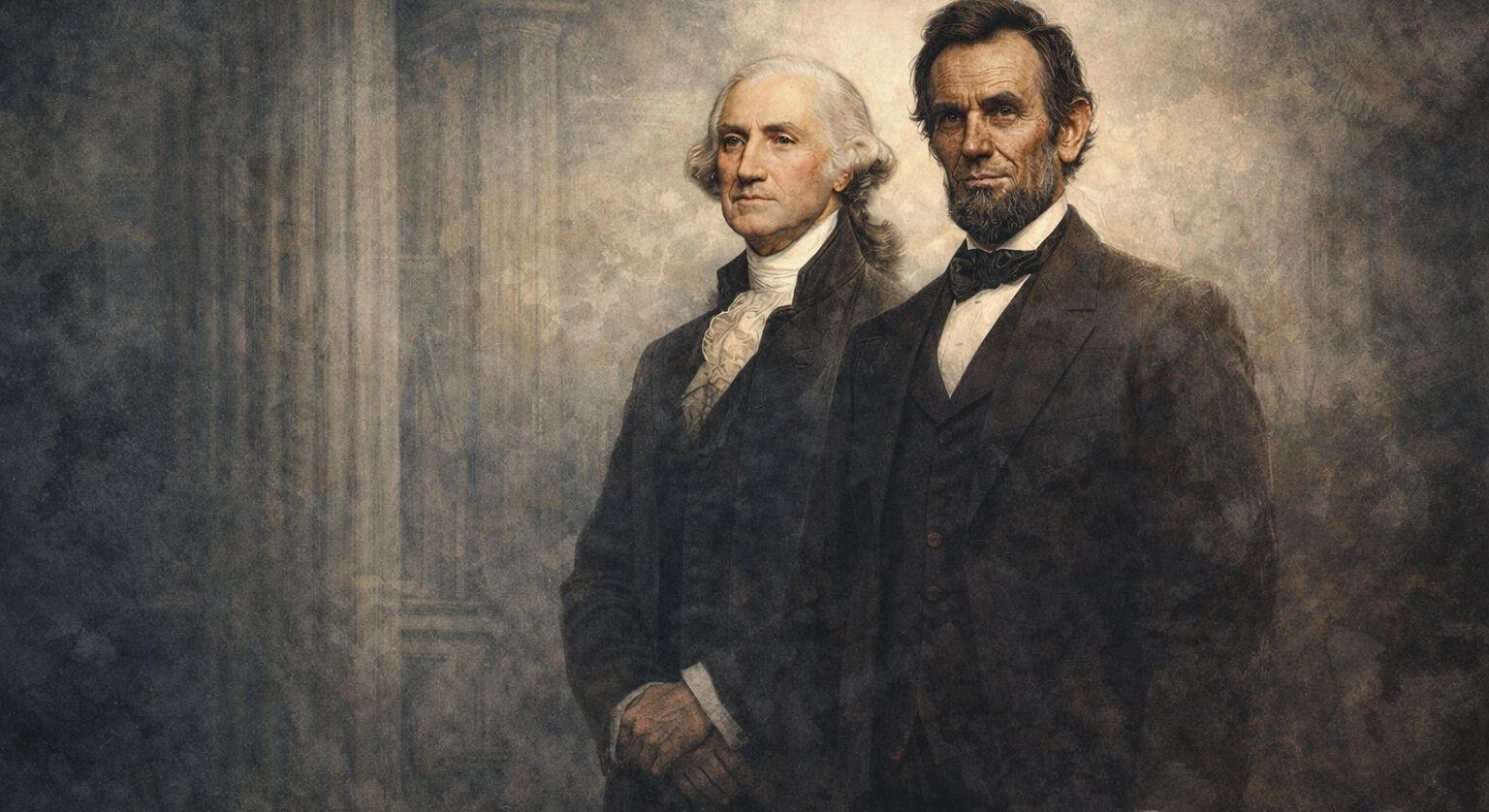
George Washington set the tone for the American presidency by emphasising restraint. He rejected royal titles, avoided overt displays of power, and treated the office as a temporary duty rather than a personal possession. His authority came from dignity and self-limitation. By stepping away from power voluntarily, he established the idea that the presidency belonged to the republic, not to the man occupying it.Washington articulated this ethic plainly in his Farewell Address, warning that “the spirit of encroachment tends to consolidate the powers of all the departments in one, and thus to create, whatever the form of government, a real despotism.” The warning was not abstract. It was a deliberate attempt to bind future presidents to restraint.
Somebody went up there, they say, you’re the third best president… this was on television, third best… And they said, who are the first two? George Washington and Abraham Lincoln. And I got extremely angry at this man.
Donald Trump
Abraham Lincoln, governing during the gravest crisis in American history, exercised immense power but carried it with visible moral weight. His language was careful, often sombre. Even when prosecuting a civil war, he framed his actions as tragic necessities rather than personal victories. In his Second Inaugural Address, Lincoln urged the country to proceed “with malice toward none; with charity for all,” even as the war neared its bloody conclusion.Trump’s leadership style stands in near-total opposition. Where Washington worried about factionalism, Trump embraces it. Where Lincoln used words to steady a fractured nation, Trump uses them to sharpen divisions. Both men treated power as a burden. Trump treats it as validation.
Reagan and Obama: persuasion over provocation
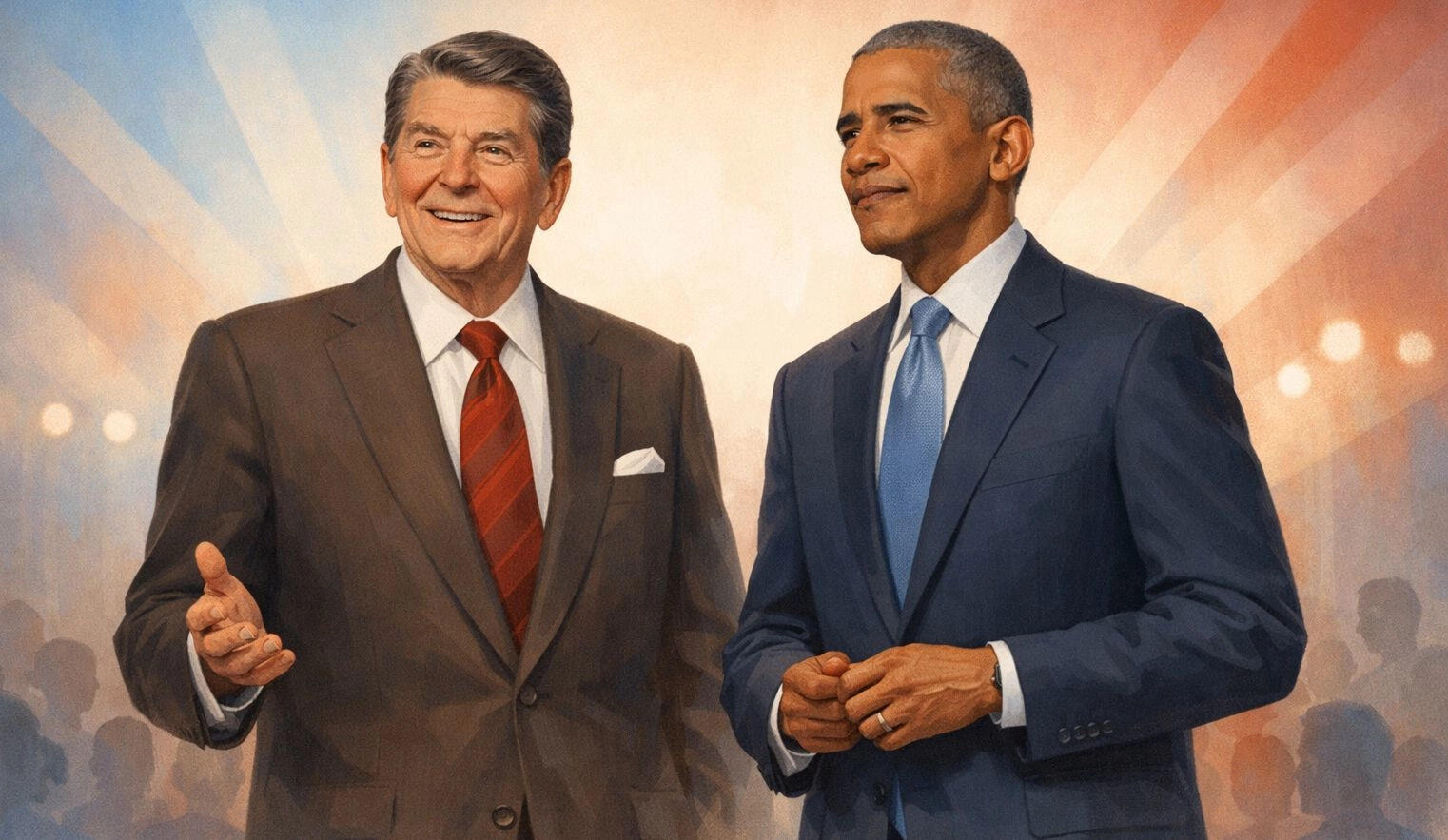
Ronald Reagan and Barack Obama represent two modern traditions of presidential leadership that Trump explicitly rejects. Reagan understood politics as persuasion. His optimism, humour, and storytelling allowed him to sell ideological change without constant confrontation. Even when attacking adversaries, he did so in a way that framed America as hopeful rather than embattled.Reagan once summarised his governing philosophy with characteristic simplicity: “I’ve learned over the years that when one’s mind is made up, this diminishes fear.” Yet that confidence was paired with reassurance. His famous “shining city upon a hill” metaphor was aspirational, not accusatory.Obama’s style was cerebral and aspirational. He spoke as a teacher, often emphasising process, principle, and shared responsibility. His 2004 convention line, “There is not a liberal America and a conservative America; there is the United States of America,” was an explicit attempt to place unity above grievance. Even when frustrated by Congress, Obama framed obstruction as a problem to be reasoned through rather than an enemy to be crushed.
Trump borrows selectively from both but discards their core instincts. He uses Reagan-like slogans without Reagan’s warmth and commands attention without Obama’s discipline. Trump does not aim to persuade the sceptical middle. He seeks to mobilise loyalists and overwhelm opponents. His speeches are declarations, not invitations.
Nixon: power without patience
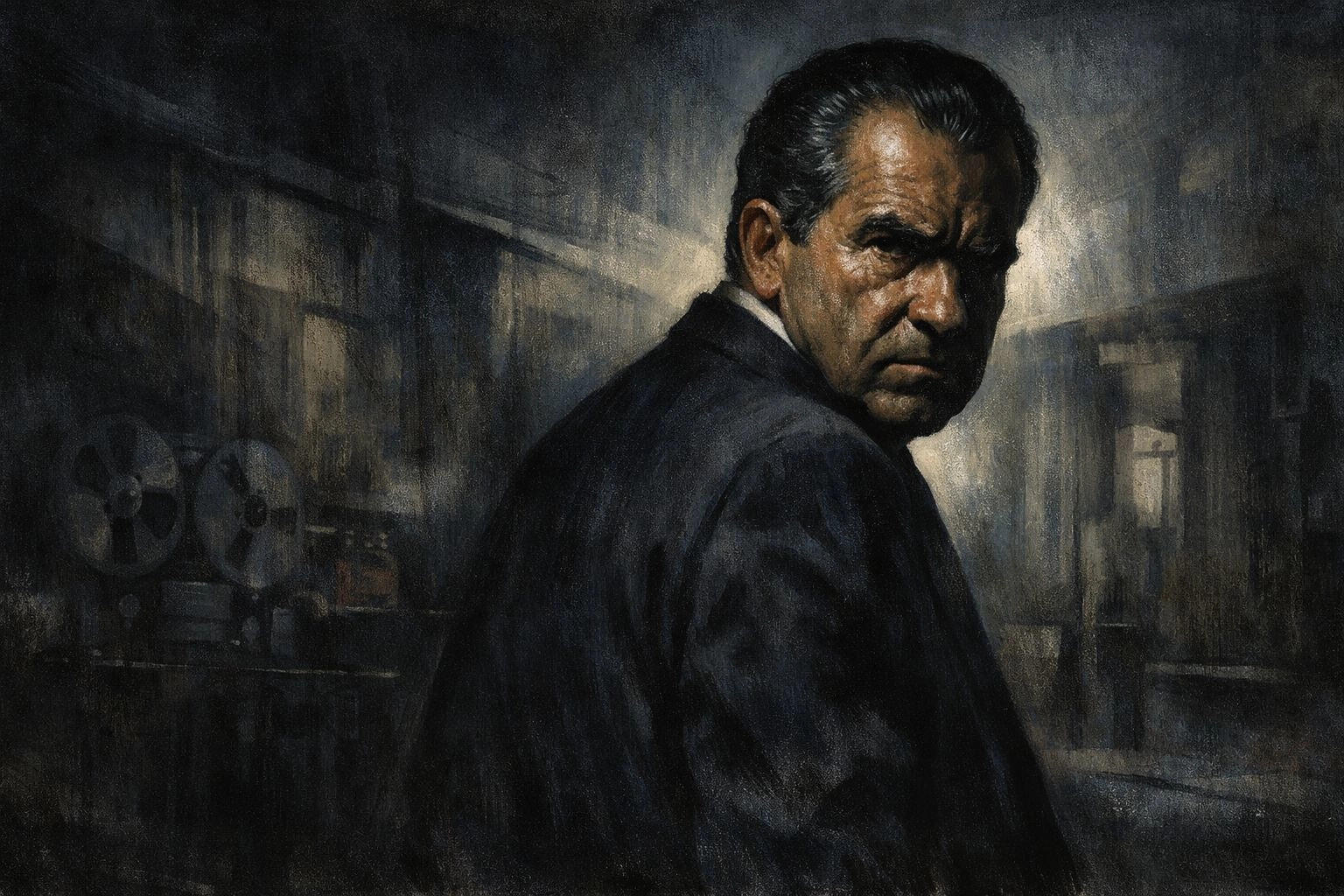
If there is a historical parallel that most closely resembles Trump’s instincts, it is Richard Nixon. Nixon shared Trump’s suspicion of the press, fixation on enemies, and expansive view of executive authority. He believed that the presidency justified extraordinary measures in defence of national interest.“The press is the enemy,” Nixon told aides in the Oval Office, a sentiment that Trump has echoed openly and repeatedly. But Nixon’s paranoia was largely concealed. He worked through secret tapes, private orders, and covert manoeuvres.
The difference lies in method and temperament. Nixon operated in secrecy, fearful of exposure. Trump operates in full view, often daring critics to react. Nixon hoarded tapes; Trump generates spectacle. Nixon’s paranoia was hidden. Trump’s is performative.Both presidencies raise the same underlying question about the American system: how much power can the executive accumulate before institutional resistance asserts itself? Nixon met that resistance decisively. Trump’s second term suggests a presidency increasingly unrestrained by internal checks, sustained by loyalty rather than balance.
Institutions versus personality
Perhaps the most significant difference between Trump and other presidents is his relationship with institutions. Most presidents, even when frustrated by Congress or the courts, treated them as legitimate constraints. Trump treats institutions as extensions of personal loyalty.Supporters are rewarded. Critics are vilified. Process is framed as sabotage. Tradition is dismissed as dead weight. The result is a presidency that feels less like a constitutional office and more like a personalised command centre, where legitimacy flows from popular acclaim rather than institutional consent.
Historian Arthur Schlesinger Jr. once warned of the “imperial presidency,” describing moments when the executive expands power beyond constitutional intention. Trump’s leadership style fits squarely within that warning, but with a crucial difference: where earlier presidents justified expansion as temporary necessity, Trump treats it as permanent entitlement.This shift explains Trump’s hostility to historical comparison. To compare him with Washington or Lincoln is to judge him by standards he does not recognise. He measures success not by continuity, unity, or democratic stability, but by dominance, visibility, and personal triumph.
A presidency outside the tradition
Donald Trump has not merely led differently from other US presidents. He has redefined what leadership means in his own image. His presidency blends spectacle with authority, grievance with governance, and personality with power.Whether history ultimately judges this as strength or excess will depend on outcomes that are still unfolding. What is already clear is that Trump does not see himself as a steward of history. He sees himself as its protagonist.And that, more than any policy difference, is what truly separates him from the presidents who came before him. Go to Source