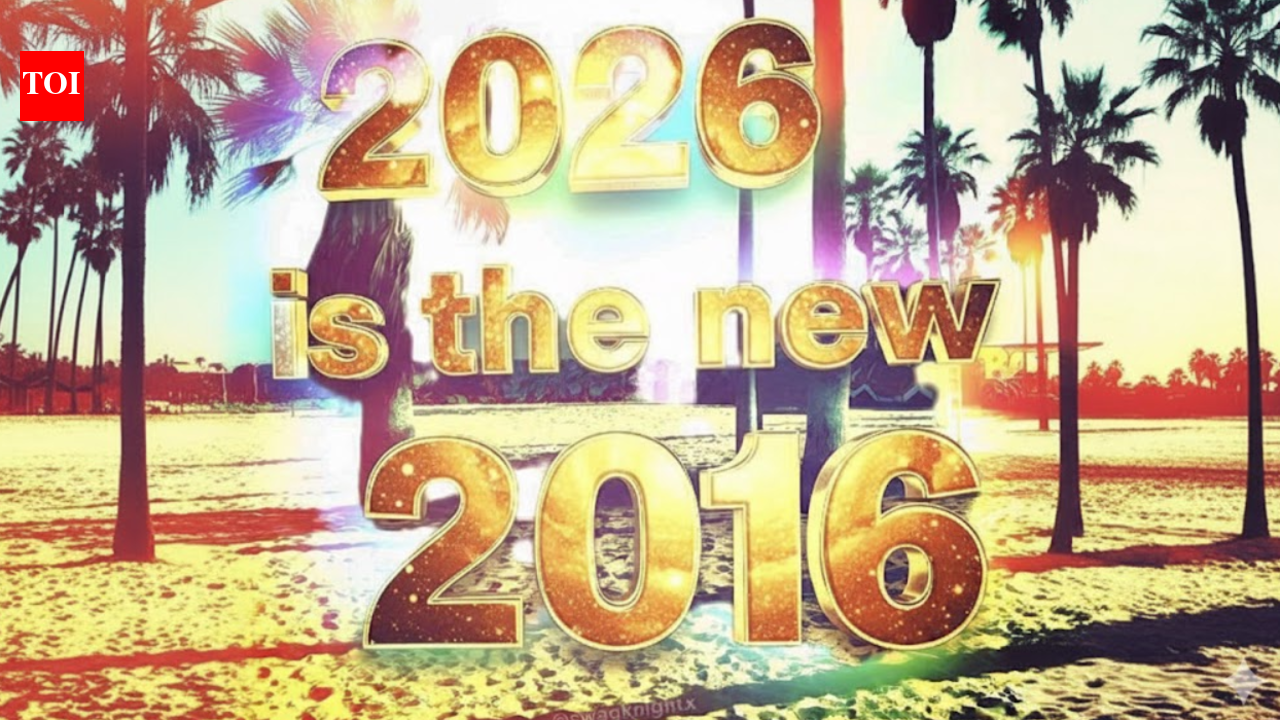


‘2026 Is the New 2016’: Why everyone’s engaging in performative trend-hopping
The moment we realised the “2016 is back” thing had slipped out of our hands was not when journalists started writing explainers, or when social media filled up with throwback posts, but when Charlie Puth, now well into his thirties, posted a selfie video using the Rio de Janeiro Instagram filter and treated it like a knowing wink, complete with the lazy caption “Heard it was 2016 again”. Instagram’s official account replied, calling it “elite ball knowledge”, which only made it worse. Anyone who actually belonged to that moment, who had a more original contextual reference for it, could tell immediately that this was not intimate or remembered, but simply pretentious and performative (both terms popularised by Gen Z ), and a classic case of trend hopping.It has since hardened into a template, mislabelled as a generic throwback trend, which was never what it was. In the first week of 2026, searches for “2016” jumped by 452% on TikTok, with over 55 million videos now using 2016-themed filters and the #2016 hashtag passing 37 million posts on Instagram. Watching it get absorbed by the mainstream is quietly dispiriting, not because it’s wrong, but because something that once had a sharp, particular edge now feels diluted and widely replicated.The current “2016 is the new 2026” trend says far more about who is participating in it than about the year itself. The loudest voices riding this wave tend to belong to people who were either too young to experience 2016 properly, or old enough that it passed through their lives without leaving much of a mark. The irony is hard to miss: the people most eager to explain what 2016 was are often the ones who didn’t really get it at the time.There is a specific group, usually bundled under the label Gen Z, (even though that tag has since been stretched, diluted and slapped onto a great deal of criminally cringe behaviour) that formed a shared understanding of 2016 long before it hardened into a trend. I’m talking about the earlier cohort, not the Gen Alpha adjacency that now gets folded into the same lazy shorthand. We didn’t agree to the label then and most of us still don’t now. If anything, we would rather remain unlabelled, slightly allergic to being categorised at all. But if we’re being precise, it was those of us born roughly between 1998 and 2002, maybe stretching a year or two on either side, who actually lived the version of 2016 that is now being remembered and repackaged, not because we think it was inherently better than other years, far from it, a year in many ways as broken, and messy as any other, but because we exaggerated it to see it through rose-coloured lenses, or more accurately, the Rio de Janeiro filter, and reinforced it relentlessly through memes and inside references.We were the ones who made 2016 a reference point. We were the first to romanticise it. Without us, the year wouldn’t exist in its current mythologised form; it would be just another entry in the calendar.What matters here is not the year itself but the lens through which it was remembered, a lens forged by a very specific online culture, dominated by a particular strain of Gen Z exceptionally good at producing niche references, for which being chronically online and part of a particular vintage with the lived, working knowledge of internet lore was a prerequisite.For this group, 2016 existed in conversation, in memes, in the way references bounced between feeds and comments, layered and under-explained. It lived in a select few echo chambers, never escaping to the mainstream, slowly accumulated and reinforced as the algorithm built its world brick by brick. References appeared in certain corners, dry, ironic, coded for those who belonged, and only for this group did they carry meaning. By around 2022, as the world staggered out of the pandemic, the year began to take on more sense. 2016 became symbolic of a pre-Covid utopia, and the gestures finally gained some form of real explanation rather than remaining unexplained fragments stripped of context. The visual artefacts came later, almost as teaching aids. The Rio de Janeiro filter. Pokémon Go. Bottle flipping. Fidget spinners. The Chainsmokers’ album covers. These were not the reason 2016 stuck; they were selected afterwards because they were widely experienced enough to function as shared reference points. Inside the original group, none of that was required. Outside it, those cues helped approximate a feeling that had already been established. This is why the current media fixation on identifying what “made” 2016 feels so off. Every year has pop stars, scandals, deaths, debuts, elections. If those were enough, we would be doing this exercise annually. The difference is that this particular cohort, old Gen Z, if you want to call it that, before the label became unusable, had both the meme literacy and the timing to turn a vague, collective feeling into a repeatable reference. We did it ironically, without trying to canonise anything. As with many things that group touched, it escaped containment and went mainstream.Now you have media outlets desperately trying to reverse-engineer the feeling, listing Zara Larsson songs, Zayn and Gigi, Trump’s first campaign, Vine dying, Tumblr aesthetics, One Direction’s final tours, Marvel movies, Stranger Things, even the early-wave Fortnite dances, as if swapping out the cast would change anything. It wouldn’t. Replace the celebrities. Replace the albums. Replace the headlines. The longing would survive. It is less about what happened than about how we collectively felt it, and how that feeling was captured, coded, and carried forward by a group of people who were online enough to notice it in the first place. Once that happened, the meaning shifted. When celebrities now post filtered videos and captions about “missing 2016”, it reads less like remembrance and more like bandwagoning. Not because they are wrong to feel nostalgic, but because they are arriving at something that was never meant to be staged so explicitly. What was once a shared shorthand has become an aesthetic, and aesthetics are easy to imitate without understanding. To be clear, this is not about gatekeeping a year. Everyone lived through 2016 in their own way. But not everyone contributed to the version of 2016 that now circulates online. Without that specific group, people just young enough to be forming identities, just old enough to be culturally fluent, and online in a way that still felt communal rather than optimised, the year would not exist as a myth at all. It would be another blurry stop between before and after.2016 has taken on a life of its own, and there’s little point in trying to pin it down. Celebrities, algorithms, throwbacks, it doesn’t matter. But for the select few who saw it first, we watch with a bit of sadness, knowing it has escaped us and entered the world on its own terms. And perhaps it’s not so bad, after all, it would be worse if no one remembered 2016 at all. Go to Source