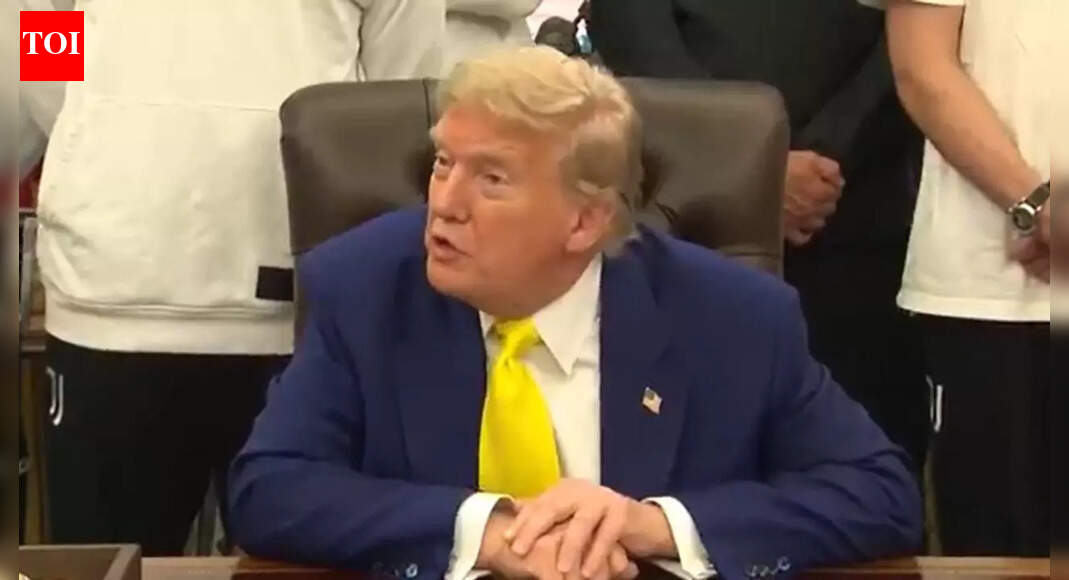

The US military needs more time to prepare for strikes against Iran, Donald Trump has been warned as another night of protests rocked the country.The US president was said to be contemplating military action and was presented with a range of targets, including elements of the security services responsible for the bloody crackdown on demonstrations. Commanders in the region told officials that they needed to “consolidate US military positions and prepare defences” before carrying out any strikes that could trigger retaliation, Telegraph reported.Trump threatened to “get involved” in the unrest threatening to topple the Iranian regime, warning that he would hit Iran “very, very hard, where it hurts” if security forces continued killing protesters. He was briefed on options that included striking non-military targets in Tehran or elements of the regime’s security apparatus.Protests continued overnight and were said to be more intense and widespread than the 2022 hijab demonstrations. Around 192 people were killed, rights groups said on Sunday morning, though the true toll was obscured by an internet blackout. Footage emerged on Sunday morning purporting to show live ammunition being used against protesters in the town of Abyek, north-west of Tehran.Senior regime officials suggested that protesters should face the death penalty, while another likened them to terrorists. On Sunday, Mohammad Baqer Qalibaf, Iran’s parliamentary speaker, warned the White House against a “miscalculation”.“Let us be clear: in the case of an attack on Iran, the occupied territories [Israel] as well as all US bases and ships will be our legitimate targets,” said the former commander in the Islamic Revolutionary Guard Corps (IRGC).Two American C-17A military transport planes departed Germany and appeared to be heading for the Middle East on Saturday evening, as speculation mounted about a potential strike. The New York Times quoted US officials as saying that any military action would need to be carefully weighed to avoid galvanising public support for the regime.Israel’s military was reportedly on high alert in the event of a US strike. Benjamin Netanyahu repeatedly warned in recent weeks that he would not allow Iran to rebuild its nuclear or ballistic missile programmes.The IDF could support US airstrikes as an opportunity to destroy its own list of targets. However, even if Israel chose not to take offensive action alongside the US, Iran was still likely to fire missiles at the Jewish state.Iran and its international supporters claimed that the protests were incited as part of a “Zionist” plot.On Saturday night, demonstrations again defied the crackdown, with thousands taking to the streets despite reports that hundreds were killed by security forces in the past three days. Hospitals were said to be overwhelmed with patients suffering gunshot wounds.The protests, initially triggered by rampant inflation, were thought to have spread to more than 100 cities and towns across all of Iran’s provinces.Israeli intelligence officials told Hebrew-language media that the unrest surpassed the 2022 hijab protests in both scale and intensity.Protesters were openly calling for an end to the clerical rule of Ayatollah Ali Khamenei, Iran’s supreme leader.