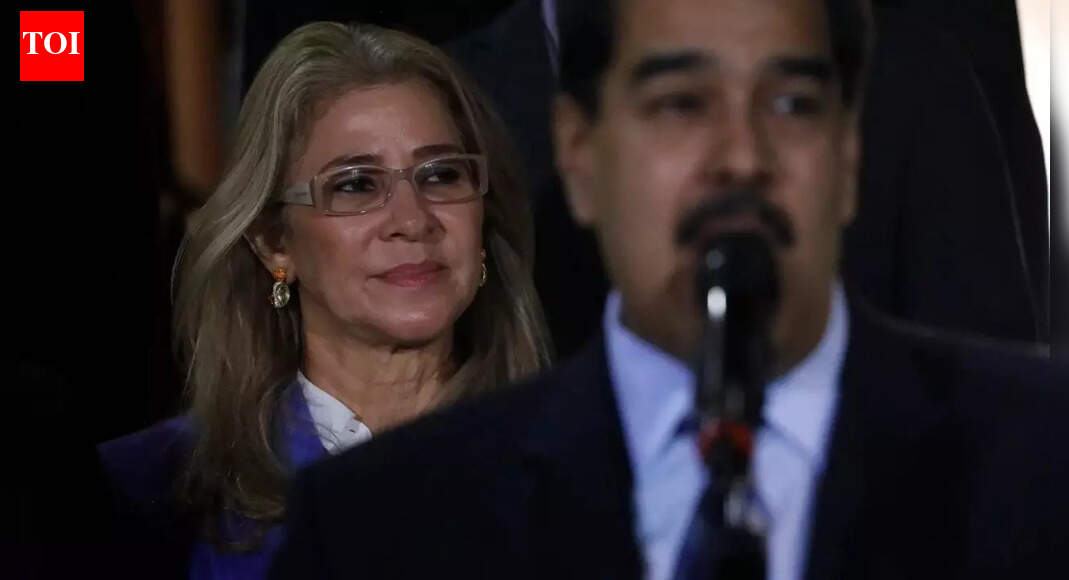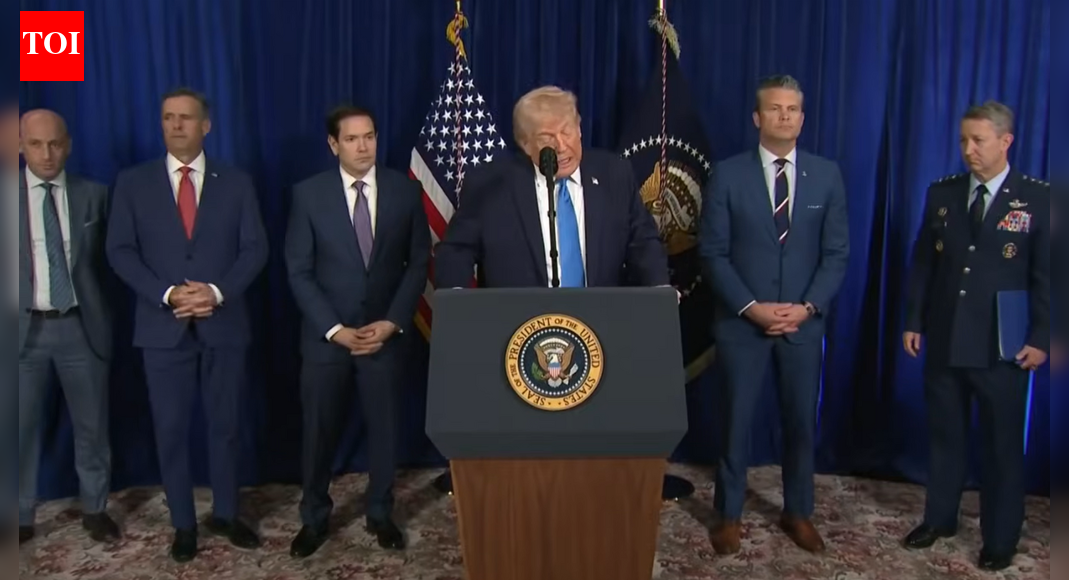


WASHINGTON: In an audacious raid into the heart of the world’s most oil-rich country, US special forces on Saturday captured Venezuela’s President Nicolas Maduro and his wife Cilia Flores while they were asleep at their home in a military fortress in the early hours of the capital Caracas. Trump administration officials justified the abduction, as it was described in some quarters, on grounds of national security and law enforcement, including charges of narco-terrorism. The couple was dragged out of their beds and flown out on choppers by an elite Delta Force, CIA agents, and FBI agents, who reportedly coordinated the raid, and placed on the warship Iwo Jima anchored off the country’s coast, to be taken back to New York City to stand trial. President Trump gave interviews to media outlets at 4.30 am to boast about the raid, excitedly telling journalists he had watched the incursion live from his Mar-a-Lago resort, and how meticulous and professional it was, with few casualties on the American invading forces.
“I was able to watch it in real time, and I watched every aspect of it, and I listened to the communication between, you know, where we were in Florida and out in the field in Venezuela,” Trump told Fox News, adding, “It was amazing to see the professionalism, the quality of leadership…” He compared the military operation to the botched U.S. withdrawal from Afghanistan during the Biden administration, saying, “We’re not a laughingstock anymore.”There was shock, concern, and anger in the region and beyond despite Maduro’s sketchy reputation and multiple indictments on drug smuggling charges, including a $25mn bounty going back to the Biden administration. UN Secretary General Antonio Guterres’ office said he was deeply concerned that the rules of international law have not been respected, and independently of the situation in Venezuela, “these developments constitute a dangerous precedent.” Mexico’s President Claudia Sheinbaum condemned the military action and said it breached the UN Charter, while urging the U.S. to comply with international law and end “all acts of aggression against the Venezuelan government and people.”President Trump often accused the Venezuelan President and his government of conspiring to flood the US with drugs and illegal immigrants. Maduro was indicted in 2020, during Trump’s first term as president, on charges of smuggling cocaine into the US, with a $15 million bounty offered for his arrest at that time. That was increased to $ 25 million by the Biden administration and further doubled to $50 million in the Trump second term after he alleged Maduro of heading a drug mafia called Cartel de los Soles and designated the group a foreign terrorist organisation. There was support for the raid and capture from U.S legislators of Venezuelan origin, but several Democratic lawmakers questioned the legality of the attack and the lack of authorisation from Congress, which is vested with the sole authority to declare war. The Pentagon notified Capitol Hill on Saturday morning, after the raid, that it had been “authorised” by the president to launch a “military operation” inside Venezuela in response to “national security threats posed by the illegitimate Maduro regime.”Vice President JD Vance, in his first public comments after Maduro’s capture, applauded the mission and defended its legality. “Maduro has multiple indictments in the United States for narcoterrorism,” Vance wrote on social media. “You don’t get to avoid justice for drug trafficking in the United States because you live in a palace in Caracas.”In recent days, after Trump openly signaled his days were numbered, Maduro literally begged for peace, telling a Spanish reporter two nights ago that the “The American people should know they have a friendly, peaceful people here, and a friendly government as well,” while handing the journalist a red hat in the style of the Make America Great Again cap with the words: “No War. Yes, Peace.”By any measure, the U.S. military operation marks one of the most consequential acts of American force in Latin America in decades, coming only weeks after the Trump White House signalled its intention to assert its hegemony in the western hemisphere in a national security strategy document. Venezuela, by most estimates, has the largest oil reserves in the world, greater than even Saudi Arabia and other Gulf countries. The Maduro abduction was evocative of the raid that captured the late Panamanian leader Gen. Manuel Noriega in the late 1980s. Once a U.S. ally, Noriega was accused of conspiring with drug traffickers to ship cocaine to the U.S. He was convicted of drug trafficking charges in a Miami federal court in 1992 and sentenced to 40 years in prison, serving 17 years before he was extradited to Panama, where he died in 2017. The latest abduction is a clear signal to other small countries in the region, which have been increasingly courted by China: Behave and fall in line behind the U.S, or else…The Trump administration’s 2025 National Security Strategy identified China as a primary threat in the hemisphere, alongside migration, drugs, and crime. Beijing has expanded its economic footprint across South America through trade and critical minerals. The U.S. intervention in Venezuela signals a muscular reassertion of American primacy—and a warning that Washington is prepared to use force to defend it.In fact, Maduro met with a Chinese diplomatic team led by Beijing’s special representative for Latin American affairs, Qiu Xiaoqi, just hours before the raid to discuss the seizure of Venezuelan oil tankers bound for China, with the envoy reiterating Beijing’s support for the Venezuelan President. Of great concern now is what the Venezuela raid will have on China’s approach to Taiwan, and more immediately, Russia’s position on Ukraine. Go to Source