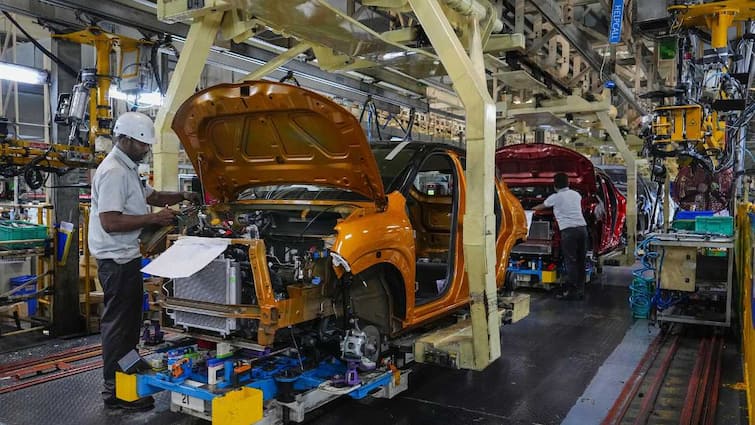

India’s manufacturing sector closed the 2025 calendar year on a softer footing, with growth continuing but momentum clearly easing across key indicators.
The latest HSBC India Manufacturing Purchasing Managers’ Index (PMI) survey for December shows that while factories are still expanding, the pace of improvement has slowed to its weakest level in nearly two years.
The seasonally adjusted HSBC India Manufacturing PMI slipped to 55.0 in December from 56.6 in November. Although the headline reading remained comfortably above the long-run average and the crucial 50-mark that separates expansion from contraction, it signalled the weakest improvement in overall sector health since late 2023.
Growth Continues, But at a Slower Clip
Manufacturers reported that demand conditions remained broadly supportive in December, allowing both new orders and output to expand. However, the rate of growth moderated noticeably. New business intakes rose at the weakest pace since December 2023, reflecting heightened competition and softer sales of certain product categories. Production growth also slowed, hitting its lowest level since October 2022, a 38-month low, marking a clear loss of momentum as the year drew to a close.
Despite the slowdown, the expansion remained robust by historical standards. Survey respondents indicated that positive underlying demand continued to support activity, even as price sensitivity among customers and cautious ordering behaviour tempered growth.
Export Orders Lose Steam
One area showing particular softness was external demand. New export orders increased at their slowest rate in 14 months, contributing to the overall deceleration in sales growth. Where export demand did improve, manufacturers cited better conditions in parts of Asia, Europe and the Middle East. However, the more modest rise in international orders underscored the uneven global environment facing Indian exporters.
Firms Rein in Buying and Hiring
As new orders growth cooled, manufacturers adjusted their operational strategies. Input purchasing continued to rise in December, but the pace of expansion eased to a two-year low. Firms appeared to be more cautious in replenishing inventories, reflecting both softer demand growth and a general lack of pressure on operating capacities.
Employment trends echoed this caution. Factory staffing levels increased only marginally, marking the slowest pace of job creation in the current 22-month expansion period that began in March 2024. The data suggest that manufacturers saw little immediate need to add capacity through hiring, given manageable workloads and subdued growth in outstanding business.
Indeed, while backlogs of work did rise in December, the pace of accumulation was only marginal. The relevant index hovered close to the neutral 50-mark, indicating broadly stable levels of unfinished work.
Inventory Trends Move in Opposite Directions
Stock positions showed a clear divergence during the month. Input inventories rose sharply, though the increase was the least pronounced in two years. Companies reported that materials were being used more actively to support ongoing production, limiting the pace of stock accumulation.
In contrast, inventories of finished goods fell solidly in December. The decline was among the fastest seen in the past eight months, as manufacturers drew down stocks to meet current sales rather than building unsold inventory. This trend suggests that firms were prioritising efficiency and cash flow management amid a more competitive demand environment.
Cost Pressures Remain Muted
One of the more positive signals from the December PMI was the continued absence of significant cost pressures. Input costs rose again, but at a historically negligible pace and among the lowest recorded in 2025. Manufacturers attributed higher costs primarily to increased prices for bamboo, chemicals, glass, leather and packaging materials.
Output prices also increased, though the rate of charge inflation eased to a nine-month low. The combination of muted input cost inflation and softer pricing power points to limited inflationary pressure from the manufacturing sector at year-end.
Pollyanna De Lima, Economics Associate Director at S&P Global Market Intelligence, said, “Even with growth momentum easing, India’s manufacturing industry wrapped up 2025 in good shape. We have seen a steady spell of softer growth in new export orders. In fact, the share of companies signalling higher international sales in December was about half of the average for 2025. The survey’s anecdotal evidence has also pointed to a narrower range of export destinations, with goods mainly heading to Asia, Europe and the Middle East. With Indian manufacturers facing less intense cost pressures than elsewhere, many will be hoping that competitive pricing can help bring in new business from other regions in the new year.”
Looking ahead, Indian manufacturers remain optimistic about output growth in 2026 compared with current levels. However, overall sentiment weakened notably in December, falling to its lowest level in nearly three-and-a-half years.