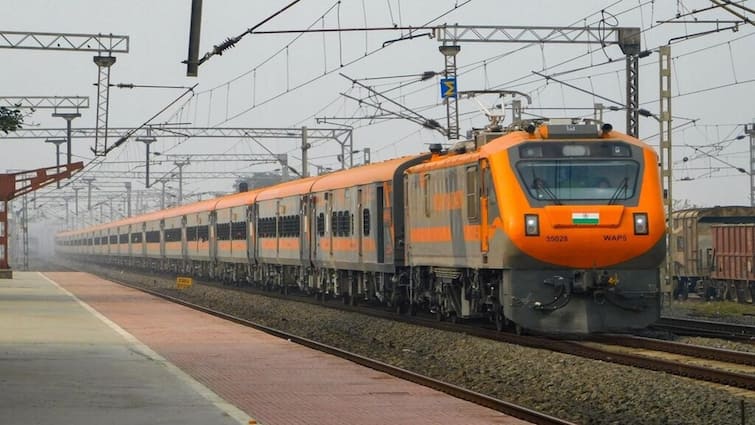

Long-distance train passengers are set to pay more after the Ministry of Railways announced a revision in rail fare tariffs, effective December 26. While the hike is modest on a per-kilometre basis, its impact will be felt most by those travelling longer routes, particularly in mail, express and AC services. The ministry said the revision was necessitated by rising operational and manpower costs, but insisted the overall financial burden on passengers would remain limited.
Why Indian Railways Has Revised Fares
Explaining the decision, Indian Railways said a sharp rise in manpower-related expenditure was a key factor behind the fare rationalisation. According to official figures, spending on manpower has climbed to nearly Rs 1,15,000 crore, while pension liabilities have reached around Rs 60,000 crore. In the 2024-25 financial year alone, the total cost of operations increased by approximately Rs 2,63,000 crore.
The Railways said it has significantly expanded its network and scale of operations over the past decade, requiring additional staff and higher safety-related investments. The fare revision, it added, is aimed at partially offsetting these costs and is expected to generate an additional Rs 600 crore in revenue.
The ministry also noted that this is the first fare hike since July 2025, arguing that enhanced manpower deployment has contributed to improvements in safety, efficiency and service delivery.
How Much More Passengers Will Pay
Under the revised fare structure, passengers travelling in mail and express trains in non-AC categories will pay an additional 2 paise per kilometre. All AC classes will also see a uniform hike of 2 paise per kilometre.
For ordinary-class passengers travelling beyond 215 kilometres, fares will increase by 1 paise per kilometre. However, those travelling up to 215 kilometres in ordinary class will see no change in ticket prices.
Suburban train services and monthly season ticket (MST) holders have been exempted from the hike, a move aimed at protecting daily commuters from higher travel costs.
Operational Pressures & Revenue Push
The Railways said rising expenditure has been accompanied by higher operational demands. It highlighted that more than 12,000 special trains were run this year to manage passenger volumes, while freight operations expanded, helping Indian Railways retain its position as the world’s second-largest cargo rail network.
Apart from passenger fares, the Railways said it will continue focusing on boosting cargo loading and operational efficiency to manage rising costs while maintaining affordable transport for the wider public.