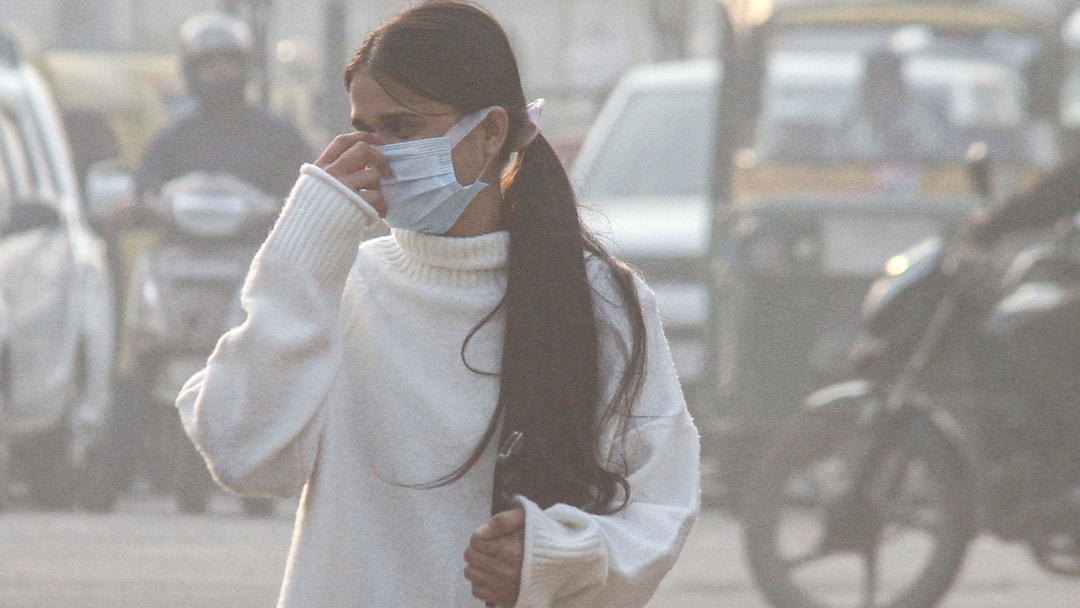

The Delhi government has rolled out stringent anti-pollution measures from today, barring the entry of non–BS-VI vehicles into the national capital and denying fuel to vehicles without valid Pollution Under Control (PUC) certificates, as Stage IV of the Graded Response Action Plan (GRAP) comes into force.
BS-VI Rule To Hit Lakhs Of Vehicles
The decision is expected to affect nearly 12 lakh vehicles that enter Delhi daily from neighbouring cities, including Gurugram, Ghaziabad, Faridabad and Noida. Officials estimate that over 4 lakh vehicles from Noida, around 2 lakh from Gurugram, and nearly 5.5 lakh from Ghaziabad will now be stopped at Delhi’s borders.
Heavy Deployment At Borders And Fuel Stations
To enforce the restrictions, 580 police personnel will be deployed for vehicle checks, supported by 37 enforcement vans at 126 checkpoints across the city. Teams from the Transport Department, Municipal Corporation and Food Department will also be stationed at petrol pumps.
Automatic number plate recognition (ANPR) cameras already installed at fuel stations will be used to identify vehicles without valid PUC certificates, ensuring that fuel is not dispensed to non-compliant vehicles.
GRAP-IV Measures In Force
The announcement was made on Tuesday by Delhi Environment Minister Manjinder Singh Sirsa. The curbs will remain in place as long as GRAP-IV is enforced in the capital.
The government cited studies showing that vehicles contribute 19.7 per cent of PM10 and 25.1 per cent of PM2.5 pollution during winter, prompting the need for tougher curbs.
Traffic And Congestion Measures
Authorities are also working to ease congestion at 100 identified traffic hotspots and to develop an integrated traffic management system aimed at reducing waiting time and emissions at traffic signals.
Pollution To Be Debated In Parliament
The Lok Sabha is scheduled to take up a discussion on pollution today under Rule 193, following demands by the Congress and other Opposition parties. Leader of Opposition Rahul Gandhi has repeatedly pressed for the issue to be debated both inside and outside Parliament.
Union Environment Minister Bhupender Yadav is expected to reply to the short-duration discussion at 5 pm, a response seen as significant for highlighting key public interest concerns.
AQI Remains Poor; Curbs On Schools And Offices
Delhi’s Air Quality Index has fluctuated between the “Severe” and “Very Poor” categories since November. At 4 pm on Wednesday, the city’s 24-hour average AQI stood at 334, slightly better than Tuesday’s 354 but still firmly in the “very poor” range.
In response, physical classes for primary students have been suspended, while secondary and higher secondary schools have been given the option of online or physical classes. Offices have been directed to function with only 50 per cent staff on-site.