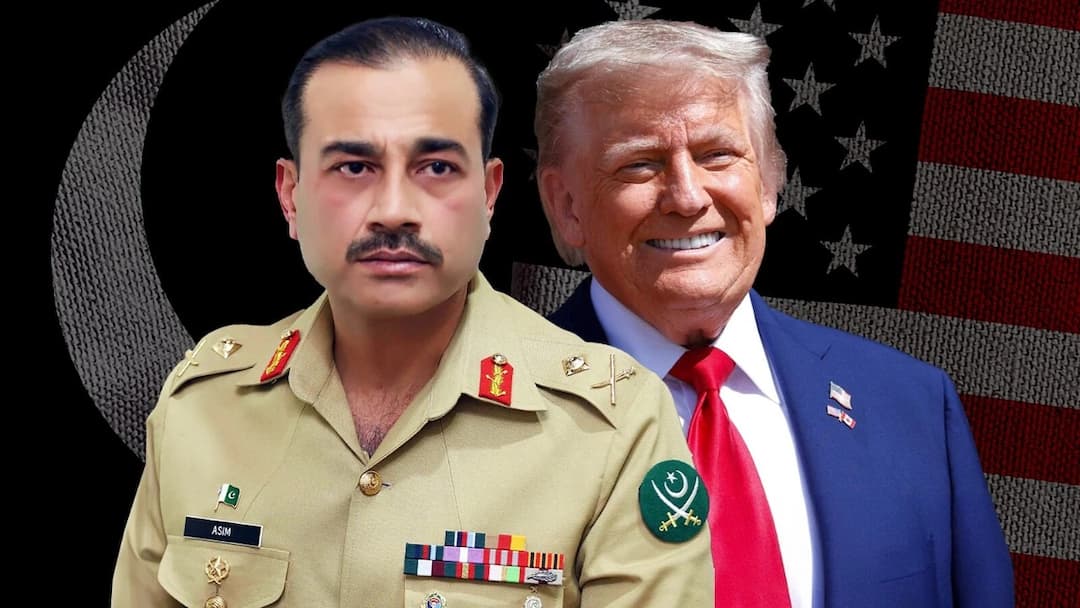

Pakistan’s most powerful military leader in history is confronting the sternest challenge of his newly consolidated authority, as Washington urges Islamabad to commit troops to a proposed Gaza stabilisation force, an idea analysts warn could trigger serious backlash at home.
Field Marshal Asim Munir is expected to travel to Washington in the coming weeks for talks with US President Donald Trump, marking their third meeting in just six months. According to two sources cited by Reuters, one of whom is closely involved in Munir’s economic outreach, the Gaza force is likely to dominate the agenda.
The discussions come as Trump pushes ahead with his ambitious 20-point Gaza plan, which envisions a multinational force drawn from Muslim-majority nations to oversee a transitional phase of reconstruction and economic recovery in the devastated Palestinian territory, battered by more than two years of Israeli military action.
Why the Gaza Plan Is Raising Alarms
While the proposal is framed as a stabilisation effort, it carries heavy risks. Many countries remain reluctant to participate, wary that any mission aimed at disarming Hamas could entangle foreign troops in an already volatile conflict. For governments across the Muslim world, there is also the fear of igniting anger among deeply pro-Palestinian and anti-Israeli populations back home.
Pakistan, in particular, sits at a sensitive crossroads, balancing strategic ties with Washington against powerful domestic sentiments.
Asim Munir’s Growing Clout and US Ties
Munir, who now wields unprecedented authority within Pakistan’s power structure, has worked to rebuild trust with Washington after years of strained relations. That effort appeared to pay off in June, when Trump hosted him for a private White House lunch, an unprecedented gesture for a Pakistani army chief, notably without civilian leaders present.
Analysts say the relationship matters deeply for Islamabad.
“If the Pakistanis declined to be a part of this mission, then that might disappoint Trump,” said Michael Kugelman, Senior Fellow for South Asia at the Atlantic Council. “That could be a problem for Pakistan, given how keen both the civilian and military leadership are for US investment and security assistance, which has largely been suspended.”
Pakistan’s military credentials are significant. It is the world’s only Muslim-majority country with nuclear weapons, has fought three wars with India, managed a brief conflict earlier this year, and continues to battle insurgencies along its borders, including militant groups it says operate from Afghanistan.
According to defence analyst and author Ayesha Siddiqa, these capabilities have not gone unnoticed in Washington. “Trump looks at Pakistan’s military and institutional capacity and knows they can fight,” she said, explaining the US president’s interest in closer engagement.
Silence from Official Channels
Despite the growing speculation, Pakistan’s military, foreign office and information ministry declined to respond to Reuters’ queries. The White House also offered no comment.
What is known is that Pakistani Foreign Minister Ishaq Dar signalled some openness last month, saying Islamabad could consider contributing troops for peacekeeping duties. However, he was careful to draw a red line, stressing that disarming Hamas “is not our job.”
Unprecedented Power at Home
Munir’s influence has expanded dramatically in recent months. He has been elevated to oversee the air force and navy alongside the army, granted an extension until 2030, and awarded the lifelong title of field marshal. Constitutional amendments passed by Pakistan’s parliament have also granted him lifetime immunity from criminal prosecution.
Kugelman described the changes as extraordinary. “We’ve seen what could best be described as the unbridled power of Asim Munir,” he said.
At the same time, Munir has intensified diplomatic engagement across the Muslim world. In recent weeks, he has met leaders from Indonesia, Malaysia, Saudi Arabia, Turkey, Jordan, Egypt, Azerbaijan and Qatar. Siddiqa believes these meetings resemble quiet consultations on the proposed Gaza force.
Mounting Anxiety Inside Pakistan
Yet the greatest risk may lie within Pakistan’s borders. Any deployment of Pakistani troops to Gaza under a US-backed framework could reignite unrest among Islamist parties fiercely opposed to both Washington and Israel.
These groups have a history of mobilising mass protests. One particularly hardline and violent anti-Israel party—known for its push to enforce strict blasphemy laws, was banned in October. Authorities arrested its leadership, detained more than 1,500 supporters, and froze its assets. Still, officials concede that its ideology continues to resonate.
Complicating matters further is the political movement aligned with former prime minister Imran Khan. Despite Khan’s imprisonment, his party secured the largest number of seats in the 2024 elections and retains broad public backing, along with deep hostility towards Munir. “There is a risk of religious hardliners reacting negatively,” Kugelman warned. “It could lead to violence, which is not what the military would want to see.”