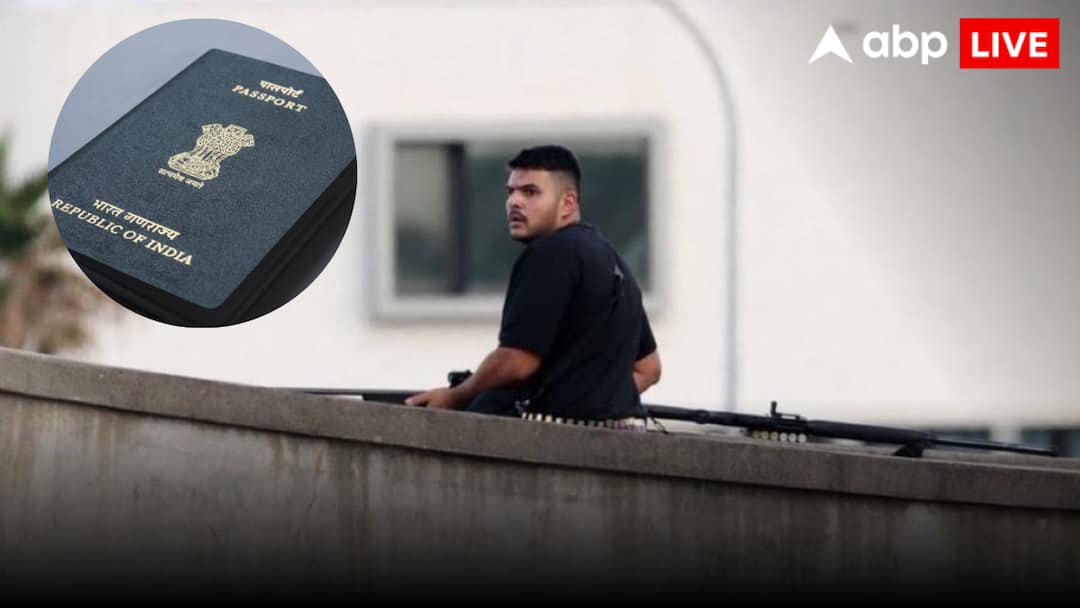

Sajid Akram, the 50-year-old man killed during a terrorist attack on a Jewish gathering in Australia, was an Indian national, the Philippines’ Bureau of Immigration confirmed on Tuesday, adding that he had visited the country just weeks before the deadly assault.
The attack unfolded on Sunday at a Hanukkah event at Bondi Beach in Sydney, where Sajid Akram and his 24-year-old son, Naveed Akram, allegedly opened fire with rifles. Fifteen people were killed and at least 42 others were injured. Police shot Sajid Akram dead during an exchange of fire, while his son survived and remains hospitalised under armed guard.
Philippines Visit Confirmed, Travel Details Revealed
Confirming the men’s recent movements, Dana Sandoval, a spokesperson for the Philippines’ Bureau of Immigration, said Sajid Akram, an Indian national and Australian resident, travelled to the Philippines with his son on November 1, 2025, arriving from Sydney.
“Both reported Davao as their final destination,” Sandoval said. She added that the pair left the Philippines on November 28, flying from Davao to Manila before returning to Sydney. Philippine and Australian authorities are now examining the purpose of that visit.
Sajid Akram’s Indian origin had earlier been confirmed by five people familiar with the matter, who spoke on condition of anonymity. No additional personal details were shared.
Visa History, Family Background and Official Responses
Australia’s Home Affairs Minister Tony Burke addressed the case at a news conference on Monday, outlining the family’s immigration history. He said Sajid Akram arrived in Australia in 1998 on a student visa, later moving to a partner visa in 2001.
Since then, Burke said, Akram travelled overseas several times on resident return visas, which allow permanent residents to leave and re-enter Australia multiple times while retaining their residency status. Naveed Akram, he confirmed, was born in Australia and holds Australian citizenship.
Diplomatic engagement followed swiftly after the attack. Australian Foreign Minister Penny Wong spoke with India’s External Affairs Minister S. Jaishankar on Monday, briefing him on the attack and the ongoing investigation, according to people familiar with the conversation.
“I thanked minister Jaishankar for his condolences and for the Indian government’s messages of support,” Wong said. “We agreed that there must be no place for antisemitism, violence and terrorism.”
Jaishankar later said on social media that he conveyed India’s “deepest condolences” over the Bondi Beach attack and offered “fullest support,” without elaborating further.
Additional details about Naveed Akram emerged through Australian media. The 9 News channel aired an interview with a former colleague who described him as an out-of-work bricklayer with Indian and Italian heritage. According to the colleague, Naveed Akram’s mother is Italian and his father Indian. He also said Akram occasionally spoke about religion but was not forceful, and that he legally held a firearms licence.
Australian officials confirmed on Tuesday morning that both men had travelled to the Philippines last month, noting that investigators are examining whether the trip had any operational or ideological significance.
Davao, where the pair reportedly stayed, is the largest city on the island of Mindanao and serves as a gateway to southern Philippines, a region that has long been a focus of Islamic State-linked activity. In 2017, militants affiliated with the group laid siege to Marawi city in Mindanao for five months, prompting a large-scale military operation by Philippine forces.
Australian Prime Minister Anthony Albanese said on Tuesday that investigators believe the attackers were driven by “Islamic State ideology” and had been radicalised by beliefs linked to the terror group, as authorities continue to piece together the events and influences that led to one of the deadliest attacks on Jewish civilians in Australia’s recent history.