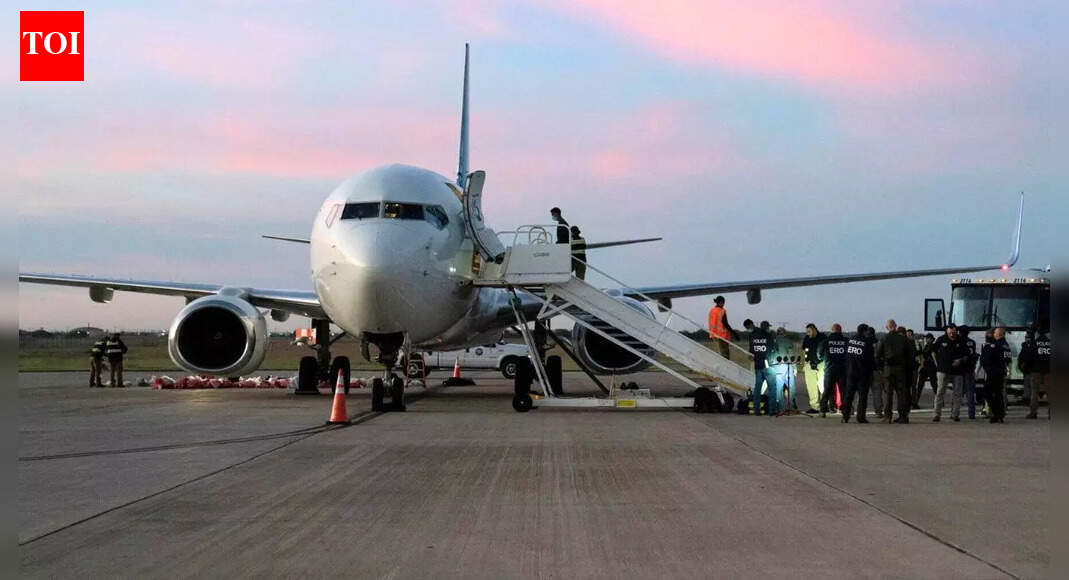

The Department of Homeland Security has signed a contract worth nearly $140 million to purchase six Boeing 737 aircraft for deportation operations, as reported by The Washington Post. The move marks a major shift in how the US government carries out removals, giving ICE the ability to operate its own dedicated fleet instead of relying solely on chartered flights.
Deportation fleet funded by record enforcement budget
The aircraft are being paid for through a major enforcement funding surge backed by Congress as part of President Donald Trump’s immigration agenda. Lawmakers authorised $170 billion over four years, giving DHS wide latitude to expand detention capacity and transportation systems tied to removals.Officials familiar with the plan say the new planes will allow ICE to increase flight schedules as the administration pushes toward its stated target of 1 million deportations in Trump’s first year. DHS figures show nearly 66,000 people currently in detention and more than 579,000 removals so far.DHS spokesperson Tricia McLaughlin said the dedicated fleet is expected to reduce operational costs and improve flight efficiency, although she did not detail how those savings would be achieved.
A little-known company lands the DHS contract
The procurement was awarded to Daedalus Aviation, a relatively new firm formed in 2024. Corporate documents list William Allen Walters III as president and Taundria Cappel as chief financial officer. The company promotes itself as offering customised commercial and charter aviation services.Walters and Cappel also oversee Salus Worldwide Solutions, a separate company that previously secured a nearly $1 billion DHS contract linked to voluntary “self-deportation.” That agreement is currently being challenged in court over allegations that the contract process was rushed and improperly structured. Walters declined to comment on the new aircraft deal.Former ICE acting director John Sandweg questioned the logic of purchasing planes outright, noting that charter services have traditionally been more flexible and cheaper than maintaining a full government-operated fleet. Earlier administrations considered the idea but ultimately backed away due to concerns over cost and logistics.
A growing deportation machine
ICE Air Operations already handles most US immigration flights, including transfers within the country and deportations abroad. From January through October, it conducted more than 1,700 flights to 77 destinations, according to monitoring data from Human Rights First.With the addition of its own Boeing 737s, DHS is positioned to scale those operations even further, cementing a long-term shift toward a more permanent and expansive deportation infrastructure.