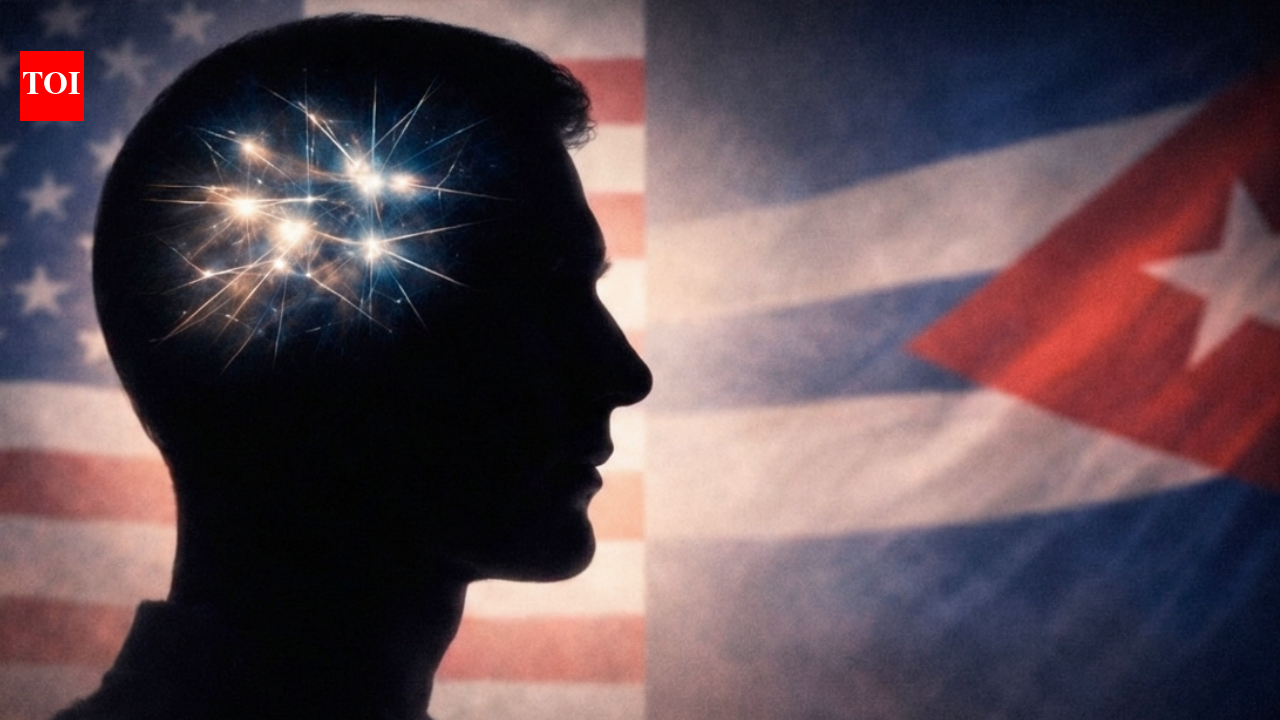

After decades of frozen diplomacy and political hostility, the United States and Cuba cautiously turned a page. Under US President Barack Obama, diplomatic ties were restored and the US Embassy in Havana reopened. On the Cuban side, the country was led by Raul Castro, who had taken over from his brother Fidel Castro. American diplomats, intelligence officers and support staff arrived for what was expected to be a routine overseas posting. The mission carried political sensitivities, but nothing unusual. There was no expectation of danger beyond standard surveillance risks. The early months passed quietly and as planned.Then something unexpected began to unfold. It was not a political crisis or a security breach. Instead, US personnel started reporting intense head pressure, piercing headaches, dizziness and nausea. Some struggled to concentrate or remember simple details. Others experienced ringing in their ears or sudden balance problems. A few said they heard odd sounds shortly before symptoms appeared, while others fell ill without any sensory trigger. Medical tests produced no clear answers. There was no obvious toxin, no visible injury and no explanation anyone could point to. What began as scattered complaints soon formed a troubling pattern. The phenomenon would later be known as Havana syndrome.Nearly a decade later, the mystery has returned to the spotlight. A Norwegian government scientist has revived debate after building and testing a homemade microwave device on himself. Following the experiment, he developed symptoms similar to those reported by US personnel in Havana. The incident was reported to the CIA. While the experiment does not explain what caused Havana syndrome, it has reopened long-standing questions and renewed scrutiny of an illness that was never fully understood.
The beginning of the Havana syndrome mystery in Cuba
As reports increased in late 2016, US officials grew concerned. The symptoms appeared suddenly and affected trained professionals with no shared medical history. Some individuals said their symptoms intensified in certain locations and eased when they moved away. Several affected personnel were quietly withdrawn from Havana for further evaluation.When the illnesses became public in 2017, the US reduced embassy staffing and expelled Cuban diplomats from Washington. Cuba denied any involvement and invited international investigation. At that stage, no device had been found and no cause had been identified.The story did not remain confined to Havana. Similar symptoms were later reported by US personnel in China, parts of Europe and other regions. Cases were even recorded inside the United States. The geographic spread complicated every theory. Environmental explanations struggled to account for such varied locations. Psychological explanations raised doubts because of the sudden onset and physical nature of the symptoms. Claims of an attack lacked a clear weapon or perpetrator.The US government launched multiple intelligence and scientific reviews. Some experts argued the symptoms could be explained by stress-related or functional neurological disorders. Others said those explanations did not fully account for the reported sensory experiences or neurological findings.
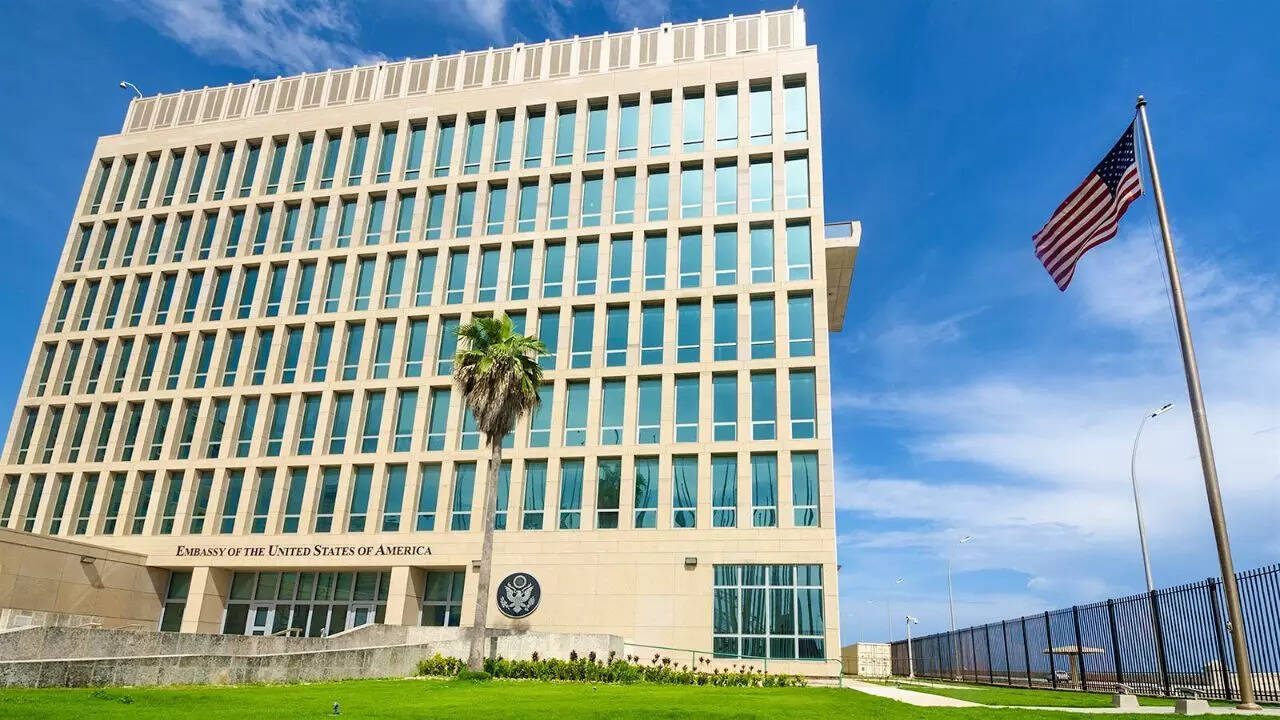
US Embassy, Havana
Official assessments and divided views
In 2023, a major US intelligence assessment concluded that it was very unlikely a foreign adversary was responsible for most cases. The report said many incidents were better explained by common medical or environmental factors. It did not dismiss all cases, nor did it deny that those affected were genuinely ill.Other reviews took a more cautious approach. A scientific panel convened by US intelligence agencies found that pulsed electromagnetic energy could plausibly explain some core symptoms. The lack of consistent data and wide variation between cases prevented firm conclusions.
The Norwegian experiment that changed the conversation
The debate shifted again after developments in Norway. A government scientist who was sceptical of directed-energy theories decided to test the idea himself. He built a homemade device that emitted pulsed microwave or radio-frequency energy and exposed himself to it.According to officials briefed on the case, the scientist later developed neurological symptoms resembling those reported by US personnel years earlier. Norwegian authorities alerted the United States. Officials from the CIA, the Pentagon and the White House reviewed the incident.The experiment did not prove Havana syndrome was caused by an attack. It did show that pulsed energy can affect the human nervous system under certain conditions. That alone was enough to reopen questions many believed were settled.
The experts and critics take on Havana Syndrome
Scientists and intelligence officials have warned that a single self-experiment cannot resolve a mystery as complex as Havana syndrome. David Relman, who chaired a US intelligence advisory panel on the illness, has said that similar symptoms do not automatically point to a single cause. He has argued that while pulsed energy remains plausible, the evidence is incomplete.US intelligence agencies have echoed that caution. The 2023 multi-agency assessment warned against confirmation bias driven by fear or geopolitics and urged restraint in drawing conclusions without stronger evidence.Other prominent voices have also questioned government messaging. A bipartisan Senate Intelligence Committee criticised the CIA for inconsistent handling of cases and unclear communication. CIA Director William J. Burns acknowledged that affected personnel were genuinely ill, while saying investigations had not found credible evidence of a foreign attack. Former CIA officer Marc Polymeropoulos challenged early sceptical views and argued that the pattern of cases deserved serious investigation rather than reassurance. Together, these voices underscored a central tension. The symptoms were real. The cause remained unknown.Sceptics have argued that Havana syndrome does not behave like a single disease or weapon effect. Some neurologists and psychologists have pointed to functional neurological disorders, stress responses or environmental exposure as more likely explanations. They note that symptoms varied widely and diagnostic findings often failed to align.The National Academies of Sciences previously acknowledged that electromagnetic energy could plausibly explain some symptoms, while stressing the lack of direct evidence linking it to real-world attacks. This divide has left the scientific community split between those urging deeper investigation and those warning against fixation on exotic explanations.
Conspiracy theories and public suspicion
As years passed without clear answers, speculation filled the void. Online forums dissected embassy floor plans and analysed audio recordings. Some claimed the symptoms matched secret Cold War weapons. Others blamed foreign intelligence services or covert surveillance devices. A few suggested a hidden global campaign that governments were refusing to admit.For those who were ill, the theories were often painful rather than entertaining. Many said speculation distracted from their suffering and turned a medical mystery into an online battleground. Intelligence agencies repeatedly stated there was no evidence of a coordinated attack. Still, secrecy, uncertainty and real human harm allowed rumours to spread faster than facts.
What remains unresolved
No device was ever recovered in Havana. No attacker was identified. No single explanation accounts for every reported case. Yet the people affected were real, and many saw their health and careers permanently altered.The Norwegian experiment did not solve the Havana syndrome mystery. It reopened it. Whether what happened in Havana in 2016 was an attack, an environmental exposure, a medical phenomenon or a combination of factors remains one of the most persistent unanswered questions in modern diplomacy and security.What is clear is that something happened. Nearly a decade later, the world is still trying to understand what it was. Go to Source