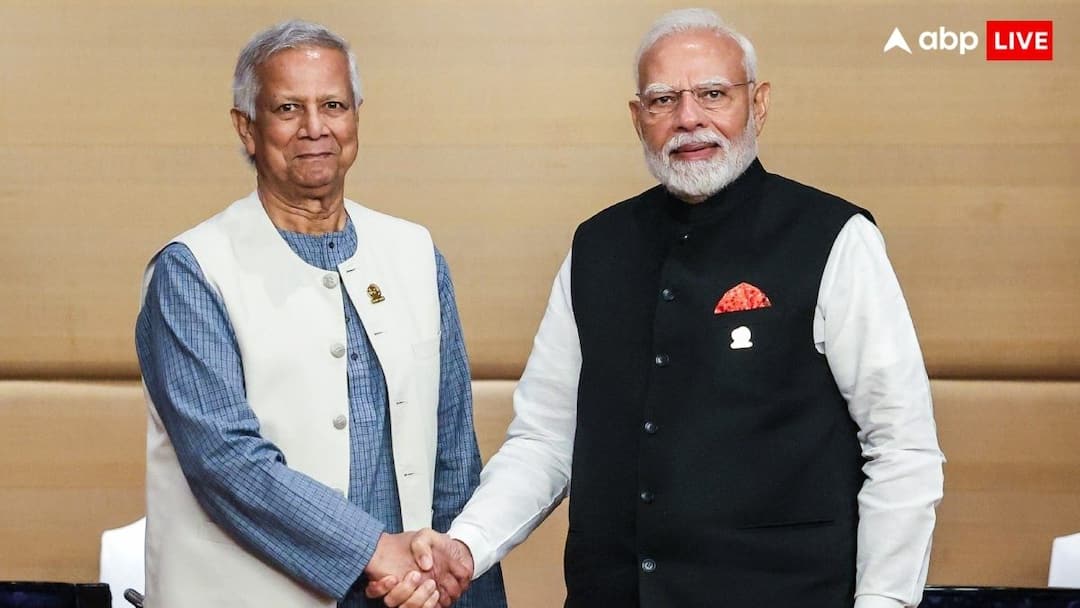

At a moment when India–Bangladesh relations appear unusually tense, Bangladesh’s interim administration has sent its clearest signal yet that it wants dialogue, not discord. Finance Adviser Salehuddin Ahmed on Tuesday underlined that Dhaka has no desire to let ties with its largest neighbour sour and is instead committed to rebuilding trust, deepening cooperation and safeguarding economic stability.
These remarks stand out as the first conciliatory message from the interim government, even as protests, suspended visa services and sharp rhetoric on both sides have pushed bilateral relations to a fragile point. Ahmed also revealed that Chief Adviser Muhammad Yunus is personally engaged in efforts to bring relations back on track.
Interim Government Stresses Cooperation Over Conflict
Speaking after a meeting of the Advisory Council Committee on Government Procurement at the Secretariat, Ahmed made the interim administration’s position unambiguous.
“The current interim government does not want any kind of bitter relationship with a big neighbour like India,” he said. “Our main objective is to further strengthen bilateral relations while ensuring economic stability.”
In the interim arrangement, Ahmed is effectively performing the role of finance minister. His comments, reported by Dhaka-based Bangla daily Desh Rupantor, came against the backdrop of deteriorating diplomatic exchanges and growing public unease.
According to Ahmed, Muhammad Yunus is personally working to ease tensions with New Delhi. The administration, he stressed, does not want relations with India to worsen under any circumstances.
Political Rhetoric Distanced From State Policy
Addressing recent anti-India statements made in some political quarters, Ahmed was careful to draw a clear line between political rhetoric and official policy. He said such remarks were politically motivated and did not reflect the stance of the interim administration.
Regardless of the noise in the political arena, he emphasised, the Yunus-led interim government remains firmly committed to maintaining stable, state-to-state relations with India.
The message was clear: while emotions may be running high in certain circles, Dhaka’s official position remains one of restraint and engagement.
Bangladesh to Import Rice From India Despite Tensions
In a significant move underscoring this approach, Ahmed confirmed that Bangladesh has decided to import 50,000 metric tonnes of rice from India. He described the decision as a practical step towards reinforcing economic cooperation, signalling that political tensions would not be allowed to disrupt essential trade.
“There will be no obstacles to importing essential commodities,” he said, adding that economic ties would continue unhindered.
Meanwhile, The Daily Star reported that the Yunus administration also plans to procure an additional 50,000 metric tonnes of rice from Pakistan, highlighting Dhaka’s broader efforts to stabilise food supplies amid the current political climate.
Warning Against External Provocation
Ahmed also cautioned against attempts by third parties to exploit the situation and damage India–Bangladesh relations. The interim administration, he said, is proceeding cautiously and remains focused on advancing bilateral ties based on national interest rather than external pressure.
This careful tone reflects an awareness of how quickly regional tensions can spiral—and a determination to prevent that outcome.
Backdrop of Protests and Diplomatic Fallout
The finance adviser’s remarks come at a time when bilateral relations have sharply declined following anti-India protests triggered by the assassination of Osman Hadi, an anti-India radical leader who was contesting as an independent candidate from the Dhaka-8 seat.
In the aftermath of his killing, radical protesters and extremist groups targeted Indian diplomatic missions in several Bangladeshi cities. These incidents prompted India to temporarily suspend visa services in Bangladesh.
Tensions further escalated after protests erupted outside the Bangladesh High Commission in New Delhi over the lynching of Dipu Chandra Das, a Hindu Bangladeshi factory worker accused of blasphemy. On Monday, the High Commission of Bangladesh in New Delhi suspended consular and visa services until further notice.
India Flags Strategic Concerns
Last week, India’s Parliamentary Standing Committee on External Affairs, chaired by Congress MP Shashi Tharoor, warned about the deepening crisis in Bangladesh. The committee described the situation as India’s most serious strategic challenge in the neighbouring country since the 1971 Liberation War.
Against this troubled backdrop, Ahmed’s comments appear designed to cool tempers and reopen channels of communication. The question now is whether these early signals of reconciliation can translate into concrete diplomatic progress, and whether both sides can steer the relationship away from another prolonged downturn.