
Thursday, December 25, 2025
21.1 C
New Delhi

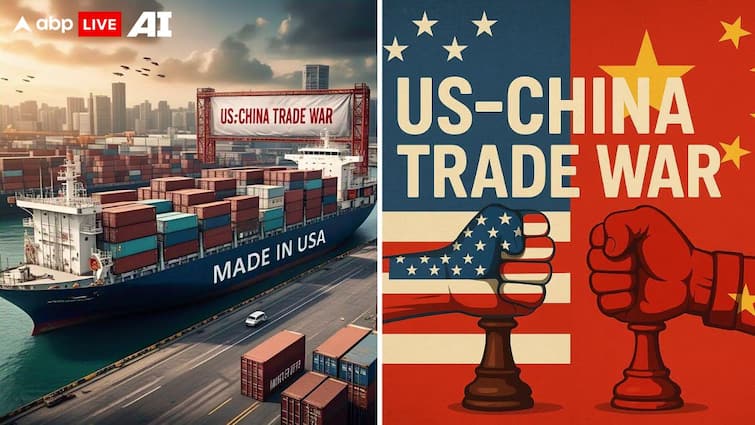
US-China Trade Deal: Trump’s Tariff Cut, Xi’s Rare Earth Pledge, And Why The World Is Watching

Show Quick Read

Key points generated by AI, verified by newsroom

US President Donald Trump lowered tariffs on China from 57 per cent to 47 per cent, easing some of the tensions between the two largest economies in the world. 

The development came after the American leader met with Chinese President Xi Jinping in Busan, South Korea. The decision, made during their first meeting since 2019, marks a tentative step towards an improvement in relations between the two superpowers.

Trump called it an “amazing meeting,” crediting it with securing several key commitments from Beijing, including the resumption of US soybean purchases, continued exports of rare earth elements, and a crackdown on illicit fentanyl trade.

 But beyond the photo ops and handshakes, the announcement has left investors, manufacturers and policymakers worldwide asking one big question: where do US-China tariffs stand now, and what does it mean for global trade?

A Fragile Truce in the Tariff War

The US-China trade war, which has defined much of the past decade’s economic turbulence, appears to have reached a temporary pause. Trump’s move to scale tariffs back to 47 per cent signals an easing of hostilities, but not a full reconciliation. 

Global markets reacted nervously to the announcement: Asian indexes and European futures fluctuated, and the Shanghai Composite slipped from a ten-year high. Even US soybean futures weakened despite China’s commitment to resume purchases, reported Reuters.

At the core of this truce is a one-year agreement allowing China to continue exporting rare earth minerals to the rest of the world. While Trump said the deal could be extended, Beijing has yet to release official details.

 The US Trade Representative, Jamieson Greer, confirmed that China would not go ahead with its proposed rare earth export restrictions, though he declined to clarify whether existing controls would also be lifted.

Why Rare Earths Matter So Much

Rare earth elements (REEs), a group of 17 critical minerals, have quietly become one of China’s most powerful economic levers. These minerals are essential for manufacturing advanced technologies, from electric vehicles and smartphones to jet engines and guided missiles. Beijing’s dominance in this space, controlling around 70 per cent of global production, has long given it strategic influence over the world’s supply chains.

China’s export restrictions, first imposed in April and expanded in October, caused significant shortages worldwide. Automakers, electronics firms and defence manufacturers scrambled to secure alternative suppliers as production delays rippled through the global economy. 

The new US-China understanding could stabilise those supply chains, at least temporarily, easing pressure on industries heavily reliant on these materials.

What This Means for Global Trade

Trump’s announcement has injected cautious optimism into global markets, but experts warn that the trade détente may prove short-lived. The deal leaves several questions unanswered, particularly whether existing tariffs will be further reduced, and how China’s commitments will be enforced.

The easing of tariffs could restore some balance to global trade flows disrupted since 2018, when the two nations began imposing punitive duties on each other’s goods. 

For manufacturers, it offers a brief respite from rising costs and supply bottlenecks. However, for policymakers, it underscores the ongoing fragility of the global trading order, one increasingly defined by strategic competition rather than open markets.

The temporary resolution on rare earth exports may also have far-reaching implications beyond the US and China. Countries such as Japan, South Korea, and members of the European Union, all heavily dependent on these materials, stand to benefit from greater supply stability. 

Meanwhile, the move could spur renewed interest in developing alternative rare earth sources in countries like Australia and Canada.
Go to Source

Hot this week

‘Can’t bear the pain’: Indian-origin man made to wait for hours at Canada hospital, dies after cardiac arrest

Prashant Sreekumar (Image/X@yegwave) Prashant Sreekumar, a 44-year-old Indian-origin man died after waiting for hours in the emergency room of Edmont Hospital.He began experiencing intense chest pain while at work. Read More

Nvidia backs away from direct cloud fight with Amazon, Google and Microsoft

Nvidia is quietly rethinking its cloud ambitions, pulling back from a direct fight with Amazon, Google and Microsoft as technical hurdles and business risks mount. Read More

‘Don’t comment, post views’: Army issues policy on use of social media apps; check guidelines

File photo NEW DELHI: Army has issued policy on the use of social media applications like Instagram, WhatsApp, LinkedIn and others, ANI reported cited defence officials on Thursday. Read More

‘Give Pakistan In Dowry’: Atal Bihari Vajpayee’s Witty Reply To A Pak Woman’s Proposal

During Vajpayee’s visit to Pakistan, the Lahore declaration was signed, aimed at de-escalating tensions between the two neighbouring nations. Read More

Al Hind Air, FlyExpress: Two New Airlines Get Initial Clearance In India: What We Know So Far

Show Quick Read Key points generated by AI, verified by newsroom India has granted initial regulatory approval to two proposed airlines, Al Hind Air and FlyExpress, in a move aimed at widening competition in the country’s rapidly ex Read More

Topics

‘Can’t bear the pain’: Indian-origin man made to wait for hours at Canada hospital, dies after cardiac arrest

Prashant Sreekumar (Image/X@yegwave) Prashant Sreekumar, a 44-year-old Indian-origin man died after waiting for hours in the emergency room of Edmont Hospital.He began experiencing intense chest pain while at work. Read More

Nvidia backs away from direct cloud fight with Amazon, Google and Microsoft

Nvidia is quietly rethinking its cloud ambitions, pulling back from a direct fight with Amazon, Google and Microsoft as technical hurdles and business risks mount. Read More

‘Don’t comment, post views’: Army issues policy on use of social media apps; check guidelines

File photo NEW DELHI: Army has issued policy on the use of social media applications like Instagram, WhatsApp, LinkedIn and others, ANI reported cited defence officials on Thursday. Read More

‘Give Pakistan In Dowry’: Atal Bihari Vajpayee’s Witty Reply To A Pak Woman’s Proposal

During Vajpayee’s visit to Pakistan, the Lahore declaration was signed, aimed at de-escalating tensions between the two neighbouring nations. Read More

Al Hind Air, FlyExpress: Two New Airlines Get Initial Clearance In India: What We Know So Far

Show Quick Read Key points generated by AI, verified by newsroom India has granted initial regulatory approval to two proposed airlines, Al Hind Air and FlyExpress, in a move aimed at widening competition in the country’s rapidly ex Read More

UAE and Indonesia unite to treat Gaza patients under Operation Gallant Knight 3

A fresh batch of Indonesian medical experts joins the UAE’s floating hospital in Al-Arish / Image: National News In the bustling Egyptian port of Al-Arish, a repurposed vessel serves as a beacon of survival. Read More

The joint US-Canada military organisation that ‘tracks’ Santa during Christmas

A screen shows the progress of Santa Claus as volunteers answer calls from people wondering where he is on his journey around the globe at a call center Wednesday, Dec. Read More

Oil ‘quarantine’ Venezuela for at least two months: Trump’s new order to US military

US is ramping up pressure on Venezuela, ordering military forces to enforce a two-month ‘quarantine’ on Venezuelan oil exports, tightening sanctions on Maduro’s government while stopping short of a formal blockade, as Washington bets economic squeeze Read More

Related Articles