

Reported by: Dharvi Vaid | Roshni Majumdar
- UN Security Council set to vote on Bahrain-sponsored proposal that would allow countries to use wide range of measures to secure Hormuz
- Trump says US military has ‘not even started’ destroying what’s left in Iran
- US strikes will target ‘bridges next, then electric power plants,’ Trump adds
- US oil prices continue to climb to more than $111 per barrel on fears of escalation in Iran war
Here are the main developments in the US-Israeli war with Iran on April 3:
Iran warns against ‘provocative action’ before UNSC vote
Iran has cautioned the United Nations Security Council against taking any “provocative action.”
The warning comes ahead of a vote later on Friday on a Bahrain-sponsored draft resolution authorizing the use of defensive means to protect shipping through the Strait of Hormuz.
“Any provocative action by the aggressors and their supporters, including in the UN Security Council regarding the situation in the Strait of Hormuz, will only complicate the situation,” news agency AFP quoted Iranian Foreign Minister Abbas Araghchi as saying.
The proposed resolution is supported by six Gulf nations and Jordan, and according to an Associated Pressreport has been watered down significantly.
The final draft takes out any reference to allowing offensive military action, the report says, after opposition from three veto-wielding countries: Russia, China and France.
Oil price surge continues, Asian shares rise moderately
Oil prices continued to soar on Friday amid worries of a prolonged Iran war.
Benchmark US crude leapt 11.4% to $111.54 (€96.67) a barrel while Brent crude, the international standard, increased 7.8% to $109.03 a barrel.
Asian markets, the only ones open on Good Friday, showed a moderate rise in cautious trading.
Japan’s benchmark Nikkei 225 gained 0.9% in morning trade to 52,938.62.
South Korea’s Kospi jumped 2.1% to 5,344.41.
The Shanghai Composite fell 0.5% to 3,899.57.
Iran fires on targets across Middle East, explosions heard in Tehran
Iran fired missiles at Israel and some Gulf nations on Friday, while explosions were reported around Tehran and the central Iranian city of Isfahan.
The war is into its sixth week and shows no signs of slowing down.
Israel, Bahrain and Kuwait issued alerts of incoming missile fire from Iran.
In a statement, the Israeli military said it had “identified missiles launched from Iran” towards Israel, adding that its air defenses were operating to down the missiles.
No casualties have been reported yet.
The AFP news agency cited Israel’s Magen David Adom emergency services as saying that a missile had penetrated Israel’s air defense systems and struck central Israel, damaging homes, roads and some cars.
The Israeli military radio said that a train station in Tel Aviv was damaged by shrapnel, without elaborating from where it had been fired, AFP reported.
Iranian broadcaster IRIB ran a statement from Iran’s Revolutionary Guards saying that areas of Tel Aviv and the port city of Eilat were targeted with long-range missiles, according to AFP.
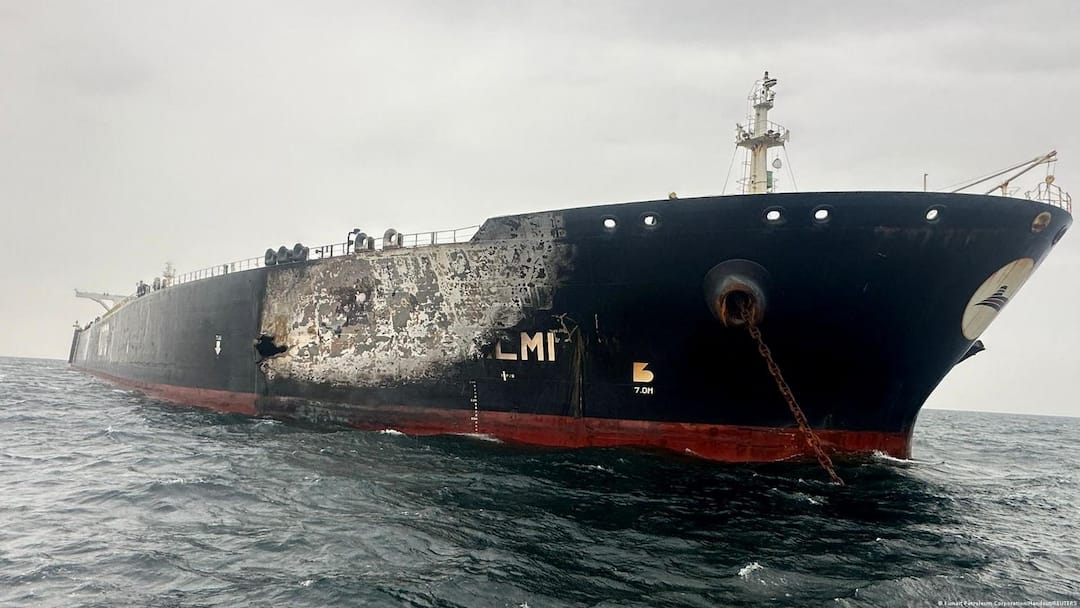
In Kuwait, the state media said that fires were started at a refinery owned by the country’s national oil company after a drone attack.
“Kuwait Petroleum Corporation (KPC) told KUNA that the Mina Al-Ahmadi refinery was targeted in a drone attack early this morning, resulting in fires in several operational units,” KUNA reported, adding that an emergency operation was underway to contain the blazes.
Meanwhile, news agency AP cited activists who reported strikes around the Iranian capital, Tehran, and Isfahan.
There was no immediate information on what was hit in the strikes.
Trump say US will hit bridges, electric power plants ‘next’
US President Donald Trump has said that the US military “hasn’t even started destroying what’s left in Iran.”
“Bridges next, then Electric Power Plants,” Trump wrote on his Truth Social platform. His warning comes a day after US strikes hit the B1 bridge connecting Tehran and the city of Karaj, with Iranian officials saying that at least eight people were killed in the attack.
Law experts in America warned this week thathitting civilian infrastructure such as power plants would be a violation of international law
Trump’s post also said that Iran’s leadership “knows what has to be done, and has to be done, FAST!”
Trump has repeatedly threatened to escalate strikes on Iran if it doesn’t give in to his demands to end the war. Tehran has vowed to keep up its retaliatory campaign against the US and Israel.
UN Security Council to vote on Hormuz reopening options
The UN Security Council is set to vote on a Bahrain-sponsored resolution that would authorize countries to use defensive —but not offensive — means, to secure the safe transit of ships through the Strait of Hormuz.
The resolution, supported by six Gulf nations and Jordan, comes as countries around the world feel the impact of the disruption of the flow of oil through the Strait, through which around a fifth of the world’s oil would normally pass.
The Associated Press reported that the final draft of the resolution, which it obtained, significantly waters down earlier proposals.
Previous drafts would have authorized countries “to use all necessary means” — UN language that would include possible military action — to secure passage and deter attempts to interfere with international navigation.
The final draft authorizes countries “to use all defensive means necessary and commensurate with the circumstances in the Strait of Hormuz and adjacent waters” to secure passage and deter attempts to interfere with international navigation “for a period of at least six months.”
The 15-member Security Council has five permanent members: the US, Britain, China, France and Russia, who all have the power to veto or block a resolution.
Russia and China had strongly opposed the previous drafts authorizing possible offensive action.
How long can Tehran’s asymmetric strategy hold?
After many years of sanctions and weeks of US-Israeli bombing, the Iranian regime is shaken — but still very much capable of threatening the region.
US President Donald Trump has said he wants a quick end to the war, but Iran has proven unwilling to give in to his demands. But how long can they hold out?
Read DW’s full story on Iran’s strategy in the war.
Welcome to our coverage
Thank you for joining us. Here are some of the major developments to help you catch up on the news in the Iran war:
The UN Security Council Friday is set to vote on a Bahrain-sponsored resolution authorizing the use of defensive means — but not offensive— to secure international navigation in the Strait of Hormuz.
The vote comes after more than 40 countries on Thursday attended a UK-led virtual meeting to discuss diplomatic and economic means to pressure Iran into opening the Hormuz shipping route.
Iran’s Foreign Minister said Thursday evening that striking Iranian civilian infrastructure will “not compel Iranians to surrender.”
US strikes on a bridge that was under construction, just outside Tehran, wounded at least 95 people, Iranian state media said.
Trump referenced the strike on the B1 bridge, which he called Iran’s biggest, in a social media post saying “much more to follow.”
Plus, the cost of US crude oil continues to soar, climbing to more than $111 per barrel, as hopes for a resolution to the conflict in the short term begin to fade.
Disclaimer: This report first appeared on Deutsche Welle, and has been republished on ABP Live as part of a special arrangement. Apart from the headline, no changes have been made in the report by ABP Live.


