
- NATO members approved a €140 billion military aid package for Ukraine.
- US grants Ukraine license for domestic Patriot missile production.
- Expert warns Patriot missile production will take several years.
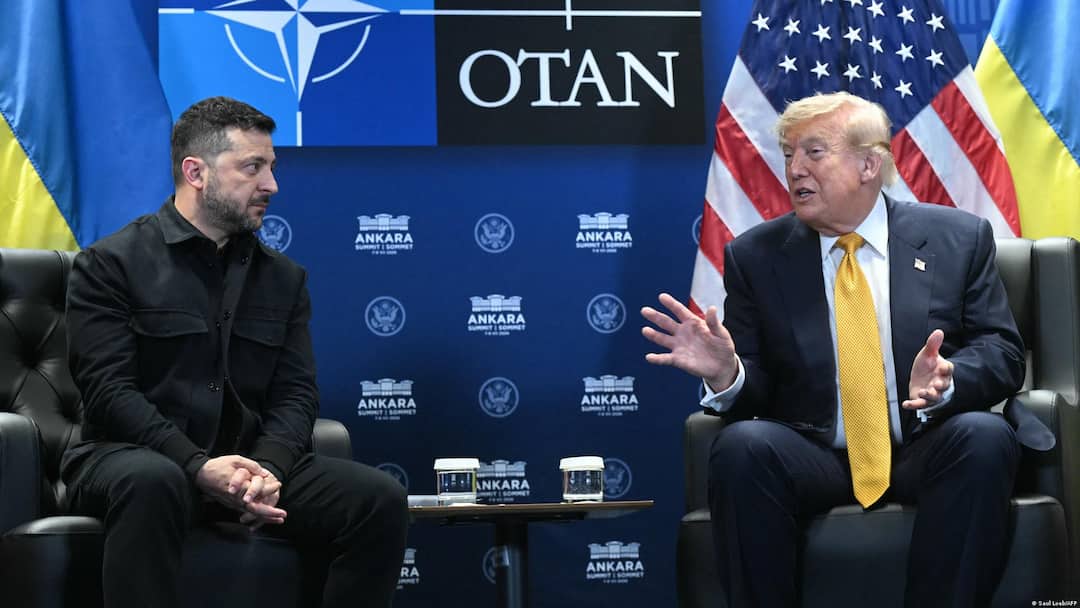
NATO members agreed a comprehensive military aid package for Ukraine totaling €140 billion at their recent Ankara summit. In addition, after meeting with Ukrainian President Volodymyr Zelenskyy, US President Donald Trump announced that he intends to grant Ukraine a license to produce Patriot air defense missiles on its own soil.
These missiles are crucial for defending the country against Russian ballistic attacks. It has been reported that Ukrainian Patriot missiles stockpiles are running low. Indeed, the Ukrainian Air Force was unable to shoot down a single Russian missile during the massive attack on July 6.
The US intends to share its Patriot technology with Ukraine and grant it the right to produce the air defense missiles, Trump said. He also said the US was willing to provide any necessary support.
Trump also said he wants to buy Ukrainian drones, marking a complete reversal in his attitude toward Ukraine’s defense industry, which he had previously dismissed. Now, however, he praised the country’s extensive drone manufacturing capabilities.
He called it “amazing” that Ukraine was still able to build drones “in a war situation.” Ukrainian drone expertise is widely sought after, including in Europe, and numerous countries signed drone agreements with Ukraine at the recent Ankara summit.
A historic decision
Ukraine would be the third country in the world — after Japan and Germany — granted the right to produce Patriot missiles. Going from political declarations to the actual production stage, however, will take years, says military expert Oleh Katkov, editor-in-chief of Defense Express, a Ukrainian media and consulting company.
“That’s really great, it’s a historic moment,” Katkov told DW. “But it’s important to realize that a process like this doesn’t take just a few days or weeks. Despite its industry, skills, and expertise, it took Japan two years from reaching the agreement to starting production. We are likely still only in the stage of the Ukrainian and US governments reaching a general political agreement.”
He told DW a government-level agreement needs to be finalized before defense contractors begin cooperation. Only then, Katkov said, will it be possible to negotiate with the US companies that hold the rights to the Patriot missiles.
“PAC-3 missiles are manufactured by Lockheed Martin, and PAC-2 missiles are built by RTX (Raytheon),” Katkov explained. “These companies must first draw up contracts with Ukrainian firms and only then can we talk about starting production in Ukraine.”
Ukraine’s Centre for Defence Strategies director Oleksandr Khara noted that the issue goes beyond whether Ukraine will receive a license to produce Patriot missiles. “I really hope there aren’t any hidden conditions,” Khara told DW. “Like expecting Ukraine to make concessions to Russia before it receives these Patriot missiles. We can expect all kinds of things from the current US administration.”
Ihor Reiterovych of Kyiv’s Taras Shevchenko National University, however, voiced doubts the Patriot missile agreement will be implemented soon. “This is more of a symbolic matter,” the political analyst told DW. “First and foremost, it’s a message to the Russian Federation: ‘Look at what might happen next.’ It is clear, however, that Ukraine will need a lot of time to actually establish Patriot missile production in its country.”
The White House is showing the Kremlin that it is not abandoning Ukraine but supports it, Reiterovych said. “If it does not produce Patriots now, then Ukraine will do so in the future, and that should serve as a warning to Russia.”
Is Ukrainian NATO membership off the agenda?
What was striking about the Ankara summit was that there was almost no discussion of Ukraine’s potential NATO membership. Oleksandr Khara mainly attributes this to Trump’s stance. “Even before his return to the White House, Trump made it clear that he is opposed to Ukraine joining NATO,” adding that “if the alliance’s most important country takes such a position, it’s clear that no one is going to seriously discuss membership now.” Khara nevertheless thinks Kyiv should not abandon its strategic goal of joining the bloc.
Europe will continue to maintain a collective security system, and Ukraine should be part of it, Khara told DW. “We will not be able to contain Russia on our own in the long run.”
Even though Ukraine’s possible NATO accession was not discussed in Ankara, Ihor Reiterovych believes the summit was still a success for Kyiv. That is because discussions focused on Ukraine, indicating its key role in European security matters, Reiterovych said.
This article was translated from German
Disclaimer: This report first appeared on Deutsche Welle, and has been republished on ABP Live as part of a special arrangement. Apart from the headline, no changes have been made in the report by ABP Live. for DW