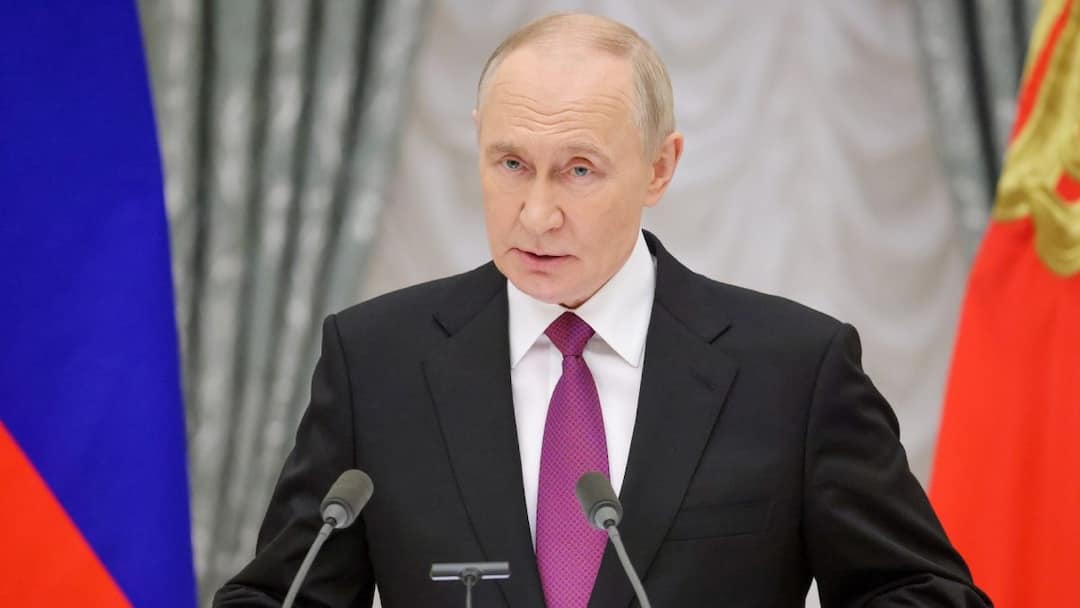

Russian President Vladimir Putin has reiterated his support for the creation of an independent Palestinian state, describing it as the central solution to the long-running conflict with Israel. Speaking in an interview with India Today, Putin said lasting peace can only be achieved by implementing frameworks already adopted by the United Nations.
“We don’t offer any special plans. We have always believed that the only way to solve the Palestinian problem is by implementing the solutions adopted and considered by the United Nations over many years,” he said. “The most important one is establishing an independent Palestinian state, that is the key to resolving all issues.”
Putin on Arab World and Iran’s Role
When asked about the Iran–Israel conflict and whether the Arab world could have supported Palestine more directly, as Iran has done, Putin rejected the suggestion that Arab nations have been inactive. While he acknowledged Iran’s efforts to back the Palestinian cause, he said it would be wrong to conclude that other countries in the region had done little.
“Each of these countries, in its own way, is concerned about Palestine and the Palestinian people, worrying about them. And each of them tries to contribute to resolving the situation. Some things are obvious, others remain hidden in the shadows. But it doesn’t mean that no one is doing anything,” he said.
‘Issue Is Too Complex for Quick Fix’
Putin stressed that the Palestinian question is deeply complex and cannot be resolved through swift political moves or short-term interventions. He cautioned against the idea that the conflict could be settled “by clicking a button” within a few months, reiterating that sustained international engagement is essential.
He again underlined that the ultimate objective must remain the establishment of an independent Palestinian state, which Russia views as the foundation for long-term stability in the region.
Israel and Palestine have been engaged in a prolonged war since 2022. A ceasefire agreement between the two sides was signed on Oct. 10, 2025, offering a temporary pause in hostilities. However, the broader political future of the region remains uncertain, with statehood continuing to be the core point of contention.