
Reported By:Haroon Janjua in Islamabad | Edited by:Wesley Rahn
Pakistan has intensified its diplomatic outreach to become a key mediator in the US-Israel war with Iran, using its strategic relationships with Iran and the US to serve as a mediator.
Despite no sign of the conflict slowing down, the government in Islamabad held high-level meetings with Turkey, Egypt and Saudi Arabia on Sunday to lay the groundwork for possible talks between Washington and Tehran.
After the meetings on Sunday, Pakistani Foreign Minister Ishaq Dar said Pakistan will be “honored to host and facilitate meaningful talks between the two sides in the coming days.”
“Pakistan is very happy that both Iran and the US have expressed their confidence in Pakistan to facilitate the talks,” Dar said, without sharing further details.
It is currently unclear if the talks in question will be direct or indirect, and the US and Iran have not specifically confirmed negotiations will move forward. The US and Iran have issued conflicting statements about whether talks are even taking place.
On Sunday, Iran’s parliament speaker, Mohammad Bagher Qalibaf, dismissed plans for talks in Pakistan as a “cover” for an invasion while 2,500 US Marines arrived in the Middle East, which Qalibaf threatened to “set on fire.”
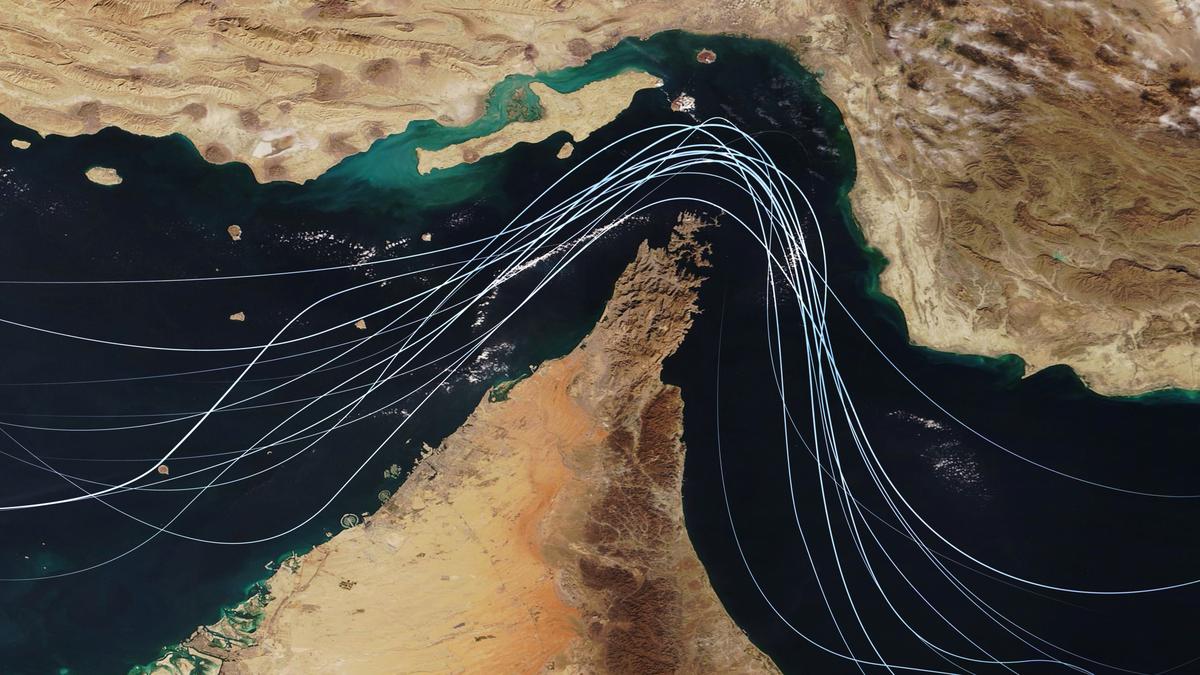
Iran previously rejected a 15-point US peace plan sent through Pakistani mediators as “excessive, unreasonable and unrealistic.” The plan called for Iran to end nuclear enrichment, dismantle nuclear sites, and allow passage through the Strait of Hormuz.
On Monday, Iran’s Foreign Ministry refuted claims by US President Donald Trump that there are ongoing talks between Washington and Tehran to end the war.
“We haven’t had any direct negotiations yet,” Foreign Ministry spokesperson Esmaeil Baghaei told a press conference.
Trump has signaled repeatedly that some form of negotiation between the US and Iran is progressing. However, in one of his latest posts on Truth Social, Trump also threatened to “obliterate” Iranian energy infrastructure if Iran doesn’t make a “deal” shortly and open the Strait of Hormuz.
Pakistan’s balancing act
Islamabad is seeking to reassert diplomatic relevance by positioning itself as a credible interlocutor, leveraging its ties with Washington, Tehran and key Gulf capitals, Raza Rumi, a US-based Pakistani analyst, told DW.
“The US-Iran conflict directly threatens Pakistan’s economic stability, given its dependence on Gulf energy flows and remittances,” he said.
Pakistan must balance its diplomacy carefully, given its defense pact with Saudi Arabia, and its cultural ties and 900‑kilometer (559-mile) border with Iran.
“Mediation allows Pakistan to project itself as a stabilizing actor while insulating itself from the spillover effects of a widening regional war,” Rumi added
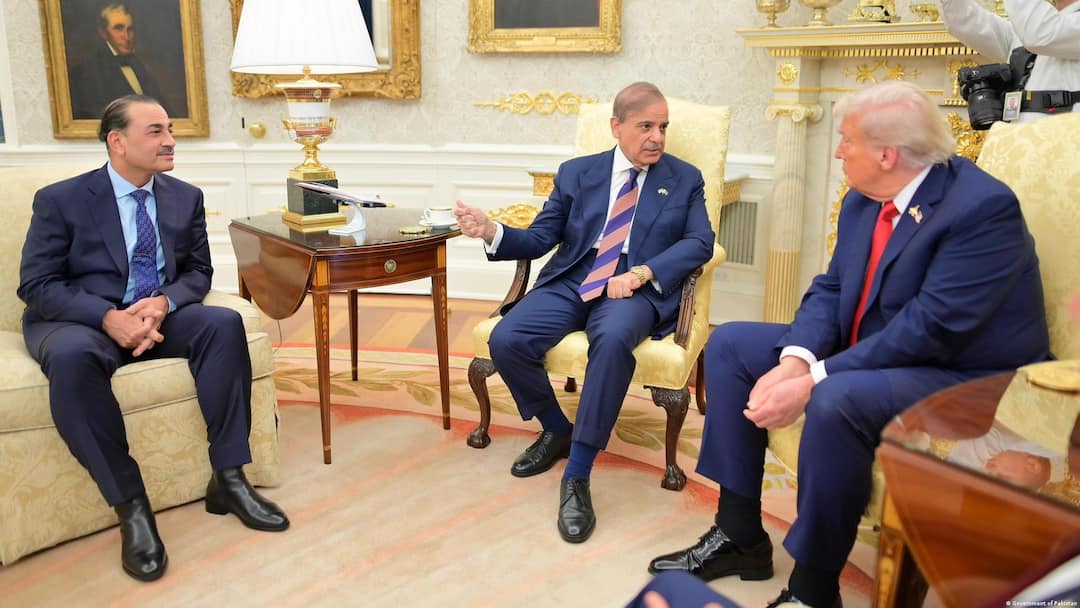
During Trump’s second term as president, US-Pakistani relations have improved. Trump has received Pakistan army head Asim Munir twice, calling the Pakistani general “my favorite field marshal.”
Fatemeh Aman, an Iran-Pakistan expert formerly at the Middle East Institute and Atlantic Council, told DW that Pakistan is among the few countries able to speak to both Washington and Tehran without being dismissed.
She added that Pakistan’s motivation is to manage a conflict that could very quickly have domestic consequences.
Pakistan fears of regional war
Pakistan already finds itself in conflict with the Taliban in neighboring Afghanistan. The country is also dealing with militant threats posed by separatists in Balochistan province, which borders Iran.
“There is urgency. Instability in Iran directly impacts Pakistan — from Balochistan’s security to energy access and domestic stability,” Aman said.
The primary threat to Pakistan is if US-Iran negotiations fail and a protracted war continues to disrupt energy supplies through the Strait of Hormuz, which would exacerbate the country’s already shaky economic situation.
“Failure would expose Pakistan to immediate economic and security shocks. Energy supply disruptions, especially via the Strait of Hormuz, would drive inflation and worsen fiscal stress. There would also be heightened risks along Pakistan’s western border with Iran, including refugee inflows and militant activity,” analyst Rumi said.
The next threat of a prolonged conflict is the security situation along Pakistan’s western border with Iran.
Aman said this would mean trade routes would become less reliable, and the broader region would become harder to operate in.
“A prolonged conflict increases pressure along the Iran-Pakistan border. It also creates openings for militant groups and raises the risk of unrest inside the country. The issue is not whether Pakistan succeeds diplomatically. The issue is that if things continue to escalate, Pakistan will have to deal with the fallout whether it wants to or not,” she said.
Pakistan’s place in the Middle East
Pakistan has strengthened a decades-long partnership with Saudi Arabia through a formal mutual defense pact, pledging to treat an attack on one as an attack on both. At the same time, it also has deep ties with Iran.
If Gulf countries join the conflict, and a regional war expands, Pakistan’s balancing act is likely to become more difficult.
“If Saudi Arabia joins the conflict, Pakistan will face pressure to offer at least symbolic support, but direct military involvement would be destabilizing and unwise,” Rumi said.
“It would likely limit its role to defensive cooperation. Iran would not see Pakistan as a main adversary unless it becomes directly involved. Still, even limited alignment with Saudi Arabia could trigger border tensions, proxy actions, or economic pressure,” the analyst added.
For Pakistan, the challenge is that it cannot simply treat Iran as an adversary, even if the Saudis ask for military support.
“There would be pressure on Pakistan if Saudi Arabia becomes directly involved, but pressure does not mean participation. Pakistan has resisted Middle Eastern wars before. Getting involved would carry serious costs: sectarian tensions, border instability, and economic strain,” Aman said.
She added that a direct Iranian attack on Pakistani interests is unlikely, but if Pakistan is seen as backing military action, risks would rise. Iran would more likely signal pressure indirectly through border tensions or proxies, while avoiding full confrontation.
The threat of sectarian violence
Pakistan’s history of sectarian violence also heightens the risk of internal instability if the Iran war expands further.
Iran is the world’s largest Shia Muslim-majority country, and the Shia population in Pakistan maintains a strong cultural connection.
After Iran’s supreme leader Ayatollah Ali Khamenei was killed in the first day of the war, protests erupted in Pakistan’s northern Gilgit‑Baltistan region.
Authorities deployed the army and imposed a three‑day curfew in Gilgit‑Baltistan after at least 23 people were killed in the protests. Much of the mobilization came from Pakistan’s Shia community, which makes up an estimated 15%-20% of the 250 million population and has historically reacted strongly to developments in Iran.
“Pakistan has a history of sectarian tensions but has built mechanisms to contain large-scale violence. A Saudi-Iran conflict could deepen domestic fault lines, not through immediate unrest but gradual polarization fueled by transnational narratives and militant actors,” Rumi said.
“The key will be how effectively the state manages messaging, law enforcement, and political signaling,” he added.
Aman said that while developments in Iran “often resonate inside Pakistan,” the current situation goes beyond sectarianism.
“The state faces broader pressures — security, economic strain, and regional uncertainty. The real risk is an external conflict aggravating multiple internal fault lines at once, which Pakistan is trying to prevent,” she said.
Disclaimer:This report first appeared on Deutsche Welle,and has been republished on ABP Liveas part of a special arrangement. Apart from the headline, no changes have been made in the report by ABP Live.