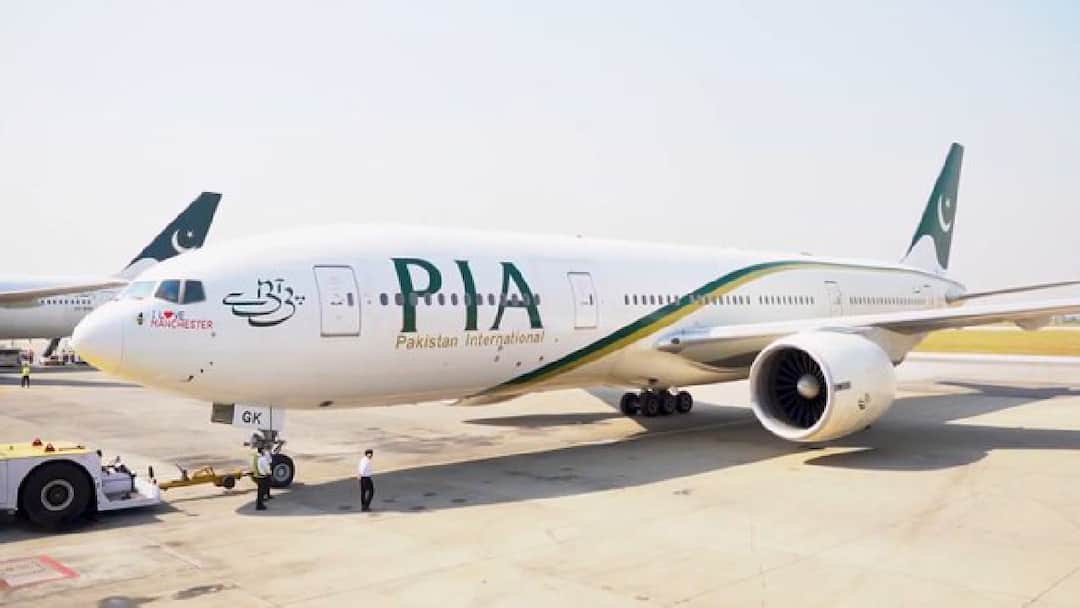

Pakistan, long dependent on foreign loans and emergency funding, is preparing to place its struggling national carrier, Pakistan International Airlines (PIA), under the hammer on 23 December 2025. The live-broadcast auction marks what officials call the “final step” in meeting a key requirement of the International Monetary Fund’s (IMF) $7 billion bailout programme, according to a report by Geo TV.
A High-Stakes IMF Condition
The sale of 51% to 100% of PIA shares, along with full management control, is a structural benchmark under the IMF’s Extended Fund Facility (EFF). The IMF Board is set to convene on 8 December to clear the next $1.2 billion disbursement, which includes $1 billion under EFF and $200 million from a climate-related facility.
Crucially, the Fund has made it clear: Pakistan must complete PIA’s privatisation before year-end to unlock future tranches.
Four Pre-Qualified Bidders
Among the four companies shortlisted for the bidding is Fauji Fertiliser Company Limited, a major arm of the military-run Fauji Foundation. The other contenders include:
- Lucky Cement Consortium
- Arif Habib Corporation Consortium
- Fauji Fertiliser Company Limited
- Air Blue Limited
This will be Pakistan’s first large-scale privatisation in nearly 20 years, as noted by Dawn.
Privatisation Minister Muhammad Ali, speaking to Reuters earlier, said the government is targeting Rs 86 billion in proceeds this year. In the previous bidding round, he noted that 15% of the proceeds would go to the government, with the remainder retained by the airline.
Military’s Indirect Influence Over Key Bidder
Fauji Fertiliser falls under the Fauji Foundation, one of Pakistan’s most powerful corporate groups, deeply intertwined with the country’s influential military establishment.
Although Field Marshal Asim Munir, Pakistan’s most powerful figure, does not sit on the Foundation’s Central Board of Directors, he appoints the Quartermaster General — a board member — giving the military considerable indirect sway. This influence extends through institutional control, senior appointments, and alignment with national priorities.
Government rules also stipulate that the majority shareholding must remain with Pakistani nationals, preventing foreign entities from securing full control.
A Crucial Moment for a Cash-Strapped Nation
The privatisation push comes at a time when Pakistan continues to borrow simply to service older debt. In 2023, the country teetered on the brink of default, the result of years of economic mismanagement and heavy spending on defence.
Pakistan remains the IMF’s fifth-largest borrower, having taken more than 20 loans since 1958. Under the current $7 billion programme approved in September 2024, only $1 billion has been disbursed upfront; the remainder is scheduled across three years.
How PIA Went From National Pride to National Liability
Once celebrated as Pakistan’s premier asset, PIA has become a case study in how mismanagement, corruption, and systemic neglect can devastate a national institution.
Shrinking Fleet and Escalating Losses
The carrier’s losses have ballooned into the billions. By October 2024, PIA had just 16 operational aircraft, after grounding 17 planes due to technical faults — a stark indicator of its deteriorating fleet and financial health.
The Fake Pilot Licence Scandal
The unraveling accelerated in 2020, when it emerged that over 30% of Pakistani pilots held fake or dubious licences. Authorities grounded 262 pilots, setting off widespread operational chaos.
The scandal prompted swift international backlash.
- The European Union Aviation Safety Agency (EASA) banned PIA flights to Europe in June 2020.
- The UK and US soon imposed similar restrictions.
Losing these lucrative routes robbed PIA of billions in annual revenue and dealt a serious blow to its global standing.
Corruption, Nepotism and Chronic Overstaffing
Internally, PIA was buckling under long-standing structural failures. Political appointments, rampant nepotism and severe overstaffing left the airline operating with a workforce far larger than industry norms. Ballooning salary costs and entrenched inefficiencies only deepened its financial wounds, which exceeded PKR 200 billion after the scandal.
Corruption and poor governance further corroded the organisation, turning recovery into an uphill battle.
The Crash That Exposed Deeper Failures
The 2020 crash of PIA Flight 8303, which led to the pilot licence probe, forced costly safety inspections, repairs, and fleet groundings. With cash reserves evaporating, the airline had to divert funds from commercial operations towards crisis management and regulatory compliance.
PIA’s Decline Mirrors Pakistan’s Larger Structural Crisis
PIA is more than a national airline; it is a symbol of Pakistan’s trajectory. Its collapse was never triggered by a single scandal, but by a decades-long chain of systemic failures, much like the country’s ongoing economic challenges.