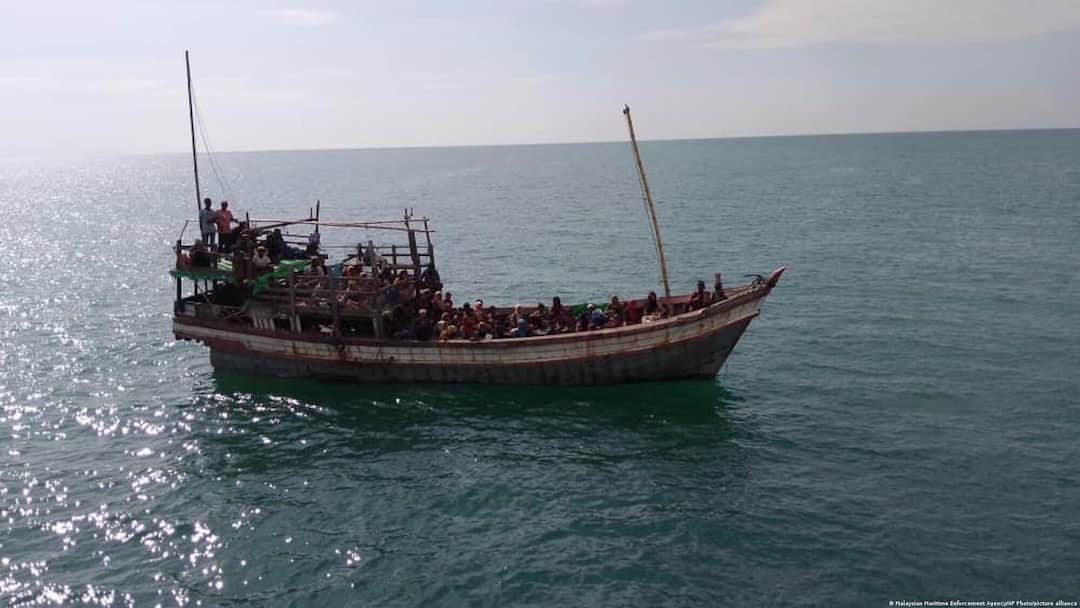

- Two boats carrying 500+ people feared capsized off Myanmar.
- First vessel lost contact; second capsized July 8.
- Rohingya sought better conditions, escaping persecution and camps.
Edited by: Karl Sexton
Two boats carrying more than 500 people are feared to have capsized off the coast of Myanmar in recent weeks, according to a joint statement released by two UN agencies on Thursday.
“According to preliminary information, the two vessels departed from Myanmar’s Rakhine State in late June carrying mostly Rohingya passengers, reportedly including some who had travelled from refugee camps in Cox’s Bazar, Bangladesh,” the statement said, without specifying from where the reports emerged.
A first boat carrying 250 people lost contact shortly after heading out to sea. Another carrying 280 people is believed to have capsized off Myanmar’s Ayeyarwady coast on July 8, according to the International Organization for Migration (IOM) and the UN Refugee Agency (UNHCR).
“If verified, this tragedy would add to the nearly 300 people reported to be missing or to have lost their lives in the Andaman Sea and Bay of Bengal so far this year, including Rohingya refugees and Bangladeshi nationals,” the statement said.
ALSO READ: Iran Says It Destroyed US MQ-9 Drone As American Strikes Damage Children’s Cancer Hospital
Rohingya refugees seek better living conditions
The Rohingya are a Muslim minority group mostly from Myanmar’s Rakhine state on the border of Bangladesh who have faced widespread persecution and have been driven from their homes.
After fleeing a campaign of persecution at the hands of Myanmar security forces in 2017, more than 1.2 million Rohingya have since fled across the border to Bangladesh where they live in squalid conditions in packed camps.
The UNHCR estimates that in 2025, 6,500 Rohingya attempted to seek better living conditions abroad by taking perilous sea journeys run by traffickers, with nearly 900 Rohingya reported missing or dead at sea in the northern Indian Ocean in 2026. Most are attempting to reach safety and opportunity in countries such as Malaysia, Indonesia or Thailand.
In recent years, thousands of Rohingya refugees have landed in Muslim-majority Indonesia’s Aceh province, after making a crossing of more 1,800 kilometers (1,100 miles) often in overcrowded, underpowered, and rickety wooden fishing vessels. Depending on the condition of the vessel, the journey can take anywhere from two weeks to over a month.
“The reported incidents also highlight the persistent risks posed by smuggling and trafficking networks, which continue to exploit the desperation of people seeking safety,” the UN agencies said in the statement on Thursday.
ALSO READ: US Launches Fresh Air Strikes On Iranian Oil Tanker, Airport; Tehran Attacks Kuwait, Jordan
Hazardous conditions at sea
The missing vessels embarked “outside of the regular sailing season, when maritime conditions are typically more hazardous,” it added.
July is the peak of the southwest monsoon in the Andaman Sea, marked by heavy rainfall, rough seas, and high winds.
“Recent torrential rain and flooding across the region have further increased the risks associated with such sea movements,” the UN agencies said.
The UNHCR and IOM said that they are” gravely concerned by the potentially devastating loss of life,” although the incidents and casualty figures have yet to be officially confirmed.
“Escalating conflict and a worsening humanitarian situation in Myanmar, along with limited assistance and opportunities in refugee camps in Bangladesh, contribute to increasing numbers of people attempting perilous sea journeys in search of safety and protection,” the statement said.
Disclaimer:This report first appeared on Deutsche Welle, and has been republished on ABP Live as part of a special arrangement. Apart from the headline, no changes have been made in the report by ABP Live.