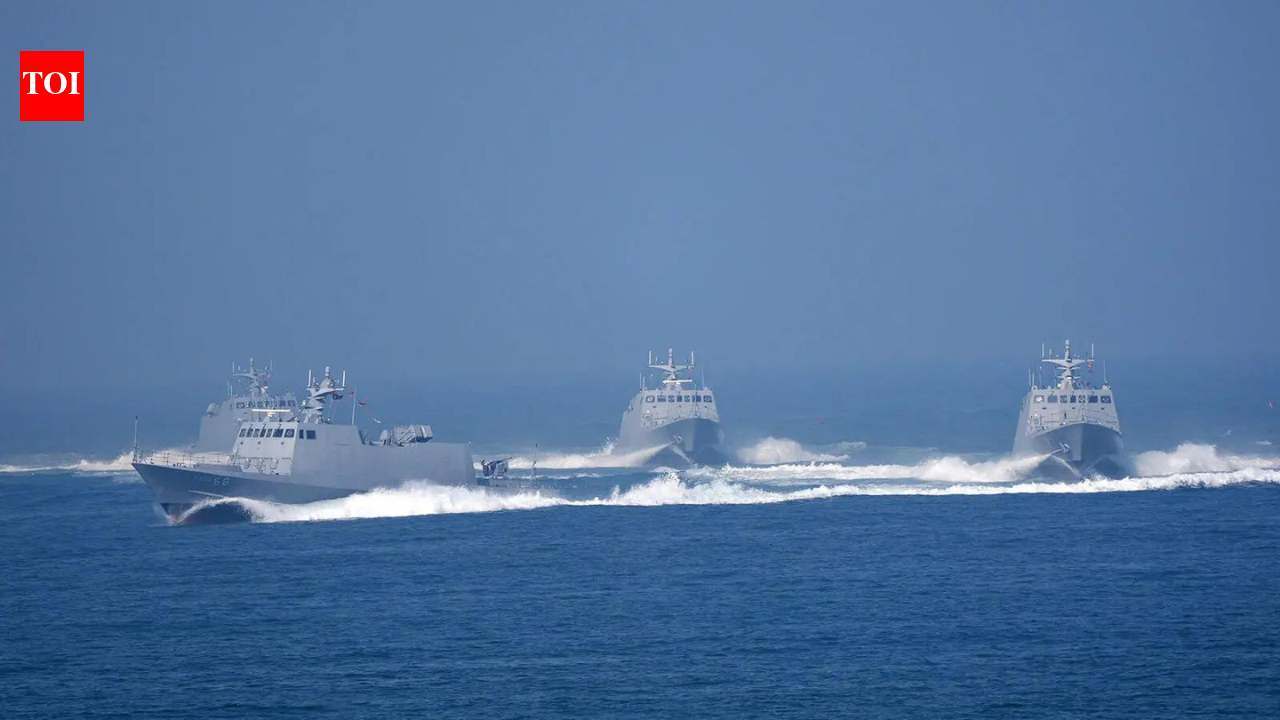
The threat of conflict hangs heavily over the Taiwan Strait as China continues to aggressive military deployment and muscle flexing in the region. Meanwhile, Taiwan, which considers itself a sovereign nation, is bolstering its defences and conducting military drills to prepare for any potential invasion by the Chinese People’s Liberation Army (PLA). This state of tension, characterized by a precarious balance of “no war, no peace,” has persisted since the late 1990s, largely due to the Chinese government’s concern that an invasion could jeopardize its economic interests and lead to serious geo-political and geo-economic fallout.
Taiwanese citizens are resolute in their commitment to safeguarding their democratic way of life, willing to make significant sacrifices to maintain their freedom. The determination of the Taiwanese people to protect their sovereignty poses a considerable challenge for China, as any military action could have profound repercussions both domestically and internationally. Should the PLA attempt to land troops on the island, it is likely to encounter fierce resistance, potentially leading to intense urban combat and extensive aerial bombardment that could devastate Taiwan’s modern economy, which is also intertwined with China’s.
Despite the ongoing political strife and fundamental disagreements regarding Taiwan’s status, both sides have cultivated a complex network of economic interdependencies. Taiwan has become one of China’s largest investors, with Taiwanese businesses investing over USD 203 billion from 1991 to 2022, while bilateral trade has reached over USD 225 billion. This intricate relationship highlights the strategic dependencies and significant risks that both nations face, as over one million Taiwanese citizens live and work in China, contributing to the employment of millions of Chinese and reinforcing the economic ties between the two.
Currently, Chinese companies in the fields of artificial intelligence and electronics heavily rely on advanced semiconductor chips manufactured in Taiwan. The collaboration with Taiwanese technology has played a crucial role in China’s economic transformation. Aware of this dependency, China is taking a pragmatic stance. While Taiwan has refrained from declaring full independence, the resilient spirit of its people continues to deter any significant military efforts by China to assert control over the island, which is home to over 23 million people.
The issue of Taiwan was a prominent topic during the meeting between US President Donald Trump and Chinese President Xi Jinping from May 13 to 15 in Beijing. Xi cautioned Trump against further arming Taiwan with advanced weaponry, emphasizing the need to respect established redlines. In recent years, China has intensified its rhetoric regarding the reunification of Taiwan, expressing strong discontent over the United States’ decision to provide Taiwan with another lot of arms valued at $14 billion. This includes Patriot interceptor missiles and advanced NASAMS surface to air missile systems . Earlier last December, Taiwan had received another consignment of arms worth USD 11 billion. In response, China has blocked the visit of Elbridge Colby, a senior Pentagon policy official, to Beijing.
Taiwan is making significant efforts to assert its sovereignty, a territory that is claimed by China, which identifies itself as the People’s Republic of China, with Taiwan regarded as one of its provinces. The historical context dates back to the establishment of the Republic of China by President Jiang Kai-shek, following the communist revolution that ousted him in 1949. As the communists took control of Beijing, the Republic of China flag was raised in Taipei, symbolizing the ongoing struggle for identity and governance between the two entities.
The Republic of China, commonly known as Taiwan, has established itself as a formidable economic and industrial powerhouse, significantly contributing to both China’s economic growth and the global economy. Among its key players, the Taiwanese company Foxconn stands out as a major investor in China, employing hundreds of thousands of workers and supplying essential high-tech components to various Chinese enterprises. The role of Taiwanese companies is vital in the supply chains of industrialized nations, and any disruption in these networks would be detrimental to China’s modern industries.
The Taiwan Strait has become a critical flashpoint in global geopolitics, marked by China’s assertive stance and Taiwan’s resolute defence of its sovereignty. Despite the heightened tensions, particularly during Donald Trump’s visit to Beijing in mid-May, China has refrained from taking military action against Taiwan. Instead, its strategy aligns with the teachings of ancient strategist Sun Tzu, emphasizing the importance of winning a war without engaging in direct conflict. This approach has led to a state of strategic ambiguity, where China often escalates tensions in response to high-level interactions between U.S. and Taiwanese leaders or discussions regarding Taiwan’s independence.
Recently, tensions have intensified due to the election of Taiwan’s new President, Lai Ching-te, whose reaffirmation of Taiwan’s distinct identity has alarmed Beijing. In response, China has increased military pressure through drills and incursions into Taiwan’s air defence identification zone. Taiwan, in turn, has conducted its own Han Kuang military exercises to assess its combat readiness and safeguard critical infrastructure, such as airports and seaports, while also preparing for potential cyber attacks and blockades. Additionally, Taiwan is focusing on asymmetric strategies to effectively counterbalance much stronger China’s military might.
In anticipation of President Trump’s visit, China intensified its military maneuvers around Taiwan, conducting extensive exercises that simulated invasion scenarios. This military posturing is often accompanied by aggressive rhetoric directed at Taiwanese leaders, heightening concerns about potential military escalation in the Taiwan Strait. However, Chinese President Xi Jinping’s statement that he has instructed the military to prepare for a possible invasion by 2027 provided some reassurance to strategic analysts, that China would not invade Taiwan in near future.
The ongoing China-Taiwan military tensions significantly affects the Taiwan Strait, a crucial area for global shipping routes and home to leading semiconductor manufacturers essential to the economies of China, the United States, and the industrialized world. Disruptions in this region could have severe repercussions for global supply chains. Additionally, the United States is involved in this dispute, as it is committed to providing defensive support under the Taiwan Relations Act. Any military action against Taiwan would likely provoke a U.S. military response, risking a broader confrontation in the region, which China is keen to avoid.
A full-scale war would not only result in substantial casualties for the People’s Liberation Army (PLA) but also have significant domestic repercussions for China. Furthermore, a conflict involving Taiwan and the U.S. would severely impact China’s already strained economy. Given these considerations, it is likely that China will refrain from invading Taiwan, opting instead to maintain strategic ambiguity through psychological warfare, economic coercion, and diplomatic isolation.
( The writer is a senior journalist and strategic affairs analyst)