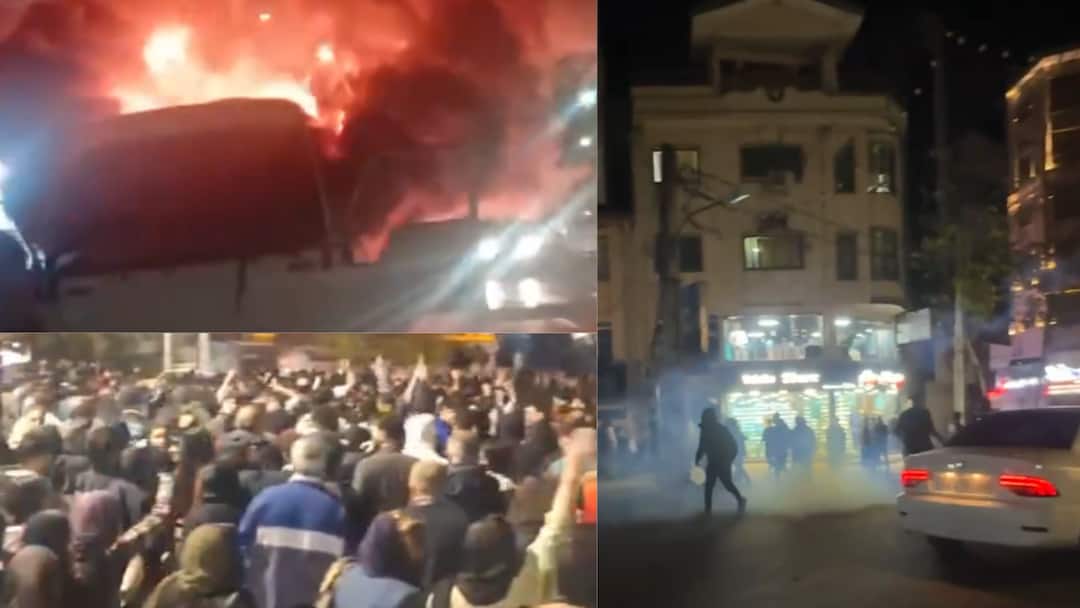

At least 36 people have died in the violent confrontations during the past 10 days in Iran. The recent clash broke out at Tehran’s historic Grand Bazaar on Tuesday as Iranian security forces fired tear gas to disperse demonstrators, signaling the most intense wave of unrest the country has witnessed in nearly three years.
Economic Anger Fuels Nationwide Unrest
The latest protests have been driven by public fury over soaring prices and the rapid devaluation of the Iranian rial, which touched yet another historic low against foreign currencies this week. Inflation has climbed to around 40%, squeezing household budgets already battered by years of economic mismanagement and international sanctions linked to Iran’s nuclear programme.
The demonstrations initially began in late December, sparked by shopkeepers in Tehran protesting the currency collapse. Since then, the movement has expanded far beyond the capital, reaching 27 of Iran’s 31 provinces, according to activist networks, as per the foreign-based Human Rights Activists News Agency (HRANA), quoted by BBC. University students have also joined the protests, accelerating their spread and adding momentum to the movement.
Deaths, Arrests And Heavy Crackdowns
Human rights groups report a mounting toll. Norway-based Iran Human Rights (IHR) said at least 27 protesters have been killed over the past ten days, including five minors. BBC Persian has independently verified the deaths of 20 individuals so far. Iranian authorities have not issued an official casualty count but confirmed that three members of the security forces have died.
The activist organisation HRANA reported that more than 60 protesters have been injured and over 2,000 people arrested since the unrest began. On Tuesday evening, semi-official media said a policeman was shot dead in Malekshahi, Ilam province, one of the areas witnessing particularly intense demonstrations and forceful security responses.
Footage circulating earlier in the day showed protesters chanting slogans against Iran’s clerical leadership inside the Grand Bazaar as security forces moved in, forcing crowds to scatter through surrounding alleyways.
Political Stakes
The current unrest is the most serious since the 2022–2023 nationwide protests that followed the death of Mahsa Amini in police custody. While it has not yet reached the scale of those demonstrations or the mass protests that followed Iran’s disputed 2009 elections, analysts say the stakes are high.
The protests come amid a deepening economic crisis and just months after a 12-day war with Israel in June, posing a renewed challenge to Supreme Leader Ayatollah Ali Khamenei, who has ruled Iran since 1989 and is now 86 years old. With pressure mounting at home and abroad, the government faces growing uncertainty over how long it can contain the unrest.