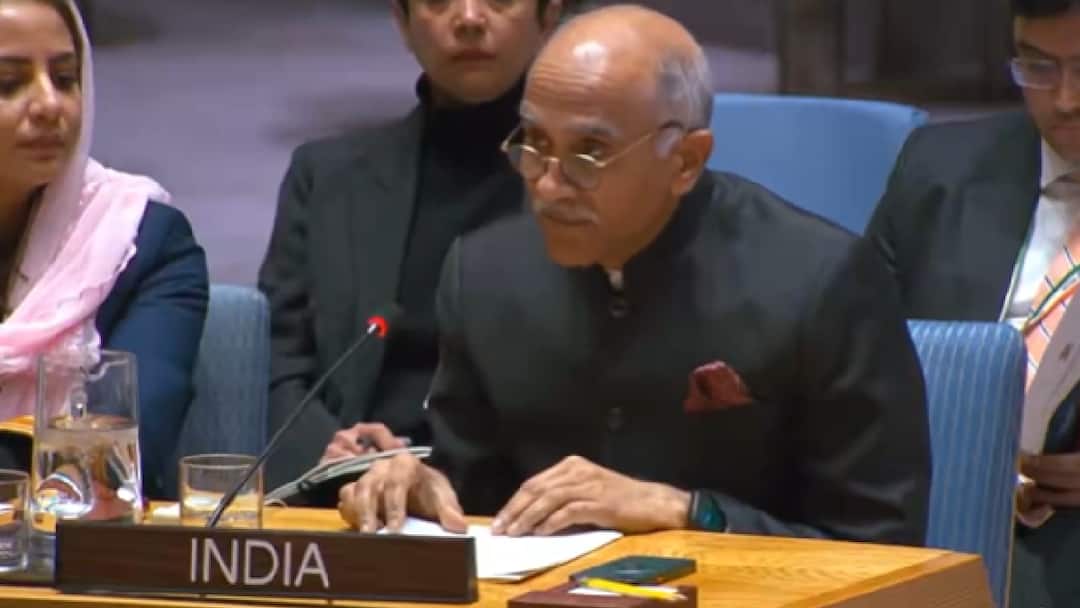

India on Thursday issued a strong condemnation of Pakistan’s airstrikes in Afghanistan during a United Nations Security Council (UNSC) session, decrying the loss of innocent lives, including women, children, and cricketers. Highlighting the humanitarian consequences, India echoed concerns raised by the UN Assistance Mission in Afghanistan (UNAMA), emphasising that such attacks violate the UN Charter and international law.
“We add our voice to calls for full respect for the United Nations Charter and international law, with particular attention to the protection of innocent civilians,” India’s envoy told the Council. He noted that the airstrikes have compounded the suffering of communities already grappling with a severe crisis.
Concerns Over “Trade and Transit Terrorism”
India also expressed deep alarm over Pakistan’s ongoing practice of what it termed “trade and transit terrorism.” The envoy highlighted that the closure of key access routes to Afghanistan—a landlocked nation heavily reliant on cross-border trade for essential supplies—disrupts the country’s recovery and violates World Trade Organization (WTO) norms.
“These actions amount to open threats and acts of war against a fragile nation struggling to rebuild under difficult circumstances,” India said.
Support for Afghanistan’s Sovereignty and Pragmatic Engagement
While condemning Pakistan’s actions, India reaffirmed its unwavering support for Afghanistan’s territorial integrity, sovereignty, and independence. The country stressed that the international community must engage with the Taliban in a structured and pragmatic manner, using policy measures that incentivise positive action rather than relying solely on punitive approaches.
“An approach based only on sanctions or punishments risks perpetuating the ‘business as usual’ dynamic that has characterised the last four and a half years,” the envoy warned, urging for nuanced strategies that can bring lasting benefits to Afghan citizens.
Counterterrorism Efforts Remain a Priority
India underscored the importance of global coordination to prevent UN-designated terror groups and individuals from operating across borders. Specifically, it called attention to threats from ISIL, Al-Qaida, Lashkar-e-Taiba, Jaish-e-Mohammed, and proxies like the Resistance Front, emphasising the need to halt cross-border terrorism and operational support.
“Continued vigilance and concerted international efforts are essential to ensure that terrorist networks cannot exploit instability in Afghanistan,” India said, highlighting its commitment to regional security.
A Call for Sustainable International Policy
Reiterating its stance, India urged the UN and the broader international community to adopt pragmatic and well-calibrated policies toward Afghanistan. By incentivising constructive behaviour rather than merely imposing sanctions, India argued, the global community could help foster long-term stability and humanitarian relief in a country facing immense challenges.