
A video showing an elderly woman openly defying Iran’s Islamic leadership has gone viral on social media, striking a powerful chord as protests spread across the country. The clip has come to symbolise the nationwide unrest driven by economic hardship and deepening public anger against the government.
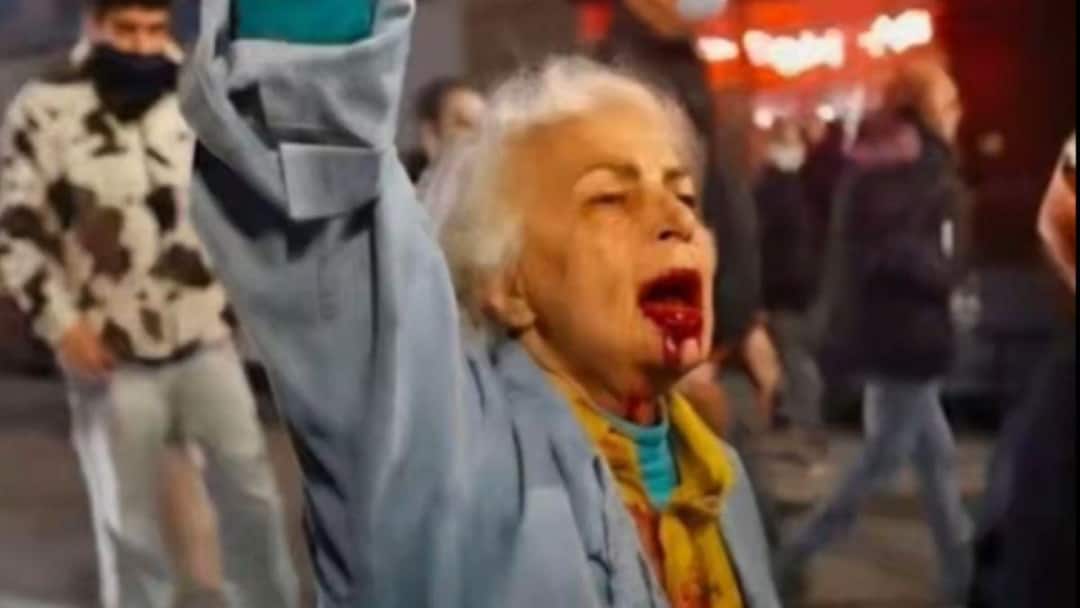
In the footage, the woman, who appears to have blood or a similar red liquid on her mouth, is seen marching through the streets of Tehran while chanting anti-government slogans.
“I’m not afraid. I’ve been dead for 47 years,” she shouts, her words resonating widely online. It remains unclear whether the substance on her face is blood or paint used as a form of protest.
I’m not afraid. I’ve been dead for 47 years this is the voice of a woman in Iran who is fed up with the Islamic republic.
47 years ago, the Islamic Republic took our rights and turned a nation into hostages.
Today people have nothing left to lose, they rise.
Iran is rising. pic.twitter.com/GAawmynE0C— Masih Alinejad 🏳️ (@AlinejadMasih) January 8, 2026
A Haunting Reference To Iran’s Past
The woman’s remark appears to reference the 47 years since Iran’s 1979 Islamic Revolution, which overthrew the pro-Western Shah Mohammad Reza Pahlavi and replaced the monarchy with a Shiite Islamic theocracy. The revolution ushered in clerical rule under Ayatollah Ruhollah Khomeini, whose legacy continues to shape Iran’s political system.
Iran is currently led by Supreme Leader Ayatollah Ali Khamenei, a central figure in the Islamic Republic’s power structure. Public dissent against the clerical establishment was once ruthlessly crushed, with even expressions of sympathy for the former monarchy carrying the risk of severe punishment.
Internet Blackout And Escalating Crackdown
As protests intensified, Iran’s government cut off internet access and international telephone calls, a move that coincided with nighttime demonstrations called by exiled crown prince Reza Pahlavi. From rooftops and streets, protesters shouted slogans and poured into public spaces, defying mounting security pressure.
The mobilisation marked the first major test of whether Pahlavi, whose father fled Iran shortly before the 1979 revolution, could influence public sentiment from exile. Demonstrations have included chants backing the former shah, a striking shift that underscores how far anger over Iran’s economic crisis has spread.
Protests continued on Thursday in cities and rural towns, with more markets and bazaars shutting in solidarity. According to the US-based Human Rights Activists News Agency, violence linked to the unrest has left at least 42 people dead, while more than 2,270 others have been detained.