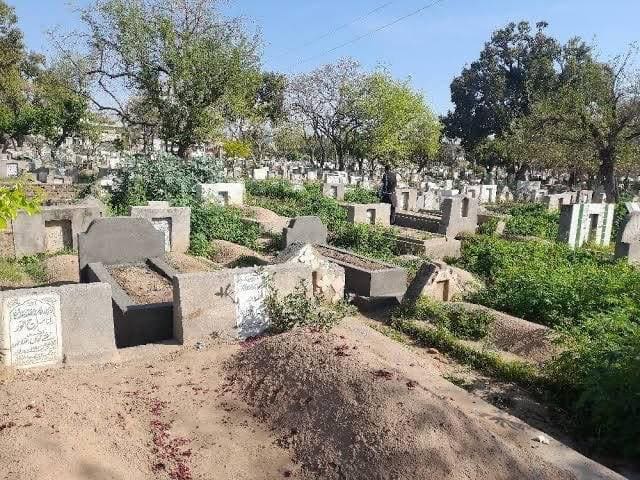
Pakistan’s state-sponsored terror organisation Hizbul Mujahideen has suffered a significant setback with the death of its founding member and senior terrorist commander Qaiser Ahmed Mir, alias Mohammad Iqbal, in Pakistan’s capital, Islamabad. According to sources, the veteran Hizbul terrorist died after a prolonged battle with cancer. He had been living in Islamabad’s Tarlai Kalan area for nearly two decades after fleeing India.
Founding Role & Kashmir Operations
Qaiser Ahmed Mir was among the founding members of Hizbul Mujahideen when the outfit was formed in April 1990. Between 1990 and 2008, he remained active in the Kashmir Valley and emerged as a top Hizbul commander in Pulwama, Shopian and Rajpora. Security sources attribute to him a key role in targeted violence and the massacre of Kashmiri Pandits during the peak years of insurgency. After escaping to Pakistan, Mir was tasked with overseeing terrorist training operations in Pakistan-occupied Kashmir and Khyber Pakhtunkhwa (KPK) province.
Training Hub For Militants
He was placed in charge of terror training at the Khalid bin Walid camp located in the Guldheri mohalla of Garhi Habibullah, a known stronghold of Hizbul Mujahideen and Lashkar-e-Taiba. Several high-profile terrorists, including Burhan Wani, Riyaz Naikoo and Zakir Musa, were trained at this camp under Mir’s supervision, along with hundreds of other terrorists. Sources further reveal that after relocating to Pakistan, Mir was provided a house in Islamabad’s Tarlai Kalan area and was receiving a monthly stipend of around 125,000 Pakistani rupees (PKR).
OGW Network & Logistics
Intelligence sources said that while Qaiser Ahmed Mir was living in Islamabad, he travelled to Garhi Habibullah only during specific training schedules. Apart from training, Mir also managed an extensive Over Ground Worker (OGW) network of more than 80 operatives in Jammu and Kashmir, responsible for providing logistics, shelter and intelligence support to infiltrating terrorists. Following the 2019 Pulwama terror attack and India’s Balakot air strikes, then Pakistani Prime Minister Imran Khan announced the implementation of the National Action Plan under international pressure. As a result, the Khalid bin Walid camp was shut down.

Balakot Aftermath Hits Training
Prior to its closure, Hizbul Mujahideen was producing more than 100 trained terrorists annually, nearly 40 per cent of whom were supplied to Lashkar-e-Taiba and Jaish-e-Mohammed in exchange for funds. The shutdown of the camp severely disrupted Hizbul’s training pipeline. The situation worsened further after the killing of Hizbul commander Imtiaz Alam in Rawalpindi by unidentified gunmen, which dealt a blow to the group’s financial network inside Pakistan. Simultaneously, the abrogation of Article 370 in Jammu and Kashmir significantly curtailed Hizbul’s recruitment base.
Article 370 Weakens Recruitment
Security agencies dismantled the outfit’s support ecosystem by arresting government employees, teachers and senior Hurriyat leaders linked to terror financing and recruitment. As a result, Hizbul Mujahideen has failed to recruit even a single local militant from Jammu and Kashmir in the past one year. With the death of Qaiser Ahmed Mir, a native of Pulwama, Hizbul’s OGW network is expected to weaken further. The outfit is now attempting to re-establish itself in Khyber Pakhtunkhwa’s Lower Dir and Mansehra regions since August last year but faces stiff resistance from Lashkar-e-Taiba and Tehreek-e-Taliban Pakistan (TTP).