- Pakistan hired Ervin Graves Strategy Group for lobbying, costing Rs 11 crore.
- Firm will influence White House, Congress, media, and policy think tanks.
- Lobbying aims to improve Pakistan’s image and strategic US interests.
Pakistan, which is struggling with economic collapse, terrorism and a rapidly deteriorating global image, has launched a large-scale lobbying operation in the United States in an attempt to repair its reputation and protect its strategic interests.
ABP News has accessed a confidential Pakistani government document revealing that Pakistan’s Embassy in Washington DC signed a major lobbying agreement worth nearly Rs 11 crore with American lobbying firm “Ervin Graves Strategy Group LLC” on May 1, 2026. Under the agreement, the US-based lobbying firm will actively lobby in favour of Pakistan within the White House, US Congress, American media and influential policy think tanks.
ABP News possesses an exclusive copy of the nine-page agreement, which states that the lobbying firm will work to influence members of the US Congress and congressional staff associated with committees dealing with foreign policy, defence, national security, trade and funding matters in favour of Pakistan.
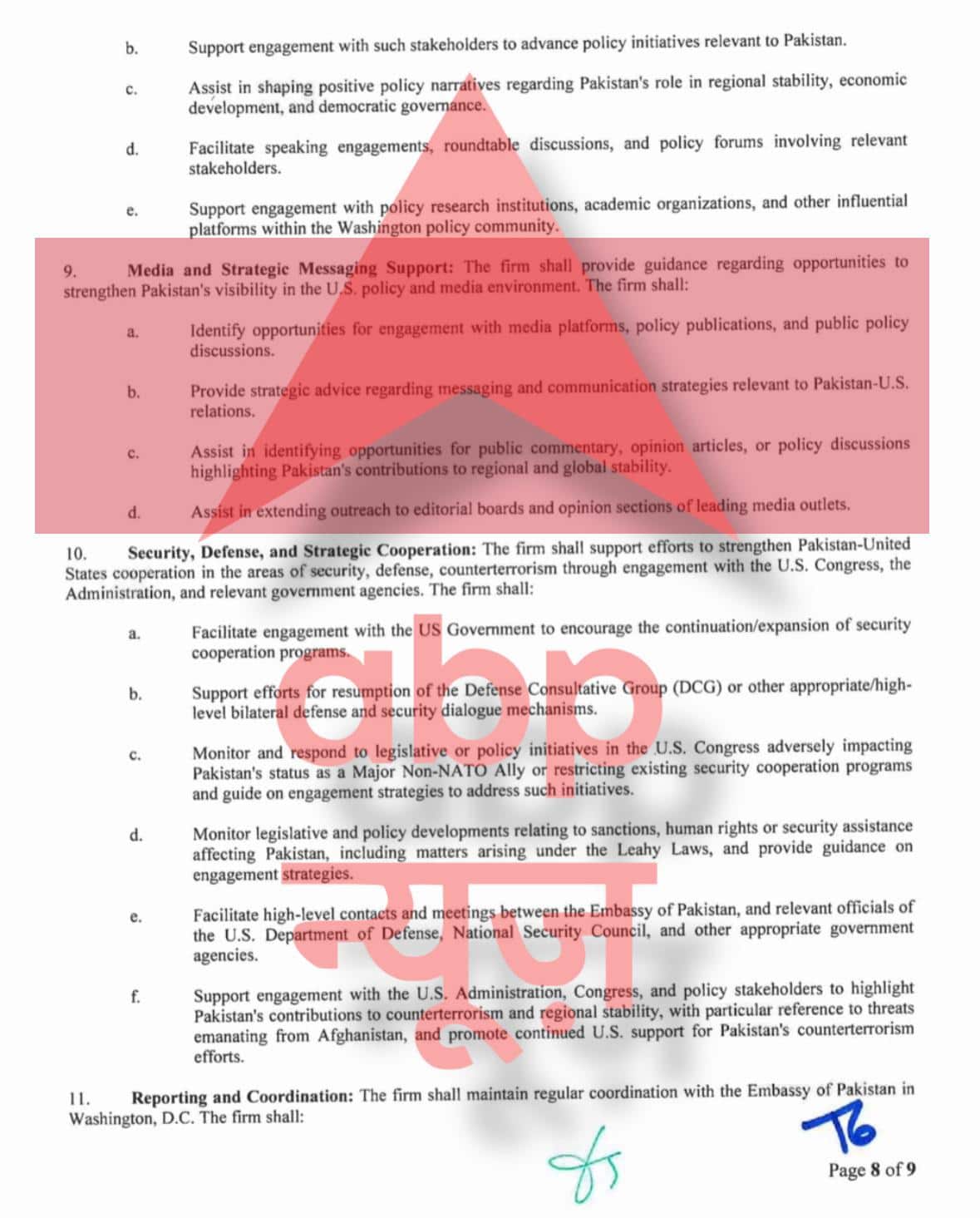
The agreement further mandates the firm to arrange meetings, strategic discussions and briefings between Pakistani representatives and senior officials from the White House, US State Department, Pentagon and US Commerce Department in order to advance Pakistan’s interests inside the American establishment.
Former US Congressman Tom Graves Heads Lobbying Firm
The CEO of Ervin Graves Strategy Group is former US Congressman Tom Graves, a Republican politician who served in the US Congress from 2010 to 2020 and is considered well-connected within America’s ruling Republican political ecosystem.
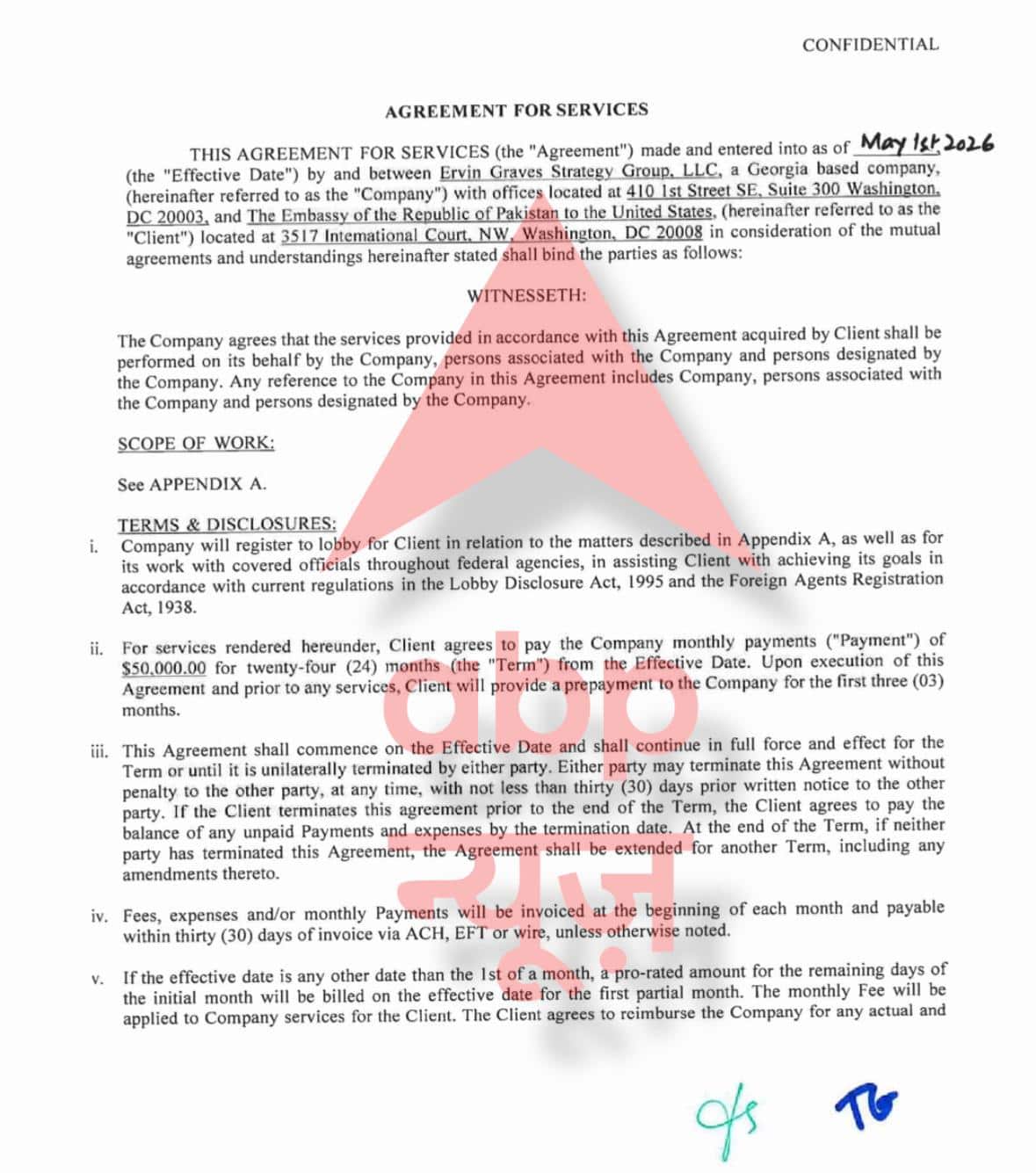
The agreement bears the signatures of Tom Graves and Pakistan’s Ambassador to the United States Rizwan Saeed Sheikh.
The document makes it clear that the lobbying company will not only help Pakistan expand its reach within Congress but will also strengthen Islamabad’s access inside the White House and executive branch of the US administration.
Engagement Across US Executive Agencies
According to the agreement, the lobbying firm will establish high-level engagement with US Executive Branch agencies including:
- State Department
- Department of Defense
- Treasury Department
- Department of Energy
- Department of Commerce
- EXIM Bank
- US International Development Finance Corporation
The objective is to expand Pakistan’s institutional influence within these agencies.
Congressional Outreach And Political Network Expansion
The agreement also states that the lobbying firm will work to strengthen the “Congressional Pakistan Caucus” by bringing more US lawmakers into the group, while simultaneously arranging high-level engagements between Pakistan’s ambassador and senior American officials and lawmakers.
These engagements will include receptions, roundtables, networking events and closed-door policy discussions.
The document further reveals that the lobbying firm will coordinate congressional delegations and visits of US lawmakers and congressional staff to Pakistan.
Through these visits, Pakistan intends to shape what the agreement describes as the “ground narrative” presented to American lawmakers, effectively exposing them only to the version of Pakistan that Islamabad wants them to see.
As part of this process, Ervin Graves Strategy Group will brief US lawmakers before their visits and coordinate travel arrangements and engagements inside Pakistan.
Targeting Key US Political Caucuses
According to the document, Pakistan also aims to build influence within powerful US political caucuses including:
- Congressional Black Caucus
- Congressional Hispanic Caucus
- Congressional Asian Pacific American Caucus
The objective is to create a broader pro-Pakistan political support network across multiple American political blocs.
Media, Think Tanks And Narrative Management
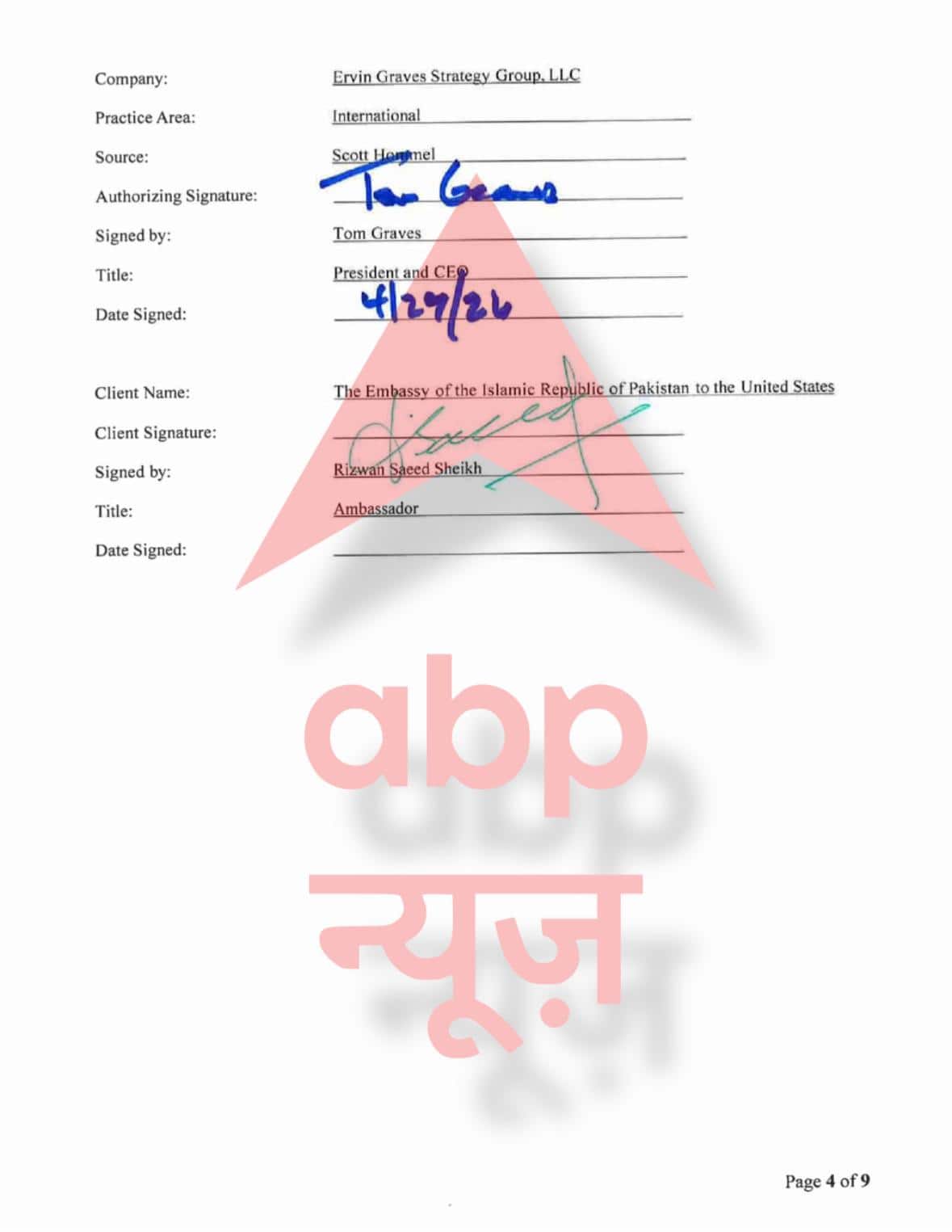
Pakistan is fully aware that its global image remains closely associated with sponsoring, sheltering and exporting terrorism. In response, the agreement specifically tasks the lobbying firm with media management and narrative-building operations aimed at improving Pakistan’s image in the United States.
Under the agreement, the firm will engage with American media platforms, editorial boards and policy publications to promote favourable narratives about Pakistan.
This includes facilitating publication of pro-Pakistan articles, arranging public commentary and influencing debates within the US policy and media ecosystem.
The lobbying firm has additionally been tasked with cultivating support among former US government officials, think tanks, academics and policy analysts in order to influence US policymaking in Pakistan’s favour.
Strategic Positioning As ‘Reliable Partner’
Despite Pakistan’s long history of sheltering terrorist organisations and operating terror infrastructure, the agreement directs the lobbying firm to present Pakistan before American policymakers as a “reliable partner” in the areas of:
- “regional stability”
- “counter-terrorism”
- “democratic engagement”
The document also states that Pakistan wants the firm to highlight alleged terror threats emanating from Afghanistan against Pakistan in front of US policymakers so as to strengthen Islamabad’s strategic positioning.
Defence Cooperation And US Policy Monitoring
The agreement contains a separate section focused on defence and security cooperation, where Pakistan expresses its desire to maintain US security cooperation programmes and preserve its status as a “Major Non-NATO Ally”.
The lobbying firm has also been tasked with monitoring human rights-related bills, resolutions and legislative proposals that could affect US security assistance or sanctions targeting Pakistan.
Significantly, the agreement also mentions monitoring matters linked to the US “Leahy Laws”, American laws that restrict military assistance to countries or military units involved in human rights violations.
This strongly indicates that Pakistan intends to manage and neutralise human rights and security concerns raised against it within the US system.
Economic Lobbying And Investment Push
The agreement places special emphasis on economic lobbying. Under this framework, the lobbying firm will attempt to attract American investment into Pakistan in sectors including:
- rare earth minerals
- critical minerals
- information technology
- pharmaceuticals
- agriculture
- infrastructure
The agreement’s “Third-Party Validation Strategy” section explicitly states that the lobbying firm will identify influential voices capable of presenting Pakistan to the US government as a “strategically important partner”.
Financial Terms And Payments
Under the agreement, which came into effect on May 1, 2026, Pakistan will pay the lobbying firm $50,000 per month, approximately Rs 48 lakh Indian rupees or 1.4 crore Pakistani rupees per month, for the next two years.
In total, Pakistan is expected to spend nearly $1.2 million, approximately Rs 11 crore Indian rupees or over 33 crore Pakistani rupees, on this single American lobbying firm over the course of the contract.
Pakistan has already paid three months’ advance payment to the lobbying company earlier this month in order to immediately begin operations aimed at influencing the White House, Congress, media, think tanks and corporate networks in the United States.
Alleged Strategy To Shape Anti-India Narratives
According to sources, Pakistan’s lobbying operation is not limited to improving its international image. Islamabad is also expected to use the lobbying infrastructure to shape anti-India narratives within the United States.
This may include encouraging American lawmakers to raise issues such as Kashmir, human rights and regional security against India, while simultaneously influencing US think tanks and media platforms to publish narratives critical of India.
ALSO READ: US, Iran Near Deal To Reopen Strait Of Hormuz, Launch Nuclear Talks
Sources also indicate that Pakistan could attempt to portray itself internationally as a victim of terrorism despite its long-standing record of sheltering and supporting terror groups operating across the region.
Long-Term Influence On US Policy Discourse
Sources indicate that the lobbying and narrative-management infrastructure created under this agreement may in future facilitate increased US media articles, opinion pieces and policy commentary critical of India’s stand on the Indus Waters Treaty (IWT), while simultaneously promoting narratives advocating renewed India-Pakistan dialogue despite continuing terrorism concerns.
ALSO READ: Japan Stops Importing Indian Mangoes After Finding Flaws In Pest Control Checks
The influence operation may also contribute toward shaping discussions within US think tanks, strategic policy forums and among certain members of the US Congress along similar lines.