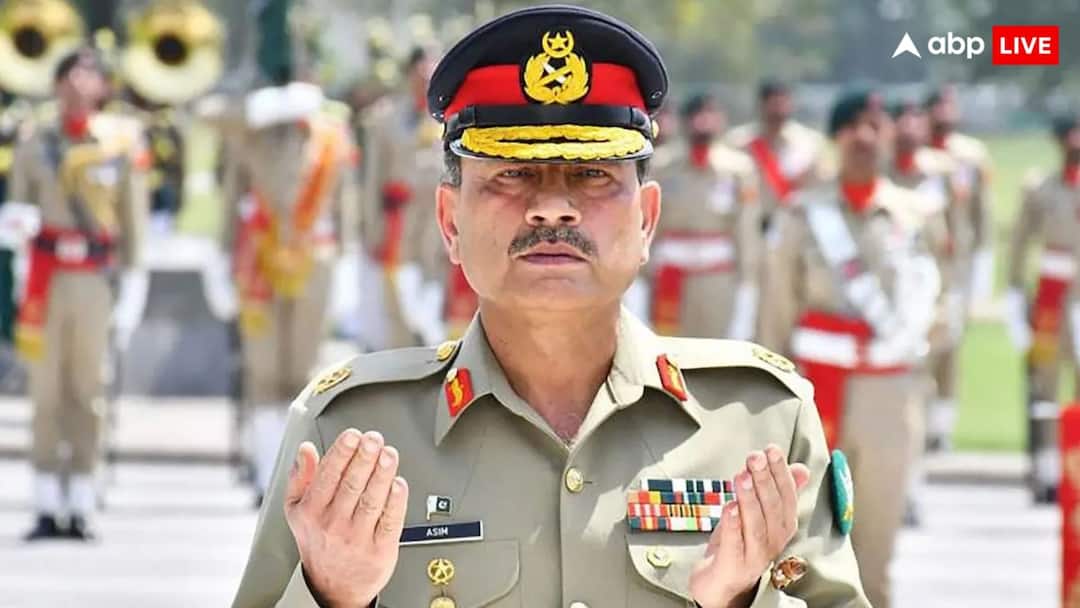

Pakistan’s parliament has approved a constitutional amendment dramatically increasing the authority of the country’s military chief while curbing the powers of the judiciary, a move that has sparked widespread criticism and fears of authoritarian rule
The 27th Constitutional Amendment, passed by the National Assembly on Wednesday and earlier cleared by the Senate, expands the role of Field Marshal Asim Munir, Pakistan’s army chief, who is often viewed as the real power centre in Islamabad. The bill will now return to the upper house for minor revisions before being sent to President Asif Ali Zardari for formal assent.
Once enacted, the legislation will create the new post of Chief of Defence Forces, giving Munir command over all three services: the army, navy, and air force. It also grants him lifelong legal immunity, a provision critics say places him beyond the reach of Pakistan’s courts.
‘Funeral For Democracy,’ Say Critics
Political observers and legal experts have condemned the amendment as a devastating blow to Pakistan’s already fragile democracy.
“This entrenches Munir and future army chiefs in power through a constitutionally protected role that defies democratic norms,” said Aqil Shah, a Georgetown University scholar and author of The Army and Democracy. He added that the immunity clause “makes a mockery of civilian supremacy.”
The amendment also weakens the authority of the Supreme Court, Pakistan’s highest judicial body, by setting up a new Federal Constitutional Court above it. Judges for this new body will be chosen directly by the executive branch, while the president will hold unilateral power over judicial transfers, a shift legal experts warn effectively ends judicial independence.
“This destroys the very idea of an independent judiciary,” said Salahuddin Ahmed, a prominent constitutional lawyer. “It paves the way for lifelong dictatorship.”
Military’s Deepening Control In Pakistan
Pakistan has been ruled by the military for nearly half its history, often under generals who suspended the constitution. Although civilian rule was restored in 2008 after the fall of Pervez Musharraf, the army has continued to wield decisive influence over politics.
Since taking charge in 2022, Asim Munir has consolidated power even further. The army chief has taken on an international diplomatic role typically reserved for heads of state, including two White House meetings with former US President Donald Trump, who reportedly described him as “my favourite field marshal.”
Swift Passage Raises Alarm
The ruling coalition led by Prime Minister Shehbaz Sharif has defended the amendment, saying it will bring “efficiency and modernisation” to the governance of both the military and the judiciary.
However, political analysts note that the speed with which the bill passed, clearing both chambers in a matter of hours with only four lawmakers opposing it, reveals the government’s weakness and the army’s overwhelming dominance.
The Pakistan Tehreek-e-Insaf (PTI), the largest opposition party led by imprisoned former prime minister Imran Khan, boycotted the vote. The PTI’s leadership has been largely dismantled through arrests and disqualifications since Munir assumed office.
A coalition of opposition parties under the banner Tehreek-e-Tahafuz-e-Ayeen-e-Pakistan (TTAP) accused the government of “shaking the foundations of the constitution.”
Meanwhile, more than 100 lawyers and civil society members issued a joint statement calling the amendment “an assault on the constitution” and criticised lawmakers for pushing it through “without debate or consultation with the legal community.”
A Step Toward Authoritarianism
For many Pakistanis, the constitutional change marks yet another step away from civilian rule. Analysts say it effectively formalises the military’s control over the state, not just through influence, but now through constitutional legitimacy.
“Pakistan has lived under military shadow for decades,” one Islamabad-based political analyst said. “This amendment removes even the illusion of civilian supremacy.”