
A Lancet analysis has estimated that antimicrobial resistance (AMR) is already associated with millions of deaths worldwide every year, signalling a deepening crisis where infections once considered routine are becoming harder, or at times impossible, to treat. The World Health Organisation (WHO) warns repeatedly that the world risks entering a “post-antibiotic era,” where even minor injuries or common surgeries could become life-threatening. The WHO has declared AMR as one of the top 10 global public health threats facing humanity.
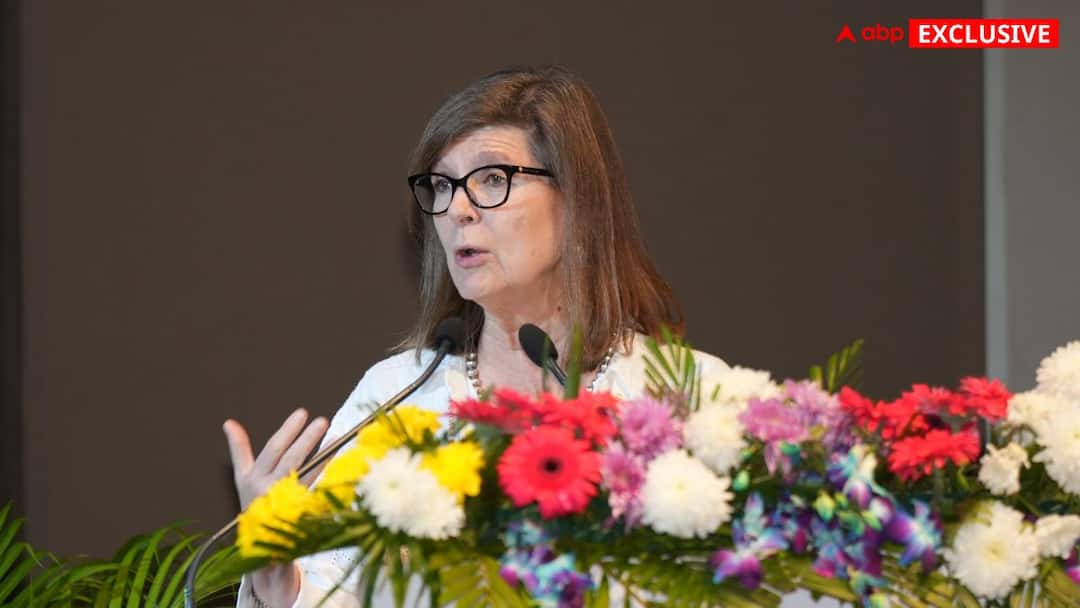
Against this stark backdrop, Dr Alison Holmes OBE, Lead for the Centres for Antimicrobial Optimisation Network (CAMO-Net) and an infectious diseases specialist who is a professor at Imperial College London and the University of Liverpool, visited India for the PCC Student Conference on AMR Next 2025 at Amrita Hospital, Faridabad.
In a conversation with Kirti Pandey for ABP Live, Dr Alison Holmes breaks down how big the AMR problem really is, why antibiotic misuse has brought us to this point, and where the solutions lie.
‘The Problem Is Enormous’: AMR Recognises No Borders!
Dr Holmes begins candidly: “The problem is enormous. It is faced in India, but also across the world. We all share this problem, which is why we must work together and learn from each other.”
She describes antibiotics as one of the most extraordinary gifts to healthcare, yet a gift humanity has not safeguarded well enough. “Penicillin was a ground-breaking discovery, one of the greatest gifts to medicine and society, yet it is a gift we have somewhat squandered. Every exposure drives resistance.”
Highlighting the spirit of the conference, she notes that AMR solutions lie in collaboration, innovation, and prevention.
Self, Medication, OTC Antibiotics, and Tracking the Misuse
In India, we do witness the everyday reality of antibiotics being bought over the counter, irregular dosing, and self-medication, each of which is a significant driver of microbial resistance to drugs that were once effective in wiping them out.
Dr Holmes warns that this is not prevalent only in India, and that it is a global stress. She highlights the need for societal-level understanding. “We need the whole of society awareness. Everyone involved in prescribing or accessing antibiotics must understand that these are treasures to be protected for times when they are truly needed.”
A Joined Future: ‘Either We All Win Together or Sink Together’
When asked whether AMR is a collective risk, Dr Holmes is unequivocal:
“Antibiotic resistance does not respect borders, regions, or cities. We are connected, and we must work globally while also working within our communities.”
Practical, Actionable Solutions for Today
Dr Holmes offers a clear roadmap with five priority pillars:
- Prevention through sanitation, hygiene, vaccination, and infection control.
- Effective use of existing antibiotics via education and diagnostics.
- Data and monitoring to guide responsible policy and prescribing.
- Minimising exposure, as any exposure fuels Darwinian resistance.
- Reducing environmental and food chain antibiotic use, beyond hospitals.
She emphasises that prevention remains the most powerful tool: clean water, vaccination, and strong infection control systems can drastically reduce antibiotic demand.
Do We Need Antibiotic Passports?
On fragmented medical histories and doctor-hopping, Dr Holmes points to digital solutions:
“Some parts of the world already use antibiotic passports. But beyond individual records, electronic health records and practice-level monitoring are crucial.”
Public understanding of harm, both individual and societal, is essential, she says:
“When you need an antibiotic, you need it to work.”
Antibiotic Literacy for Schoolchildren
Should schools teach responsible antibiotic use as civic learning?
Dr Holmes says the world is already moving in that direction:
“Interestingly, this was highlighted at the UN General Assembly, that antibiotic literacy should be part of primary and secondary education worldwide, not just science classes.”
Young people, she notes, can reshape social norms through their communication reach.
Antibiotic Overuse Has Personal Consequences
On varying response and antibiotic consumption habits between various people of the same families, Dr Holmes explains, “Antibiotics act on your own bacteria, making your bacteria resistant, not you. So take them only when needed. Preserve them so that they work when required.”
Cross, Sector Collaboration: Breaking the Silos
She highlights the AMR Next conference at Amrita Hospital as a model. “Bringing together technology, data science, AI, medicine, public health, policy, and economics enables shared language and coordinated action,” Dr Holmes said. Healthcare, she notes, often fails to fully benefit from emerging technologies because sectors remain silo-ed.
Climate Change Will Accelerate AMR
On climate pressures and India’s scale, Dr Holmes warns, “Climate change will escalate AMR, and public awareness must grow around this. No matter what happens with climate change, we will always need healthcare, and healthcare cannot function without effective antibiotics.”
Is There Hope? Or Is Doom Imminent?
Despite the scale of the crisis, Dr Holmes remains hopeful, “Yes, there is hope, particularly through the next generation. But we must focus on prevention: vaccination, water and sanitation, infection control, and creating global awareness of the debt we owe to antibiotics.”
Final Verdict: All Hands On Deck!
No one can sit this out if humanity wants to win this war on AMR. As Dr Holmes reminds us, antibiotics are foundational to modern medicine, lifelines that make surgery, childbirth, cancer treatment, and intensive care possible. With climate change altering disease patterns and bacteria evolving rapidly, safeguarding these drugs has become a shared global responsibility.
Her message is clear: With AMR rising so fast, it’s all hands on deck for global health systems, and by strengthening prevention, improving awareness, educating young people, and reducing misuse across healthcare, agriculture, and communities, it is still possible to preserve antibiotics for future generations. AMR may be a borderless threat, but coordinated action can still change the trajectory.
Check out below Health Tools-
Calculate The Age Through Age Calculator