


A powerful reflection on the origins and legacy of “Vande Mataram” was presented, highlighting its role as more than just a slogan of India’s freedom movement, but as a deep cultural and spiritual awakening of the nation. During British rule, Indians were allegedly pressured to adopt and propagate the British national anthem “God Save the Queen.” In response to this cultural imposition, a strong national counter-voice emerged, giving birth to “Vande Mataram.” The song was later formally included by Bankim Chandra Chattopadhyay in his iconic novel Anand Math in 1882. The address emphasized that “Vande Mataram” was not merely a call for the British to leave India, but a broader expression of India’s ancient civilizational ethos. The slogan revived the age-old Vedic thought of “Mata Bhoomi, Putro Aham” — the land as mother and the people as her children. References were also made to Lord Ram’s ideals, recalling the message “Janani Janmabhoomischa Swargadapi Gareeyasi,” reinforcing the sacred connection between the land and its people. Over time, “Vande Mataram” became the heartbeat of India’s independence movement, echoing across regions and uniting the nation in a shared cultural resolve.
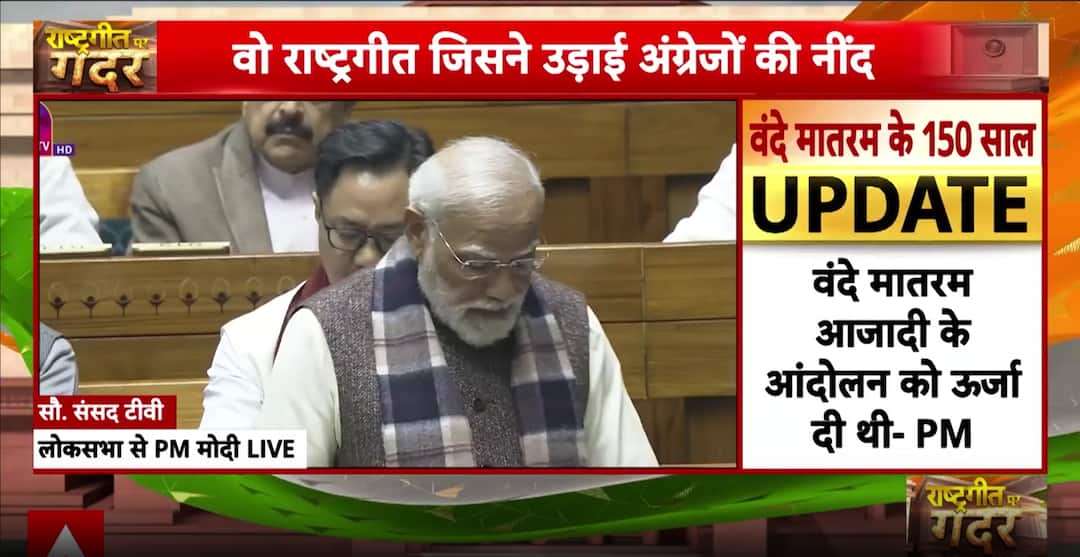
Vande Mataram: From British-Era Resistance to the Spiritual Voice of India’s Freedom Struggle
Next article
