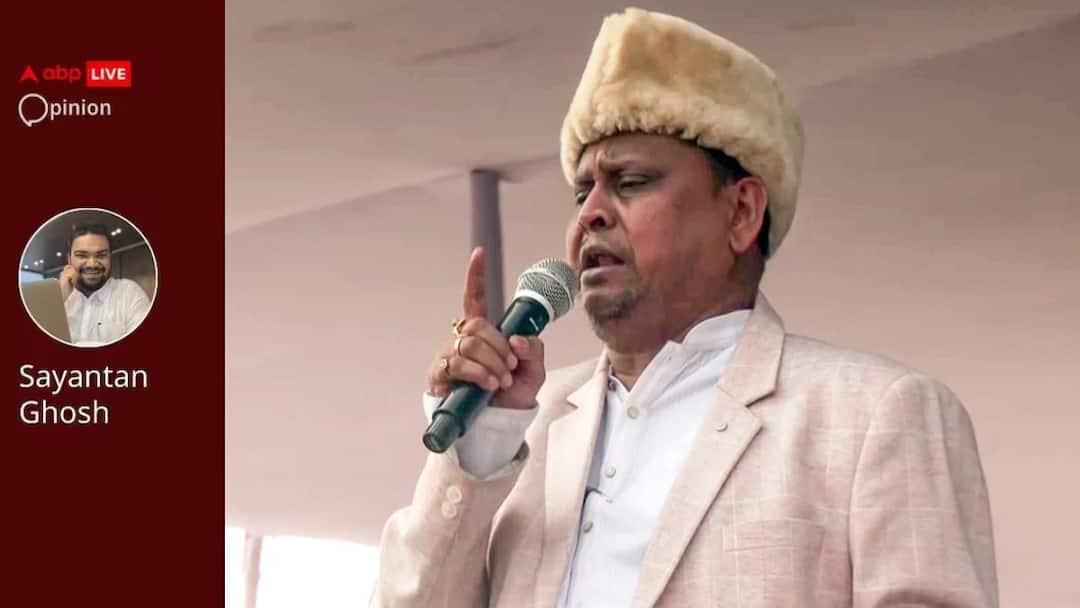

As 2025 draws to a close, West Bengal’s political landscape has witnessed yet another dramatic twist with the formation of the Janata Unnayan Party (JUP) by suspended Trinamool Congress (TMC) MLA Humayun Kabir on December 22. This move comes hard on the heels of Kabir’s highly publicised laying of the foundation stone for a mosque styled after the Babri Masjid in Beldanga, Murshidabad district, an act that drew national attention and led to his suspension from the TMC earlier in the month.
Kabir, a vocal and hardline figure in Murshidabad politics, has positioned his new party as a challenger to both the ruling TMC and the Bharatiya Janata Party (BJP), vowing to contest multiple seats in the upcoming 2026 assembly elections. He has expressed openness to alliances with parties like the All India Majlis-e-Ittehadul Muslimeen (AIMIM), the Indian Secular Front (ISF), and even the Left-Congress combine. In a state where elections are increasingly framed as a bipolar contest between the TMC and BJP, Kabir’s entry raises questions about potential fragmentation of the Muslim vote, a cornerstone of Chief Minister Mamata Banerjee’s electoral success alongside strong support from women and other sections.
Muslims constitute around 30% of West Bengal’s population, with higher concentrations in districts like Murshidabad (over 66%). The TMC has consolidated this vote bank since 2011 through welfare schemes, pro-minority policies, and a narrative of protecting secularism against the BJP’s perceived communal agenda. Any split here could, in theory, benefit the BJP’s efforts to expand its Hindu voter base. However, a closer examination of Kabir’s background, the polarising nature of his initiatives, and historical precedents suggests that his party is unlikely to inflict significant damage on the TMC’s core support.
Humayun Kabir’s Limited Credibility and Reach
Humayun Kabir’s political journey is marked by frequent shifts that have eroded his trustworthiness among broader electorates. Elected as an MLA multiple times, he began with the Congress, switched to the TMC in the early 2010s, briefly joined the BJP (contesting unsuccessfully in the 2019 Lok Sabha elections from Murshidabad), and returned to the TMC before his recent fallout. This history of opportunism paints him as a serial defector rather than a principled leader capable of building a sustainable alternative.
His influence remains largely confined to Murshidabad, particularly areas like Bharatpur (his current seat), Rejinagar, and Beldanga. At the launch of the JUP, Kabir announced intentions to contest from Rejinagar and Beldanga himself, while naming a handful of candidates for other local seats. Reports from the event described modest crowds, with attention often diverted to the mosque site rather than the political platform. Even ambitious claims of fielding candidates in up to 200 seats across the state appear overstated, given the party’s nascent organisation and lack of statewide cadre.
In Murshidabad, a district that sends 22 MLAs to the assembly, the TMC holds a dominant position with most seats in Muslim-majority areas. Kabir’s aggressive rhetoric, vowing to reduce the TMC to “zero” in the district, may energise local hardliners but struggles to resonate beyond. His suspension from the TMC stemmed from repeated disciplinary issues, including provocative statements, further isolating him from the party’s grassroots machinery that still commands loyalty among ordinary Muslim voters.
The Polarising Babri Masjid Narrative
Kabir’s decision to lay the foundation for a Babri Masjid-style mosque in Beldanga on December 6, 2025, coinciding with the anniversary of the 1992 demolition, generated significant controversy and media traction. The event drew crowds carrying bricks and donations, underscoring emotional appeal among sections frustrated with perceived inaction on historical grievances. However, such symbolically charged actions often prove double-edged in electoral politics.
While it mobilised hardline elements in Murshidabad, the initiative invited accusations of reigniting old wounds for political gain. National figures, including RSS chief Mohan Bhagwat, criticised it as a “political conspiracy” to reopen disputes. In Bengal’s current polarised climate, where the BJP aggressively courts Hindu consolidation, hardline Muslim politics tends to generate noise but alienates moderate voters who prioritise governance and stability.
Bengal’s Muslim community, largely Bengali-speaking and integrated into the state’s secular fabric, has historically favoured pragmatic choices over ideological extremism. The fear of a BJP surge, fueled by national narratives on citizenship, infiltration, and communal issues, has solidified support for the TMC as a bulwark.
Even if Kabir allies with the Left-Congress or ISF, such a bloc would likely fragment anti-TMC votes without winning enough seats to alter outcomes, inadvertently aiding the BJP. Given this arithmetic, strategic voting among Muslims is improbable to shift en masse toward a newcomer perceived as divisive.
Historical Precedents of Fringe Muslim Parties
The trajectory of Abbas Siddiqui’s Indian Secular Front (ISF) in the 2021 assembly elections offers a stark parallel. Launched with much fanfare by the influential cleric from Furfura Sharif, the ISF allied with the Left Front and Congress in the Sanjukta Morcha. It contested dozens of seats amid expectations of splitting the TMC’s Muslim vote bank, especially in southern Bengal.
Despite massive rallies and high-profile endorsements, the ISF secured only one seat, Bhangar, won by Siddiqui’s brother Naushad Siddiqui. Statewide, its impact was negligible, as Muslim voters overwhelmingly backed Mamata Banerjee to thwart the BJP’s advance. The alliance as a whole performed dismally, with the Left failing to win any seats for the first time in decades.
This outcome underscored a key reality: in a polarised TMC-BJP duel, minority voters prioritise defeating the perceived greater threat over experimenting with fringe outfits. The ISF’s hardline image, despite efforts to field diverse candidates, limited its appeal. Kabir’s JUP faces similar hurdles, perceived as Murshidabad-centric and religiously provocative, it risks being dismissed as another short-lived venture.
No Real Threat to TMC’s Consolidated Vote Bank
The TMC’s grip on Muslim support stems from consistent delivery: welfare programs like Lakshmir Bhandar (financial aid for women), student stipends, and infrastructure in minority areas. Mamata Banerjee’s image as a defender against central “interference” resonates deeply, especially amid national debates on issues like the Waqf Amendment Bill or citizenship laws.
Murshidabad remains a TMC stronghold, with the party dominating recent elections. Kabir’s rebellion may cause local ripples, perhaps costing the TMC a seat or two, but statewide extrapolation is unrealistic. If the JUP aligns with a weakened Left-Congress-ISF combine, it could further marginalise the opposition, alienating secular voters wary of hardline groupings.
Political observers note that fringe parties often serve as spoilers rather than winners in Bengal’s electoral math. The BJP has dismissed Kabir as “insignificant,” while the TMC views him as a minor irritant. Ultimately, Muslim voters’ apprehension of the BJP’s gains, evident in consolidated TMC support during 2021 and subsequent bypolls, makes a significant shift unlikely.
Ghosh teaches journalism at St. Xavier’s College (Autonomous), Kolkata. He is also the author of ‘The Aam Aadmi Party: The Untold Story of a Political Uprising and Its Undoing’
Disclaimer: The opinions, beliefs, and views expressed by the various authors and forum participants on this website are personal and do not reflect the opinions, beliefs, and views of ABP Network Pvt. Ltd.