India and the European Union have formally concluded their long-negotiated Free Trade Agreement (FTA), marking a major milestone in global trade and strategic cooperation. The deal, described as the “Mother of all Deals,” brings together two of the world’s largest economies and establishes one of the biggest free trade zones globally. Announcing the breakthrough, European Commission President Ursula von der Leyen underscored the scale and ambition of the agreement.
‘Europe & India Are Making History’
In a post on X, Ursula von der Leyen wrote: “Europe and India are making history today. We have concluded the mother of all deals. We have created a free trade zone of two billion people, with both sides set to benefit. This is only the beginning. We will grow our strategic relationship to be even stronger.”
The agreement is expected to significantly expand trade flows, investment opportunities, and economic integration between India and the EU. India’s Union Commerce Minister welcomed the pact, calling it “a formidable partnership for the world,” and highlighting its potential to reshape global trade dynamics.
High-Level Engagements At India–EU Summit
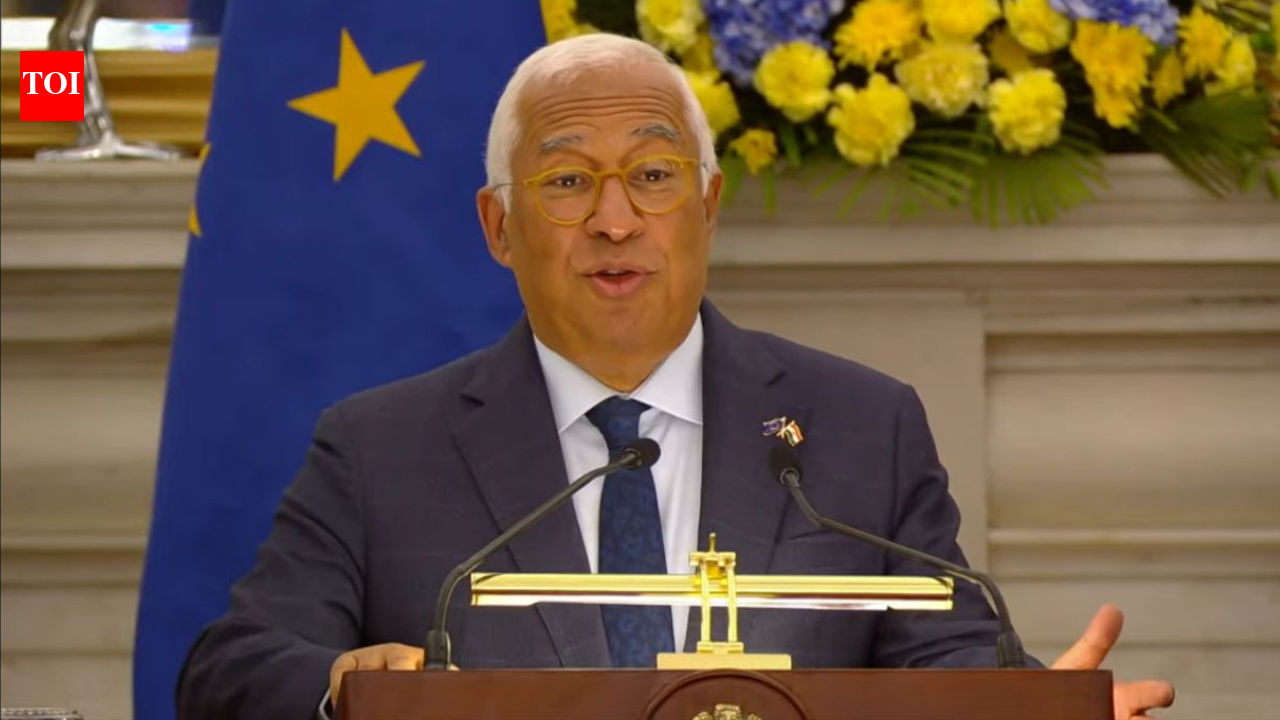
The announcement coincided with high-level diplomatic engagements in New Delhi as part of the 16th India–EU Summit. On Tuesday, Prime Minister Narendra Modi met European Council President Antonio Luis Santos da Costa and European Commission President Ursula von der Leyen at Hyderabad House. EU High Representative for Foreign Affairs and Security Policy Kaja Kallas was also present during the bilateral discussions.
The interactions were marked by visible warmth and camaraderie among the leaders. Earlier in the day, the European leaders paid tribute to Mahatma Gandhi at Rajghat, laying a wreath and signing the visitors’ book. Reflecting on the visit, Costa recalled Gandhi’s enduring philosophy, stating: “Peace will not come out of a clash of arms but out of justice lived and done by unarmed nations in the face of odds.”
Strategic & Economic Significance of the FTA
Prime Minister Modi described the agreement as a defining moment in India–EU relations, reiterating its characterization as the “Mother of all deals.” He emphasized that the pact links two major economic blocs that together account for nearly one-fourth of global GDP.
Addressing the Opening Ceremony of India Energy Week 2026 virtually, Modi said the India–EU FTA would work in synergy with India’s existing trade agreements. He noted that it would complement India’s trade deals with the United Kingdom and the European Free Trade Association (EFTA), while providing a boost to both manufacturing and services sectors. According to the Prime Minister, the agreement is also expected to strengthen investor confidence and deepen economic engagement on a global scale.
India’s Expanding Global Trade Footprint
With the conclusion of this pact, India becomes only the third Asian country—after Japan and South Korea—to secure a free trade agreement with the European Union. Beyond trade, the agreement is seen as reinforcing shared commitments to democracy, the rule of law, and a stable international economic order.
As global supply chains realign and geopolitical uncertainties persist, the India–EU FTA is being viewed as a strategic step that enhances economic resilience and positions India as a central player in future global trade partnerships.