
- PM urged citizens to curb fuel use and gold purchases.
- West Asia conflict threatens India’s energy, forex reserves.
- Higher oil prices risk widening current account deficit.
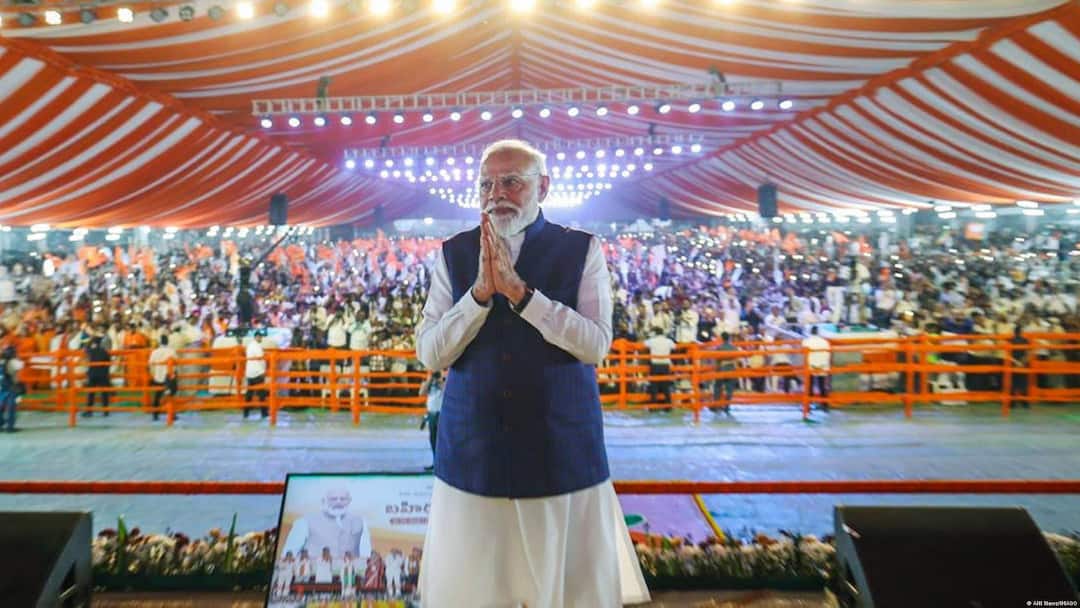
Even as Shaktikanta Das, Principal Secretary to the Prime Minister, hailed India’s improved capacity to withstand extreme energy demand shocks arising from global conflicts and the country’s position as the fastest-growing major economy with 7.4 per cent GDP growth between FY23-FY26, at the CII Annual Business Summit, Prime Minister Modi has appealed to Indians for judicious use of fuel, postponement of foreign travel and deferment of gold purchases, among other measures, to strengthen the economy.
There are, however, no discordant notes between Das’s confidence in the Indian economy and Modi’s articulation of the concerns of the Government over the impact of a prolonging West Asia conflict on energy prices, current account deficit and strain on forex reserves. “India is better positioned today to confront extreme (energy) demand conditions head-on and emerge resilient,” Das has observed and indeed, as Government officials point out, India continues to maintain adequate fuel and fertiliser stocks while monitoring supply disruptions arising from the region. Das, while highlighting India’s clean energy transition and sustained push towards alternative energy sources, has also flagged the serious threat posed by the West Asia conflict to supply disruptions and infrastructure damage with risks to energy supply, fertiliser availability and food security. That offers the timely context to Modi’s stress on the 7-point action plan as Centre’s efforts by way of trying to shield people from the adverse impact of the conflict in West Asia.
Formidable Fuel Import Bills
Call it a buffer against external geo-economic threats as the Government would like it to be seen or a premeditated move stalled till poll outcome as Opposition claims, the Prime Minister’s clarion call finds vindication in the growing intensity of the West Asian crisis. Crude oil prices remained above USD100 per barrel since the middle of March and crossed USD 110 per barrel in April despite the ceasefire. India’s crude basket averaged USD114.48 per barrel in April and USD105.4 per barrel in May, The prolonged closure of the Strait of Hormuz has exacerbated the disruption in crude oil and gas supplies, which is expected to keep their prices elevated this fiscal. India, a major crude oil importer, sees significant macroeconomic risks, as per CRISIL Ratings with external accounts directly impacted by a rising import bill. Rubix Data Sciences shows five West Asian countries — Iraq, Saudi Arabia, UAE, Kuwait, and Qatar, collectively account for 46 per cent of India’s crude oil imports (FY2025). Iraq alone contributes 19 per cent, with imports valued at USD 66 billion. Of India’s key shipments from West Asia, crude petroleum imports were worth USD 134.7 billion, gold imports were at USD 72 billion, vegetable oil imports stood at USD 19.5 billion and fertiliser imports rose to USD 14.5 billion.
“We have to save foreign exchange by any means,” says Modi. A key measure to put this in effect – albeit seen as a precursor to an imminent fuel price hike — is the call for lesser consumption of petrol and diesel by shifting to work-from-home and to public transport or electric vehicle. This would reduce imports and help avoid spending foreign currency at a time when downside risks to the economy have begun materialising with the Strait of Hormuz now de facto shut for over two months, amplifying the global energy shock alongside trade and supply chain disruption. This will take time to normalise because of the damage to oil and gas infrastructure in West Asia even after the route reopens.
CAD Risks
Prolonged closure of the Strait of Hormuz is expected to keep crude oil prices elevated for longer. Economists at CRISIL have revised the forecast for Brent crude oil price per barrel to USD 90-95 from USD 82-87 previously. The ongoing conflict has underscored the importance of building resilience in energy given that Global demand is flattening while India’s demand keeps rising—which raises current account deficit (CAD) risks. The International Energy Agency projects global demand to plateau by 2029 and contract in 2030 due to sub-par economic growth accelerating substitution away from oil in the transport and power generation sectors. “But India’s demand rises by 1 mb/d (2024–2030), making it the largest contributor to global oil demand growth, implying sustained upward pressure on India’s oil trade deficit,” inform leading economists at CRISIL Dharmakirti Joshi and Dipti Deshpande.
According to Joshi and Deshpande, India’s oil trade deficit is rising despite softer crude prices (post‑FY2024 decoupling). Higher oil prices are expected to exert greater pressure on India’s CAD. Oil, as a commodity, remains the biggest source of India’s overall goods trade deficit (36 per cent in fiscal 2026). “The traditional link between crude prices and the oil trade deficit has weakened in the last two fiscal years, with the deficit widening even as prices trended down as oil import growth is outpacing export growth after FY2024, a trend which could continue,” say the economists. In fact, CRISIL projects current account deficit (CAD) to rise to 2.2 per cent of GDP in fiscal 2027 from an estimated 0.8 per cent last fiscal.
India’s external vulnerability has increased due to the conflict. A widening CAD will mean higher demand for the dollar, while elevated global uncertainty may lead to foreign capital outflows from emerging markets, including India, putting pressure on the rupee. India’s forex reserves are around USD 690.69 billion. Data from RBI shows reserves rising close to USD 728 billion in February before slipping back to around USD 691 billion in April as global uncertainty intensified.
Rupee woes: Economists at Crisil expect the Rupee to average 93.5 a dollar in March 2027 compared with 92.8 in March 2026 amid high volatility. However, experts at the rating agency expect the Rupee to strengthen from its current levels towards the end of the fiscal, assuming a normalisation of the conflict which aligns with the historical pattern observed in currency volatility, where episodes of extraordinary weakening are typically followed by a correction. During the taper tantrum, the rupee depreciated to 68 a dollar in March 2013 before recovering to 60 by March 2014. A similar pattern of depreciation and subsequent recovery was observed during and after the global financial crisis of 2008.
Golden Trap
A big drain on foreign reserves is through gold imports as imports of gold boosts demand for forex. In fact, India is the world’s second-largest gold buyer but situations like the West Asian crisis has turned into a double whammy. The rush to buy gold leads to price increase, jump in imports and dollar outflow. Every gold purchase means an importer buys dollars from the market. That combination hurts forex reserves and the rupee. “We appreciate the appeal to limit excessive gold purchases since it will help meet our forex requirements in uncertain times, as we import gold worth nearly USD 70 billion (FY26),” says Nirmal K Minda, ASSOCHAM president. As per Rubix Data Sciences, India imports 85 per cent –90 per cent of its gold requirements and rising global prices (linked to crude/geopolitics) are increasing working capital requirements and inventory costs. According to industry estimates, reduction in gold purchases by 30-40 per cent can save USD 20-25 billion and a 50 per cent drop can yield USD 36 billion of savings. Hence India’s dollar outflow can go down by tens of billions if Indians desist from buying the yellow metal.
Be as it may, according to various sources, the estimated value of gold held by Indian households is about USD 5 trillion. This stock of privately held gold represents one of the largest pools of household financial wealth. Such a huge amount of gold can provide great strength to the Indian economy when channelled into the financial system.
Fertiliser Cutback
The other cut back being suggested – that of chemical fertilisers by half if possible on the ground that use of chemical fertilisers was ruining soil health and shift to natural farming has its share of benefits. West Asia accounted for 40-42 per cent of India’s fertiliser imports in fiscals 2025 and 2026. The highest dependence is on urea, with 64.8 per cent of its shipments coming from West Asia in fiscal 2025. The region also accounts for over a third of diammonium phosphate (DAP) imports According to Rubix data Sciences, elevated LNG prices may increase the subsidy burden (fertilisers) and reduce the viability of gas-based power generation, impacting overall energy security. Continued disruption in the Strait of Hormuz could sustain or further elevate LNG prices above USD 25/MMBtu, with supply tightening across Asia.
Nitrogenous fertilisers (especially urea) are highly dependent on natural gas feedstock, and disruptions in LNG supply from West Asia are already impacting domestic production. Recent disruptions have led to a drop in domestic urea output from 2.4 million tonnes/month to 1.8 million tonnes/month, indicating supply-side stress. India’s fertiliser imports—of which West Asia is a key supplier—were also impacted as the growth slumped to a mere 2.2 per cent on-year in March, compared with an average 26.1 per cent growth in previous three months.
In the scenario of an extended conflict, the implications are grave, says the Rubix Data report with the Gulf region historically accounting for 20 per cent – 30 per cent of India’s urea imports, making supply vulnerable to sustained disruption. According to CRISIL, ongoing tensions could increase India’s fertiliser subsidy burden by INR 200–250 billion and reduce domestic output by 10 per cent –15 per cent. Global gas supply disruptions could affect up to one-third of fertiliser trade, tightening availability and pushing up prices, especially as countries have increasingly relied on Gulf producers to offset supply losses from the Ukraine war and Chinese export restrictions. With nearly a quarter of global fertiliser production transiting through the Strait of Hormuz, prices are already rising sharply, with Middle East urea prices increasing by 19 per cent within a week in mid-March 2026, creating fresh cost pressures for agricultural sectors worldwide.
Suggestions from CRISIL to sustain growth include accelerating renewable energy adoption, diversifying crude oil sourcing and shoring up domestic oil reserves, increasing domestic fertiliser production and promoting its balanced use and continued reforms to ease domestic bottlenecks and enable productivity gains that lead to growth.