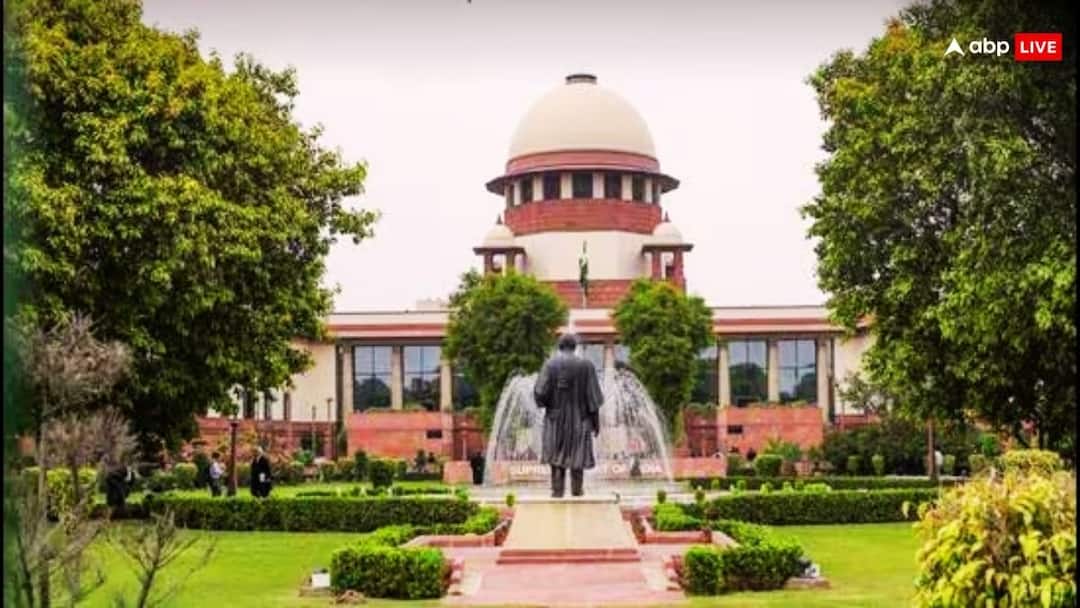

Indian courts delivered several major judgments in 2025, issuing rulings that significantly influenced the country’s legal, social, and policy landscape. The Supreme Court and High Courts repeatedly stepped in to clarify the law, influence policy, and address some of the most pressing disputes before them, contributing to the evolving realm of Indian jurisprudence.
From high-value settlements in economic-offence cases and stricter scrutiny in crimes against women to order involving stray dogs, privacy, reservation, firecrackers, and more, the Supreme Court passed decisions that will resonate well beyond the year.
Here is a look back at some of the key judgements and cases of the year 2025:
1. SC Rules Courts Can’t Fix Deadlines For President, Governors To Act On Bills
The Supreme Court of India (SC) ruled that courts cannot mandate fixed deadlines for the President or state Governors to act on bills passed by legislatures. This followed a presidential reference under Articles 200 and 201 of the Constitution.
The Court clarified that prescribing judicial timelines would violate the constitutional separation of powers and undermine the discretion of these authorities. While prolonged, unexplained delays may invite limited judicial review, the Court stopped short of prescribing uniform deadlines.
The judgment reaffirms that a Governor cannot indefinitely withhold assent and preserves checks against unreasonable delays, rejecting any broad “deemed assent” doctrine.
2. SC Aquits Nithari Serial Killings Accused Surendra Koli
On 11 November 2025, the SC fully acquitted Surendra Koli, the last convict in the Nithari serial killings, ordering his immediate release if not wanted in other cases. Koli had earlier been acquitted in 12 of 13 cases by the Allahabad High Court, which found the prosecution’s evidence unreliable.
The final conviction, related to the alleged rape and murder of a 15-year-old girl, was overturned on a curative petition. The SC found that the conviction relied solely on a statement and recovery of a knife, with no credible forensic evidence or reliable chain of custody.
The bench held that maintaining conviction on identical evidence across other acquittals would be a “manifest miscarriage of justice.” This verdict closes nearly two decades of trials and appeals, raising questions about investigative lapses and reliance on circumstantial or confession-based evidence in high-profile cases.
3. SC Orders Removal Of Stray Dogs From Schools, Hospitals, Bus Stands
The SC directed all states, Union Territories, and agencies to remove stray dogs from schools, hospitals, sports complexes, bus‑stands, railway stations, and other public institutions, relocating them to shelters after sterilisation and vaccination, under the Animal Birth Control Rules, 2023.
The court specified that dogs must not be released back in the same location. Institutions must fence premises and appoint nodal officers to prevent ingress.
Additionally, stray cattle and other animals must be cleared from national and state highways, with agencies such as NHAI, municipal bodies, and road-safety units tasked with joint drives. The Court emphasised that unchecked animals endanger public safety and violate citizens’ right to life.
4. SC Order On Use Of Green Firecrackers
The SC allowed limited sale and use of green firecrackers in the NCR from 18–21 October 2025 under strict regulatory conditions.
Only NEERI-certified crackers licensed by PESO were permitted, sold at designated locations; online sales and importation from outside NCR were banned. The Court described this as a temporary, trial-based measure, balancing festival celebrations with public health and environmental concerns.
5. SC Grants Interim Stay On Certain Provisions Of Waqf (Amendment) Act
On 15 September 2025, the SC granted a partial, interim stay on certain provisions of the Waqf Amendment Act, while refusing to stay it in entirety. Section 3(r), requiring proof of practising Islam for five years to create a waqf, was stayed until a mechanism for verification is framed.
Certain parts of Section 3C, allowing government officers to treat lands as waqf after administrative inquiry, were also stayed. No property titles are to be altered or waqf dispossessions carried out until final adjudication.
Other aspects, such as deletion of “waqf by user,” mandatory registration, and removal of non-Muslims’ ability to donate, remain effective. The judgment reflects a cautious, case-by-case judicial approach, upholding the statute while pausing the most constitutionally sensitive clauses.
6. SC Directs Centre To Implement Cashless Treatment Scheme For Road Accident Victims
The SC directed the Centre to fully implement the cashless treatment scheme for road accident victims. Injured persons are entitled to immediate cashless medical care, with coverage up to Rs 1.5 lakh per person per accident.
The Court ordered a compliance affidavit by August 2025 detailing beneficiaries under the scheme. The ruling follows the Centre’s earlier failure to notify the scheme under the Motor Vehicles Act, 1988.
The scheme allows accident victims should now receive timely emergency care, safeguarding the “golden hour” and upholding Article 21 of the Constitution.
7. SC Upholds Convictions In Kannagi-Murugesan Honour Killing Case
On 28 April 2025, a two-judge SC bench upheld convictions in the 2003 Tamil Nadu honour-killing of Murugesan (Dalit) and Kannagi (Vanniyar). Nine convicts’ appeals against life sentences were dismissed, including the commuted death sentence of Kannagi’s brother.
Two accused were acquitted. The SC affirmed the High Court’s view that the crime was a brutal, caste-motivated honour killing, and held that testimony from hostile or related witnesses, if corroborated, remains admissible.
The Court described the crime as “wicked and odious” and ordered Rs 5 lakh compensation to the surviving family members.
8. SC Order On Reserved-Category Candidates Switching To General Posts
The SC ruled that reserved-category candidates cannot automatically switch to general-category posts if recruitment rules forbid such migration.
In a constable recruitment case, some OBC candidates scored higher than the last general-category candidate but lower than the last selected OBC candidate; the High Court had allowed migration, which the SC overturned.
Whether a reserved-category candidate can be treated as general depends on whether the rules explicitly allow such a shift. The ruling reinforces that relaxations for reserved categories do not automatically entitle candidates to general-category seats where prohibited.
9. SC Agrees To Drop Bank Fraud Case If Sandesaras Settle Rs 5,100 Cr Loan
The SC agreed to drop criminal proceedings against Nitin and Chetan Sandesara, promoters of Sterling Biotech Ltd., if they pay Rs 5,100 crore. The brothers were listed as fugitive economic offenders after fleeing India in 2017 and accused of defrauding banks of over $1.7 billion. The settlement would quash all cases filed by agencies including the CBI and ED.
Though the alleged fraud was Rs 5,383 crore and the one-time settlement initially Rs 6,761 crore, prior payments and bank recoveries brought the effective demand to Rs 5,100 crore. The SC emphasised returning public money to lenders, noting the relief is specific to the case’s facts.
10. SC’s Strong Message On Dowry-Related Cruelty
The SC strongly condemned dowry-related cruelty, stating that marriage has, in many cases, become a “mere commercial transaction.”
In its ruling, the Court cancelled bail for a man accused of causing his wife’s death in Fatehpur, UP, four months after marriage. The couple had received significant dowry, yet the husband and in-laws allegedly demanded more.
Post-mortem and testimonies showed restraint and harassment leading to death. The SC emphasised dowry deaths as crimes against society, violating Articles 14 and 21.
11. SC Issues Notice To Centre, Rajasthan Govt Over Anti-Conversion Law
The SC issued notices to the Rajasthan and Central governments on a petition challenging the Rajasthan Prohibition of Unlawful Religious Conversion Act, 2025.
The petition argued that the law’s broad definitions and penal provisions violate constitutional rights, including freedom of religion, expression, and equality (Articles 14, 19(1)(a), 21, 25, 300A).
The Act criminalises conversions achieved by misrepresentation, allurement, marriage, or other fraudulent means, requiring prior District Collector permission for voluntary conversions. The SC tagged the plea with other pending challenges to anti-conversion laws in other states.
12. SC Flags Casual Use Of DNA Tests
The SC ruled that DNA tests cannot be ordered routinely, as they are “highly intrusive” and must only be used when “eminently necessary.”
The Court set aside a 2017 High Court order directing a doctor to provide DNA in a paternity dispute. Compelling someone to give genetic material intrudes on personal liberty, bodily autonomy, and privacy.
DNA testing must meet legality, legitimate aim, and proportionality standards. The Court cautioned against “fishing inquiries” that could harm family dignity and children’s psychological well-being, emphasising use only in unavoidable cases.