
India and Russia have taken significant strides to deepen their ‘special and privileged strategic partnership,” expanding collaboration across key sectors such as trade, nuclear energy, defence, and science and technology.
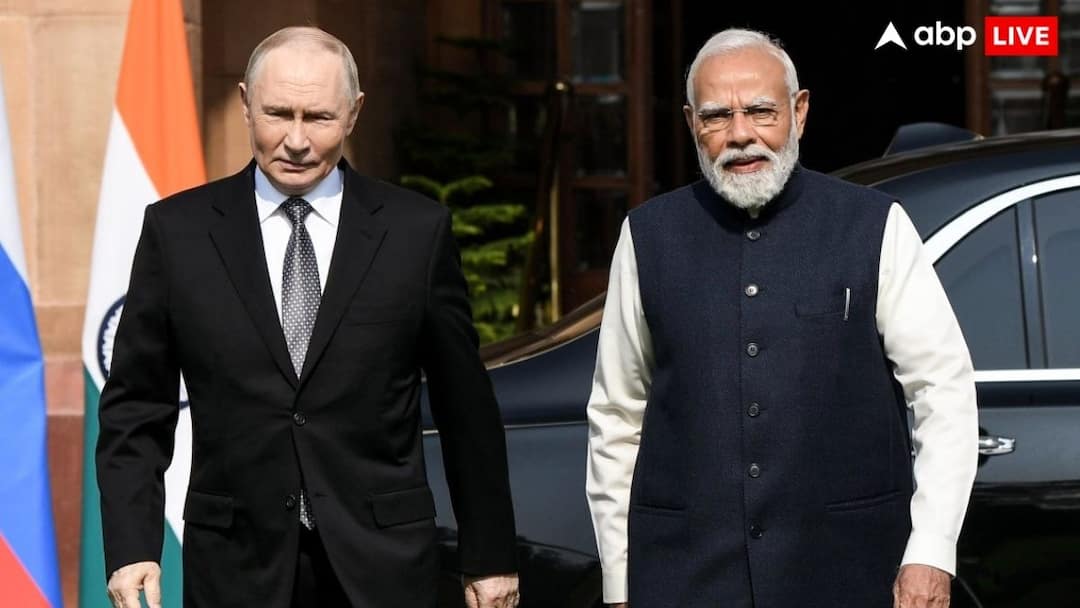
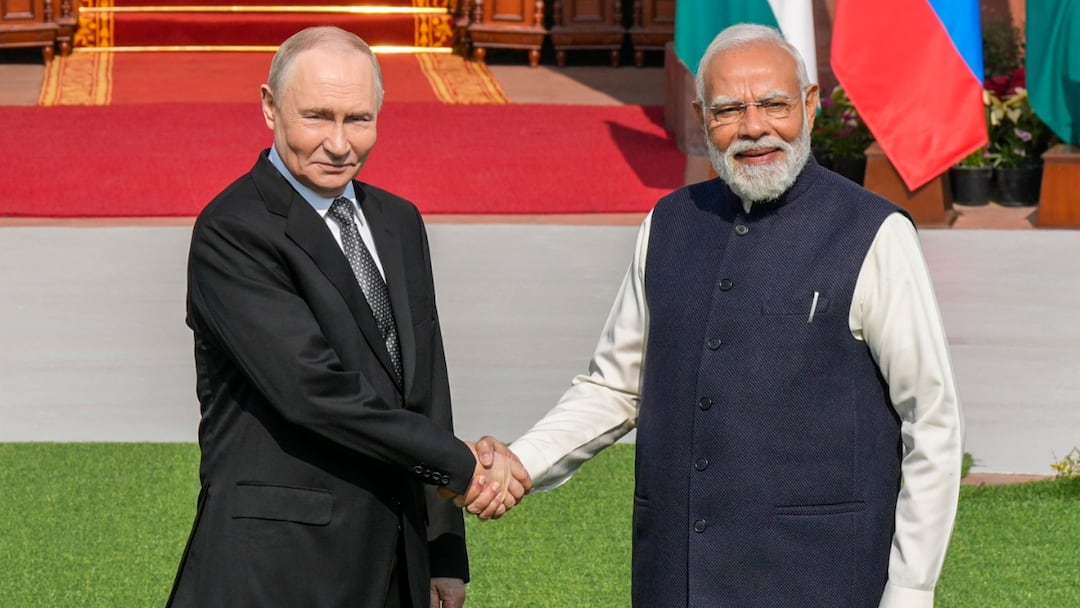
A joint statement from the Ministry of External Affairs on Friday detailed the key achievements of the 23rd India-Russia Annual Summit, attended by Prime Minister Narendra Modi and Russian President Vladimir Putin, who was on a two-day visit to India.
During his India visit, Putin received a ceremonial red carpet welcome and the tri-services guard of honour at the beginning of the day. He also visited Rajghat, held bilateral talks with PM Modi, and was later hosted at a banquet in his honour by President Droupadi Murmu.
Key Takeaways From India-Russia Summit
- Both PM Modi and Putin highlighted advancing discussions on establishing a second nuclear power plant site in India, with Russia pledging full operational support for the Kudankulam Nuclear Power Plant in Tamil Nadu. The statement revealed that India aims to formalise the allocation of this second site as per earlier agreements.
The partnership in nuclear energy will widen to include fuel cycle management, lifecycle support for operating the Kudankulam plant, and peaceful, non-power uses of atomic energy.
During their joint press briefing, President Putin reaffirmed Russia’s commitment: “We’re conducting a flagship project to build the largest Indian nuclear power plant, Kudankulam. Two out of six reactor units have already been connected to the energy network, and four are still under construction. Getting this nuclear power plant to full power output will make an impressive contribution to the energy requirements of India.”
- Further, they agreed to create a fresh agenda addressing peaceful atomic energy use and related high technologies. Both governments recognized nuclear cooperation as vital to their strategic ties, aligning with India’s ambitious plan to boost its nuclear energy capacity to 100 GW by 2047.
- Technical and commercial talks will accelerate around Russia’s VVER water-cooled nuclear reactors, research collaboration, local manufacturing of nuclear equipment, and fuel assembly production for large Russian-designed plants, adhering to mutually agreed terms.
- In space cooperation, the summit celebrated the growing partnership between India’s ISRO and Russia’s Roscosmos. They committed to further peaceful space endeavors, including human spaceflight, satellite navigation, and planetary exploration, alongside progress in rocket engine development and production.
- Trade ties also received a boost. Both nations welcomed long-term fertilizer supply agreements and the signing of a Memorandum of Understanding between JSC UralChem and India’s major fertilizer companies — Rashtriya Chemicals and Fertilisers Limited, National Fertilisers Limited, and Indian Potash Limited.
- An MoU was inked to enhance training for specialists in ships operating polar waters, paving the way to strengthen transport corridors like the International North-South Transport Corridor (INSTC), Chennai-Vladivostok maritime route, and the Northern Sea Route.
- India and Russia committed to expanding trade and investment in Russia’s Far East and Arctic regions under a cooperation program from 2024 to 2029 targeting agriculture, energy, mining, pharmaceuticals, and maritime transport sectors, among others.
- Arctic cooperation featured prominently, with both sides emphasising regular bilateral consultations and highlighting India’s participation in the 6th International Arctic Forum in Murmansk earlier this year. India reiterated readiness to take an active observer role in the Arctic Council.
- On defence, the leaders agreed to boost joint production of spare parts and components for Russian-origin military equipment in India under the Make-in-India initiative. This includes technology transfers and joint ventures aimed at meeting the Indian Armed Forces’ needs and exporting to friendly third countries.
- Military ties remain robust with regular high-level contacts, including the Defence Ministers’ meeting in Qingdao in June 2025 during the SCO meeting. The countries praised the ongoing INDRA joint military exercises and pledged to sustain and expand military cooperation and exchange visits.
- Economic cooperation also advanced with agreements to develop payment systems allowing bilateral trade in national currencies, ensuring smoother transactions. Discussions will continue on integrating national payment and financial messaging systems as well as central bank digital currency platforms.
President Putin’s two-day visit to Delhi concluded on Friday night, marking a renewed phase of cooperation between the two nations as they navigate a rapidly evolving global landscape.